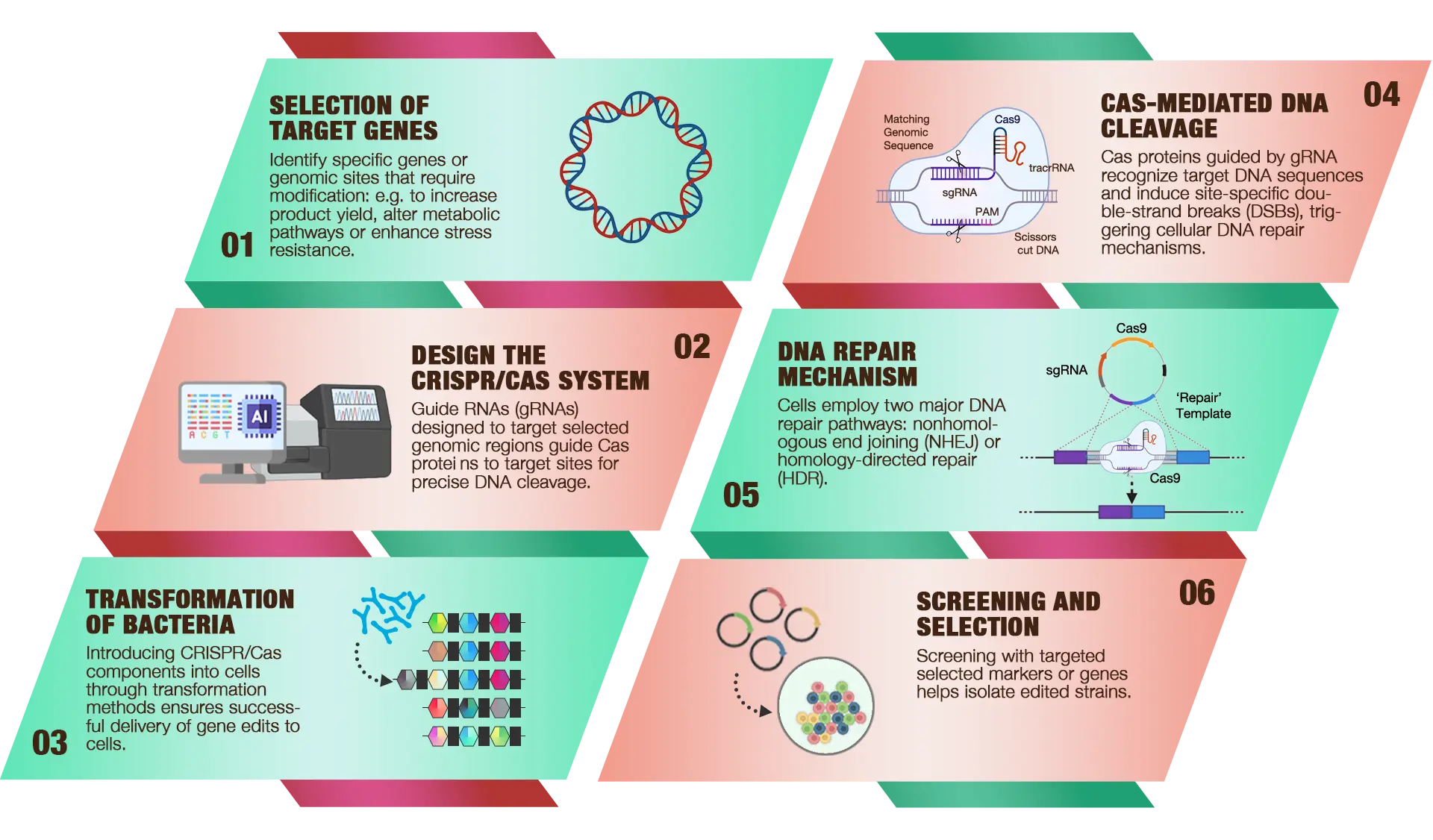
CRISPR-Cas9 system technology is a revolutionary gene-editing tool widely applied in the study and manipulation of microbial genomes. It relies on a natural immune mechanism found in bacteria, where the organism integrates segments of invading viral genes into its genome, forming CRISPR sequences. Using Cas proteins and guide RNA, CRISPR can precisely cut and edit microbial DNA, allowing for modifications to the genome. This technology is versatile, enabling the deletion, replacement, or addition of gene sequences and regulation of gene expression levels. In microbial communities, CRISPR finds applications in functional gene studies, metabolic engineering, optimization of drug production, and various other fields. Its efficiency and precision make CRISPR a crucial tool for microbiologists and bioengineers, advancing scientific research and applications in microbial-related disciplines.