
Aquaculture Microbiome Management: Building Water Quality Stability, Gut Resilience, and Pathogen Pressure Management Systems for Fish and Shrimp Farming
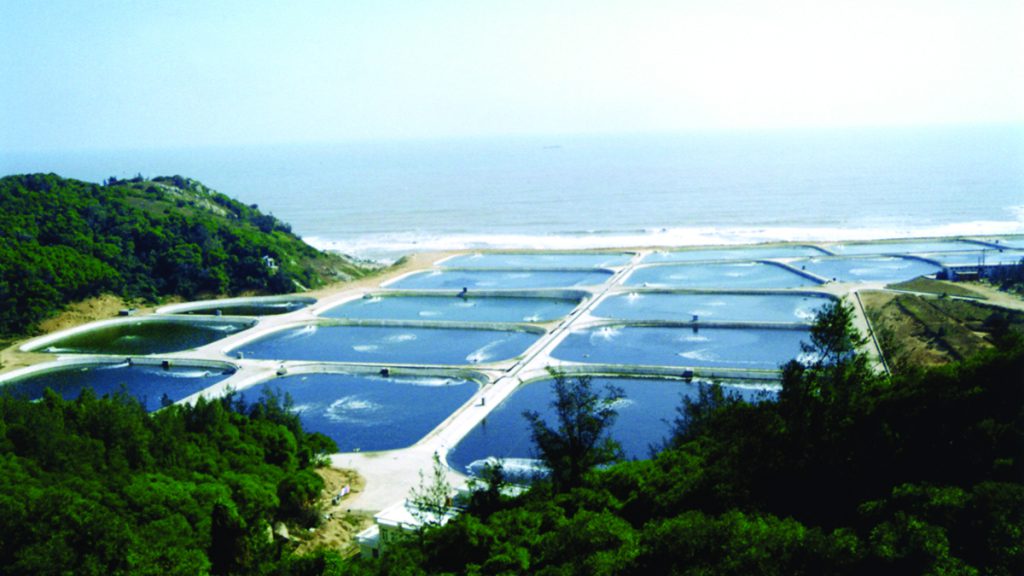
Aquaculture is fundamentally different from terrestrial livestock production. Fish and shrimp live, respire, feed, and excrete directly within their culture water. Therefore, in aquaculture systems, water quality is not merely an external management condition; it is part of the animal’s physiological interface.
In modern aquaculture, water quality, organic loading, pond bottom chemistry, dissolved oxygen, algal dynamics, gut microbiota, and pathogen pressure are tightly interconnected. A change in one layer can rapidly affect the others. Uneaten feed increases organic sludge; organic sludge consumes oxygen and creates anaerobic pond-bottom zones; low dissolved oxygen shifts microbial ecology; microbial imbalance may increase ammonia, nitrite, and opportunistic pathogen pressure. These changes can then feed back into fish and shrimp gut health, survival rate, and feed efficiency.
Because aquaculture environments are highly fluid and interconnected, aquaculture microbiome management has become one of the most important biological tools for sustainable, high-density fish and shrimp farming.
For HYGEM / GEMBIOZ, managing the aquaculture micro-ecosystem is an ecological engineering task. Instead of addressing isolated symptoms, such as sudden ammonia spikes, excessive pond bottom sludge, or localized pathogen pressure, microbiome-based BioSolutions aim to build a more stable environmental buffering capacity. This requires integrating beneficial microorganisms, functional microbial consortia, fermentation-derived metabolites, formulation stability, and field application protocols into a practical B2B technology platform.
Aquaculture is not only an animal production system. It is a living microbial ecosystem. Water, pond bottom, feed, gut microbiota, and pathogen pressure must be managed as one integrated biological system.
1. The Aquaculture Ecosystem: A Multi-Layered Microbial Arena
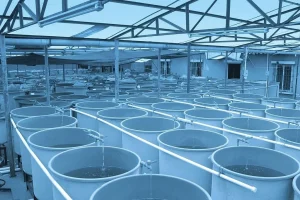
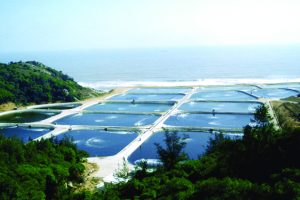
Commercial ponds, shrimp nurseries, fish cages, and recirculating aquaculture systems can all be understood as dynamic biological reactors. Every pellet of uneaten feed, every gram of fecal waste, every temperature shift, and every dissolved oxygen fluctuation can alter microbial balance.
Unlike terrestrial animal production, aquatic animals remain continuously exposed to their culture water. This means environmental microbiology and animal physiology cannot be separated. Water microbes influence water quality; pond bottom microbes influence nitrogen cycling and organic matter transformation; gut microbes influence digestion, immunity, and resilience. When environmental balance is disrupted, opportunistic pathogen pressure may increase.
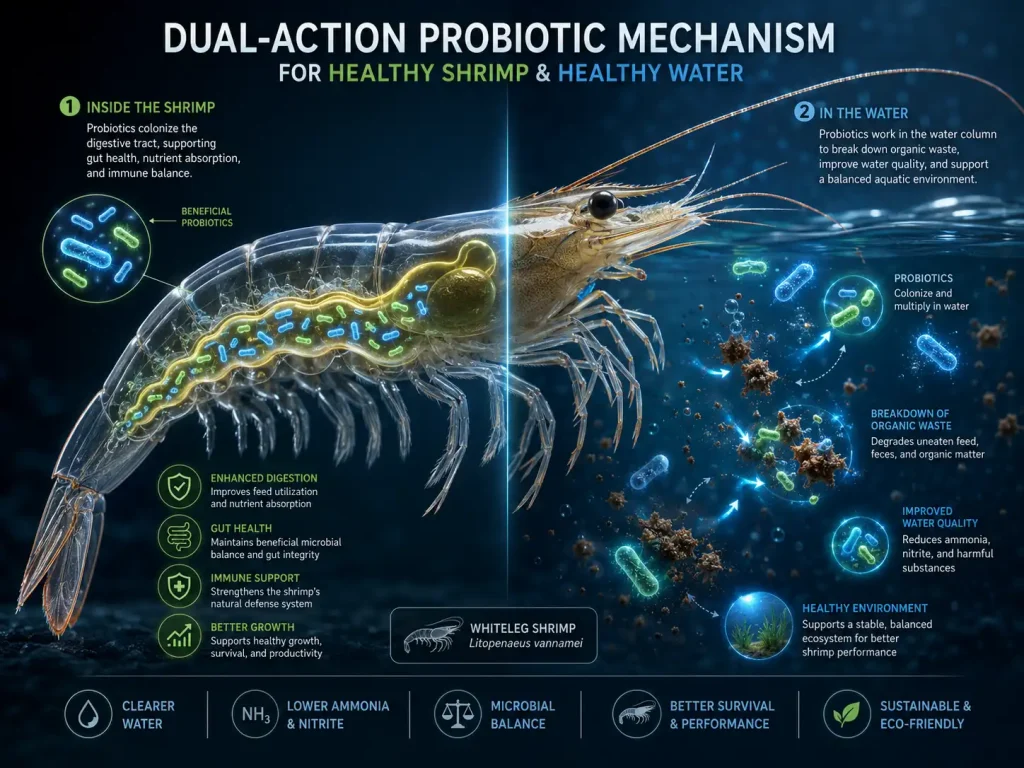
Therefore, aquaculture microbiome management should be evaluated across two interconnected biological layers:
- Environmental bioremediation: water stability, pond bottom organic matter transformation, nitrogen conversion, and microbial competition.
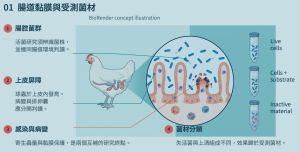
- Gastrointestinal resilience: gut microbiota balance, nutrient absorption, mucosal defense, shrimp hepatopancreas support, and physiological resilience under high-density stress.
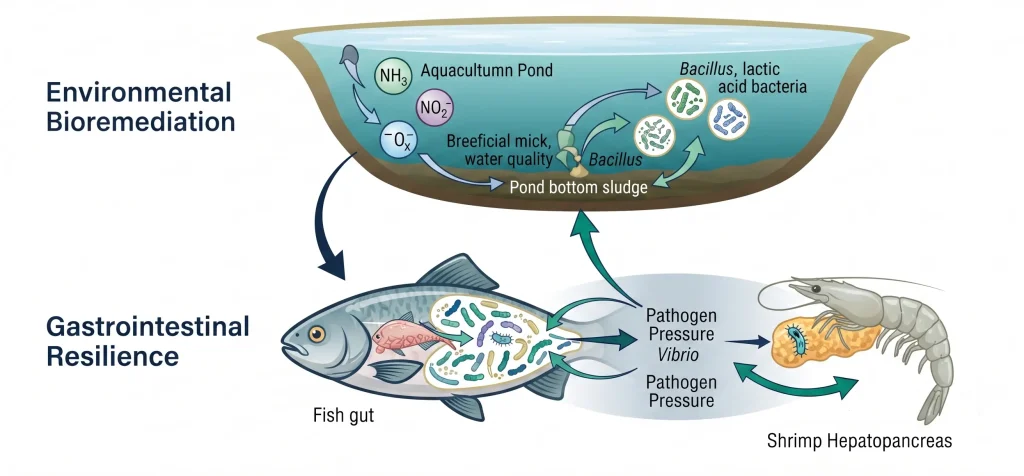
| Target Arena | Key Biological Challenges | Microbial Strategy | Production Value |
|---|---|---|---|
| Water Column & Pond Bottom | Organic sludge accumulation, ammonia and nitrite fluctuation, unstable dissolved oxygen, and opportunistic pathogen pressure. | Use resilient Bacillus spore-formers, enzyme-producing microorganisms, heterotrophic nitrogen-assimilating bacteria, and competitive beneficial microbial communities. | Supports stable water color, pond bottom improvement, dissolved oxygen profile management, and environmental buffering capacity. |
| Gastrointestinal Tract | Immature or disrupted gut microbiota, enteric pathogen pressure, reduced nutrient absorption under stress, and shrimp hepatopancreas vulnerability. | Apply functional lactic acid bacteria, Bacillus strains, synbiotics, postbiotics, and fermentation-derived metabolites. | Supports feed utilization, gut resilience, growth uniformity, and survival performance under production stress. |
Uneaten Feed / Feces / Sludge
Bacillus / LAB / Consortia
NH3 / NO2– / DO / pH
Survival / FCR / Stability
2. Water Quality Management: The First Layer of Aquaculture Microbiome Control
Water quality is one of the most direct indicators of microbial balance in aquaculture. Ammonia, nitrite, pH, dissolved oxygen, turbidity, algal dynamics, and organic matter levels are all influenced by microbial activity. When microbial transformation capacity is stable, the system can better buffer waste accumulation. When microbial ecology becomes imbalanced, water quality may deteriorate rapidly.
2.1 Organic Matter and Pond Bottom Sludge
Uneaten feed and fecal waste are the main sources of organic matter accumulation. If organic matter is not efficiently decomposed, pond bottom sludge increases, creating anaerobic zones and supporting undesirable microbial proliferation.
Beneficial microorganisms, especially enzyme-producing Bacillus strains, can help degrade proteins, starches, lipids, and other organic residues. By accelerating organic matter transformation, microbial water conditioners can support better pond bottom conditions and reduce the biological pressure caused by sludge accumulation.
2.2 Ammonia and Nitrite Pressure
Ammonia and nitrite are major water quality risks in fish and shrimp farming. They are closely related to feeding intensity, stocking density, dissolved oxygen status, pH, and microbial nitrogen cycling. Microbiome strategies can support nitrogen load management by promoting heterotrophic assimilation, nitrification-related microbial balance, and organic nitrogen transformation.
Because ammonia and nitrite dynamics are affected by multiple environmental factors, microbial products should be positioned as part of an integrated water quality management program, rather than a single replacement for water exchange, aeration, feeding control, or biofilter management.
2.3 Dissolved Oxygen and Microbial Stability
Dissolved oxygen is both a water quality indicator and a driver of microbial ecology. Low dissolved oxygen can shift the pond bottom toward anaerobic metabolism, increase undesirable metabolites, and reduce the stability of beneficial microbial communities. Therefore, microbial pond management should be combined with appropriate aeration, feeding control, and pond bottom monitoring.
Aquaculture water quality should not be judged only by visual water color or transparency. A scientific program should track ammonia, nitrite, dissolved oxygen, pH, organic loading, microbial population shifts, and animal production performance together.
3. Fish and Shrimp Gut Microbiota and Pathogen Pressure Management
The gastrointestinal tract is the second major layer of aquaculture microbiome management. Fish and shrimp gut microbiota are influenced by feed composition, water microorganisms, stocking density, stress, temperature, salinity, and pathogen exposure. When gut microbiota are stable, digestion, mucosal defense, and nutrient absorption may be better supported. When dysbiosis occurs, animals may become more vulnerable to gut stress and opportunistic pathogen pressure.
3.1 Fish Gut Resilience
In fish production, beneficial microorganisms can support gut microbiota balance, organic acid production, digestive enzyme activity, and mucosal barrier function. These effects may help stabilize feed utilization and support more consistent production performance under high-density or temperature-fluctuating conditions.
3.2 The Shrimp Gut–Hepatopancreas Axis
In shrimp farming, the gut and hepatopancreas are closely linked to digestion, immunity, and stress responses. Environmental deterioration, high organic loading, and pathogen pressure may affect gut microbiota and hepatopancreas condition. Microbiome strategies can support shrimp resilience through a dual approach combining water environment stabilization with functional feed inputs, such as probiotics, synbiotics, postbiotics, and fermentation-derived metabolites.
3.3 Managing Pathogen Pressure Without Disease Treatment Claims
In international B2B aquaculture markets, microbial solutions must be positioned carefully. Beneficial microorganisms may help reduce pathogen pressure through competitive exclusion, organic acid production, quorum-sensing-related interference, environmental stabilization, and gut barrier support. However, unless supported by appropriate regulatory approval, they should not be positioned as veterinary drugs or disease treatment products.
A more appropriate positioning is to use microbial solutions as part of an integrated aquaculture health management program to support environmental balance, pond bottom stability, gut resilience, and pathogen pressure management.
4. How to Choose the Right Microbial Technology Format for Aquaculture Applications?
When developing aquaculture microbial products, formulation stability and field application conditions must be carefully considered. Unlike terrestrial feed additives, aquaculture inputs may immediately face water dilution, osmotic stress, salinity variation, UV exposure, temperature fluctuation, and complex microbial competition.
Therefore, aquaculture microbial products must not only have biological function, but also require stable formats that can withstand water dilution, salinity changes, temperature fluctuation, and field handling pressure. Different product formats offer different application advantages in water conditioning, pond bottom management, nursery culture, feed supplementation, and gut resilience support.
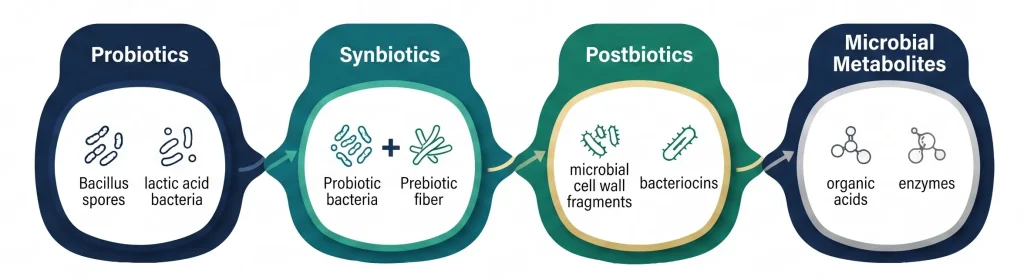
| Technology Format | Application Method | Biological Core | Manufacturing Focus |
|---|---|---|---|
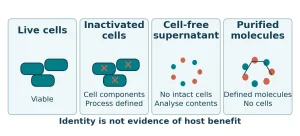
| Probiotics | Water broadcasting, pond bottom tablets, feed spraying, or feed mixing | Live beneficial microorganisms, such as Bacillus spores and lactic acid bacteria. Designed for environmental tolerance, organic matter transformation, and gut microbiota support. | Salinity tolerance, osmotic tolerance, viable count validation, germination speed, and batch consistency. |
| Synbiotics | Water conditioning, nursery feed, early-stage culture programs | Combines beneficial strains with selected prebiotic substrates to support microbial establishment and targeted fermentation. | Strain-substrate matching, growth kinetics, stability, and avoidance of non-target microbial stimulation. |
| Postbiotics | Functional feed, pelleted feed, stress management programs | Non-living microbial cells, cell wall fractions, peptides, and fermentation-derived bioactive components that may support immune and barrier-related responses. | Heat tolerance, pressure resistance, pelleting compatibility, and functional consistency. |
| Microbial Metabolites | Liquid water conditioners, liquid feed coating, short-cycle support programs | Fermentation-derived organic acids, enzymes, peptides, bacteriocin-like substances, and other metabolites that provide rapid functional input. | Liquid shelf life, UV and oxidation stability, storage compatibility, and field handling stability. |
5. Targeted Commercial Application Scenarios
Different aquaculture systems have different microbial ecologies. Shrimp ponds, intensive fish ponds, cages, hatcheries, and recirculating aquaculture systems face different biological risks. HYGEM / GEMBIOZ translates microbial biotechnology into field-oriented application programs based on specific scenarios.
5.1 Shrimp Farming: Pond Bottom, Vibrio Pressure, and Gut–Hepatopancreas Resilience
High-density shrimp ponds often face pond bottom organic matter accumulation. When organic matter increases and dissolved oxygen becomes limited, anaerobic zones may form at the bottom. These conditions may lead to undesirable microbial shifts and increase Vibrio-related pressure.
A microbiome strategy for shrimp farming should combine both environmental and feed-based approaches. Pond bottom microbial tablets or granules can target organic sludge transformation, while feed-based probiotics, postbiotics, and fermentation metabolites can support the gut–hepatopancreas axis. The goal is not to directly treat disease, but to reduce environmental stress, stabilize microbial ecology, and support animal resilience.
5.2 Intensive Fish Farming: Feed Efficiency and Water Safety
In intensive fish production, feed is usually one of the largest operating costs. Undigested protein and excess feed entering the water can increase ammonia, nitrite, and organic loading. Therefore, feed efficiency and water safety are closely connected.
Microbiome strategies can be applied from both feed and water sides. Feed-based probiotics, enzymes, postbiotics, and fermentation metabolites may support digestion and gut balance, while water conditioners may support organic matter transformation and nitrogen cycling dynamics. Together, these approaches may help establish more stable water conditions and more consistent production performance.
5.3 Recirculating Aquaculture Systems: Biofilter-Compatible Microbial Support
Recirculating aquaculture systems rely heavily on biofilters and stable microbial communities. Sudden chemical treatment, excessive organic load, or microbial imbalance may interfere with biofilter function. In RAS systems, microbial products must be carefully selected to avoid disrupting nitrifying bacteria or clogging filtration systems.
Suitable microbiome solutions for RAS should be non-disruptive, compatible with biofilter function, and focused on organic carbon removal, water clarity, microbial stability, and fish gut support.
6. R&D Validation: From Laboratory Strain to Commercial Pond
A strain that performs well in laboratory inhibition-zone assays may not necessarily perform consistently in commercial ponds. Aquaculture environments are complex, variable, and biologically competitive. Therefore, product commercialization requires a complete evidence chain from strain function to field performance.
| Validation Stage | Key Tests | Development Purpose |
|---|---|---|
| Strain Screening | Salinity tolerance, temperature tolerance, enzyme production, organic acid production, antagonistic activity, and biofilm formation. | Screens candidate strains suitable for aquaculture environments and target functions. |
| Safety Evaluation | Genome analysis, exclusion of major safety risks, AMR-related review, toxin-related review, and species identification. | Supports regulatory documentation, B2B trust, and international commercialization. |
| Fermentation Scale-Up | High-density fermentation, spore yield, metabolite profiling, batch consistency, and contamination control. | Ensures the strain can be produced reliably at industrial scale. |
| Formulation Stability | Shelf life, water-contact stability, salinity tolerance, pelleting stability, and liquid storage stability. | Confirms that the product can withstand real application and distribution conditions. |
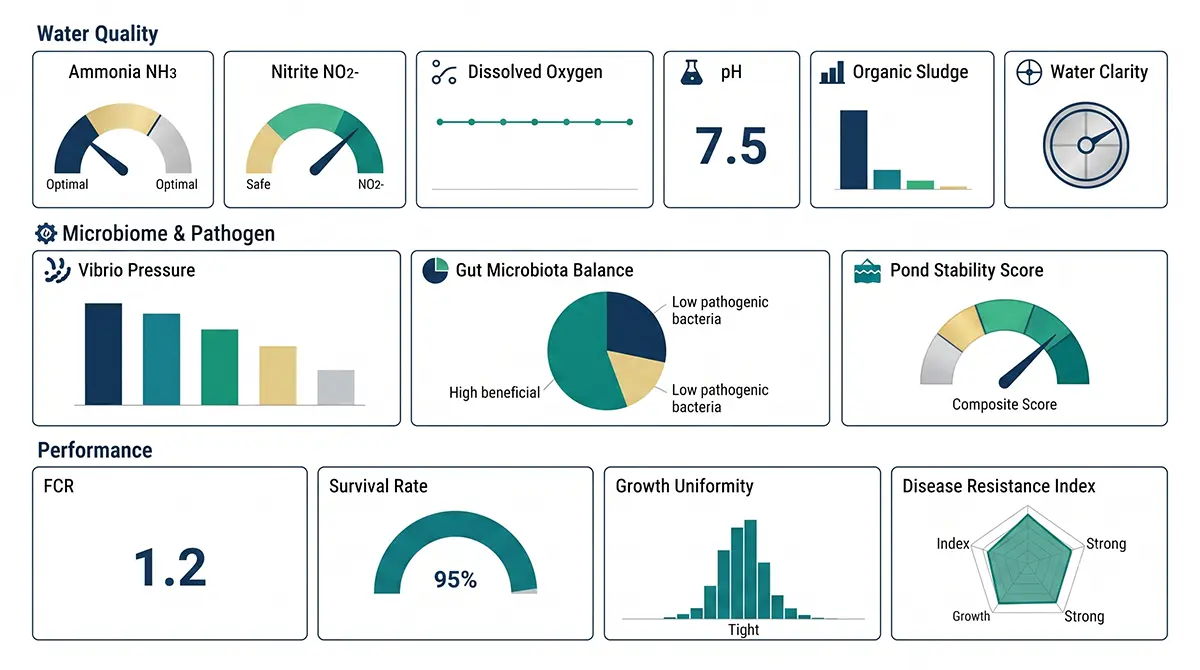
| Field Validation | NH3, NO2–, dissolved oxygen, pH, sludge, Vibrio pressure, FCR, survival rate, growth uniformity, and ROI. | Connects microbial mechanisms with commercial production outcomes. |
Aquaculture microbial products should not rely only on laboratory activity. They should also be validated through formulation stability, water quality response, animal performance, safety documentation, and field consistency.
7. HYGEM Platform Advantage: From Microbial Discovery to Field BioSolutions
HYGEM / GEMBIOZ views aquaculture microbiome management as an integrated industrialization platform. Its goal is to connect microbial discovery, functional screening, high-density fermentation, formulation design, and field application into a commercializable B2B technology framework.
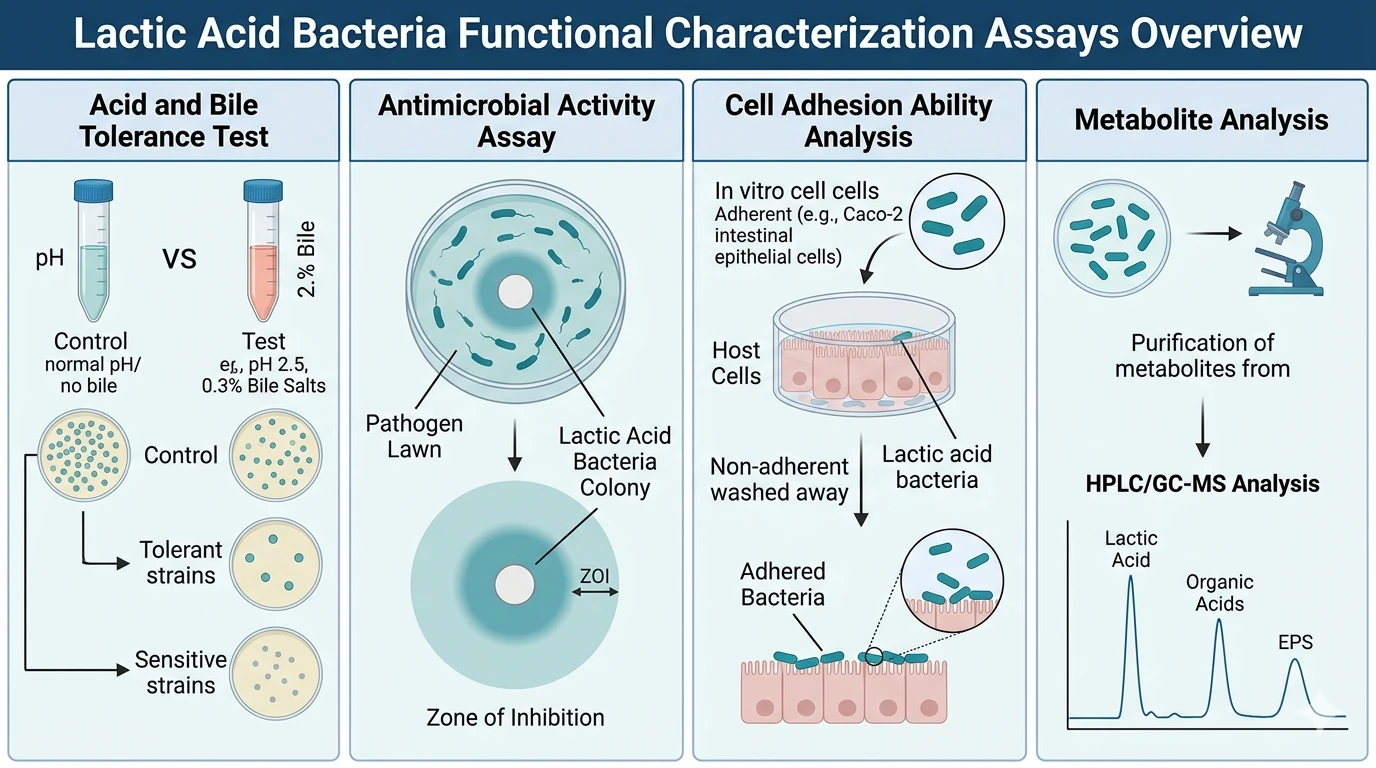
This platform can support OEM, ODM, and brand partners in developing aquaculture microbial products related to water conditioning, pond bottom management, feed applications, gut resilience, and pathogen pressure management.
| Platform Capability | Technical Focus | B2B Value |
|---|---|---|
| Strain Discovery | Bacillus, lactic acid bacteria, yeast, functional consortia, and environmental microorganisms. | Builds microbial assets for water, feed, and gut applications. |
| Fermentation Engineering | High-density fermentation, spore formation, metabolite production, and batch stability. | Supports scalable manufacturing and stable supply. |
| Formulation Design | Powders, granules, liquids, tablets, feed coating, and postbiotic formats. | Matches product formats to pond, feed, nursery, or RAS application scenarios. |
| Application Protocols | Water broadcasting, pond bottom targeted treatment, feed supplementation, hatchery, and nursery support. | Helps partners translate microbial technology into field-use programs. |
| Compliance Positioning | Safety evaluation, genome-based review, non-drug claims, and documentation support. | Supports international market access and responsible B2B commercialization. |
Responsible Claim Positioning
In international aquaculture markets, microbial products should avoid unapproved veterinary drug claims or direct disease-treatment language. A more responsible positioning focuses on optimizing environmental balance, supporting organic matter transformation, improving gut resilience, reducing pathogen pressure, and strengthening biological stability under production stress.
This positioning better supports product registration, customer education, and long-term market trust.
The future of aquaculture microbiome management is not a single product claim. It is a BioSolutions framework integrating water ecology, pond bottom transformation, gut resilience, field validation, and responsible market positioning.
Conclusion: Engineering a More Resilient Aquaculture Micro-Ecosystem
Aquaculture production is influenced by a fluid and highly interconnected microbial ecosystem. Water quality, pond bottom chemistry, organic loading, gut microbiota, and pathogen pressure cannot be managed separately. They must be viewed as one integrated biological system.
Microbiome management provides a practical pathway for improving this system. Under appropriate conditions, beneficial microorganisms, synbiotics, postbiotics, and microbial metabolites can support water quality stability, organic matter transformation, nitrogen cycling dynamics, gut resilience, and pathogen pressure management.
For HYGEM / GEMBIOZ, aquaculture microbiome management is a field-oriented ecological engineering platform. By connecting strain discovery, fermentation technology, formulation stability, safety documentation, and commercial application protocols, microbial BioSolutions can help fish and shrimp producers build more stable, efficient, and sustainable production systems.
Aquaculture microbiome management is the process of engineering biological stability across water, pond bottom, feed, gut microbiota, and pathogen pressure — transforming microbial ecology into a measurable and validated BioSolutions platform for sustainable fish and shrimp farming.
Further Reading
- Aquaculture Microbiome Management A Scientific Strategy For Water Stabikity Pathogen Pressure And Farming Resilience.
- The Boundary Challenges of Microbial Nitrogen Metabolism in Aquaculture: Dynamic Environmental Factors, Carbon Flux, and Precision Nitrification Engineering
- Animal Microbiome Solutions for Digestibility, Immunity and Disease Control.
References & Notes
Reference directions include aquaculture microbiomes, pond microbiology, water quality management, ammonia and nitrite dynamics, dissolved oxygen, organic sludge degradation, fish and shrimp gut microbiota, Vibrio pressure, probiotics, synbiotics, postbiotics, microbial metabolites, recirculating aquaculture systems, biofilters, antimicrobial resistance, and microbiome-based sustainable aquaculture.
International reference directions include FAO resources on antimicrobial resistance and One Health, WOAH resources on animal health and antimicrobial resistance, and EFSA guidance directions for microbial feed additives, safety evaluation, and market access documentation.
Disclaimer: This article is intended for scientific communication and educational purposes only. Aquaculture microbiome products, water conditioners, microbial feed additives, probiotics, synbiotics, postbiotics, and microbial metabolites should be validated under appropriate species, water quality, salinity, temperature, stocking density, feed, formulation, safety, and regulatory conditions before commercial use. Any water quality, pathogen pressure, survival, feed efficiency, or disease-related claim should be supported by controlled trials, field data, and approved documentation.