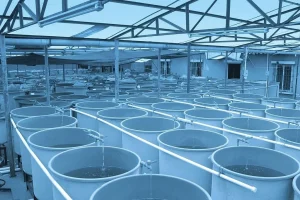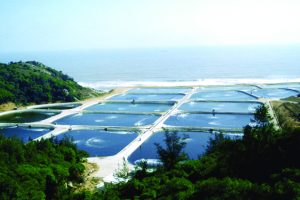

For international aquaculture customers, microbial technology cannot be explained only with simplified claims such as “improving water quality” or “reducing pathogens.” A credible B2B aquaculture microbiome solution must present a clear technical structure: production pain points, biological mechanisms, measurable indicators, standardized application workflow and field validation value. This is the core positioning of the HYGEM / GEMBIOZ aquaculture microbiome technology platform.
1. Why Aquaculture Microbiome Management Matters
Aquaculture systems are different from terrestrial livestock production. Fish, shrimp, crab and shellfish are not only influenced by feed nutrition; they are also directly exposed to water, sediment, algae, microbial communities and environmental metabolites. The water body is their living environment and also the shared space where waste, uneaten feed, organic matter decomposition, gas exchange and pathogen pressure accumulate.
When feeding volume increases and uneaten feed and feces accumulate, heterotrophic microorganisms rapidly decompose organic matter, consume dissolved oxygen and release ammonia. If the nitrification system is insufficient, sediment becomes hypoxic or the carbon-nitrogen-phosphorus balance is disrupted, nitrite may rise quickly and create physiological stress for fish and shrimp. When pH, alkalinity, algae and dissolved oxygen fluctuate at the same time, the entire pond becomes more vulnerable to instability.
In this context, Vibrio, Aeromonas and other opportunistic pathogens usually do not act alone. They interact with water quality pressure, organic load, anaerobic sediment, gut imbalance and host immune stress. Therefore, pathogen pressure control should not rely only on single disinfection events or antibiotic-centered thinking. It should return to microbiome stability, water quality monitoring, nutrition management and practical farm operation workflows.
2. Scientific Mechanisms: The Triangular Relationship Between Water, Gut and Pathogen Pressure
The core of aquaculture microbiome management is not to pursue “complete sterilization,” but to establish a more stable, recoverable and monitorable farming environment. HYGEM / GEMBIOZ can organize its technical logic into three connected layers: water microbiome, gut microbiome and pathogen pressure management.
1. Water Probiotics and Organic Load Control
Water-applied microorganisms may participate in the decomposition of uneaten feed, feces, suspended organic matter and sediment organic matter, helping reduce the accumulation of organic load. Selected Bacillus, photosynthetic bacteria, nitrification-related microbial groups and compound microbial systems may participate in organic matter transformation, ammonia oxidation, nitrite control, sediment metabolism and water stability.
However, the effect of water microbiome products cannot be discussed separately from field conditions. Low dissolved oxygen, excessive pH fluctuation, insufficient alkalinity, sudden temperature change, overfeeding or long-term blackened sediment may all limit microbial function. Therefore, water-quality microbial products must be paired with water indicator tracking and standardized application strategy, rather than being treated as one-time treatment tools.
2. Gut Probiotics and Digestive-Immune Support
Feed-applied or gut-targeted probiotics may support digestive enzyme activity, gut barrier function, nutrient absorption, antioxidant capacity and immune readiness. For shrimp and fish, gut microbiome balance is closely connected with feeding behavior, growth, feed conversion ratio, stress resistance and pathogen pressure. When the gut microbiota remains stable, aquatic animals are more likely to maintain normal feeding and digestion and better tolerate pond transfer, water exchange, high temperature, low oxygen or background pathogen pressure.
These effects should not be described as disease treatment. They should be positioned as support for gut health and production stability. For HYGEM / GEMBIOZ, feed-applied microbiome solutions can complement water-applied solutions: the water side reduces environmental pressure, while the gut side strengthens host resilience. Together, they reduce system-level risk.
3. Microbial Competition and Vibrio Pressure Management
Vibrio pressure in aquaculture is often associated with organic load, salinity, temperature, sediment condition, water nutrient status and host stress. When excessive available organic matter, hypoxic sediment, low dissolved oxygen or rapid algae fluctuation occurs, opportunistic pathogens may more easily gain a competitive advantage.
A stable microbial community may reduce the opportunity for opportunistic pathogens to expand rapidly through nutrient competition, spatial competition, organic acids and other metabolite modulation, environmental stabilization and biofilm structure regulation. This is not absolute sterilization. It is microbiome-based pressure management. For international markets, this wording is more aligned with scientific and regulatory logic and is easier for large aquaculture companies to accept.
3. Water Nitrogen Cycle: From Organic Load to Ammonia, Nitrite and Nitrate
Nitrogen metabolism is one of the most important biochemical axes in aquaculture microbiome management. Organic nitrogen from uneaten feed, feces and dead algae is converted into ammonia through microbial activity. In water, ammonia exists as NH₃ and NH₄⁺, and the unionized ammonia NH₃ is more toxic to fish and shrimp. Its proportion is influenced by pH and temperature. When the nitrification system is stable, ammonia can be converted into nitrite and then further converted into nitrate. In localized hypoxic microenvironments, part of the nitrate can be converted into nitrogen gas through denitrification.
Therefore, if the GEMBIOZ aquaculture solution aims to build scientific credibility, it should not simply say “reduce ammonia” or “improve water quality.” It should simultaneously track ammonia, nitrite, nitrate, dissolved oxygen, pH, alkalinity, organic load and sediment condition. Only by placing these indicators in the same water metabolism map can we evaluate whether microbial application truly supports pond metabolic stability.
| Management Dimension | Measurable Indicators and Field Meaning |
|---|---|
| Water Stability | Ammonia, nitrite, nitrate, pH, alkalinity, dissolved oxygen, transparency and algae profile are used to determine whether the pond is in a stable metabolic state. |
| Organic Load | Uneaten feed, feces, suspended solids, COD, blackened sediment, sediment odor and foam reflect microbial decomposition pressure and hypoxia risk. |
| Pathogen Pressure | Vibrio count, total bacterial count, opportunistic pathogen ratio, gut microbiota, reduced feeding and mortality can be used to build early risk monitoring. |
| Production Performance | Survival rate, FCR, daily growth, uniformity, market size and harvest weight translate microbiome management into customer-relevant business value. |
4. R&D Validation Framework: From Water Data to Product Credibility
A high-quality aquaculture microbiome R&D article cannot only state that a product “improves water quality” or “reduces Vibrio.” It must explain which indicators are tracked, why those indicators matter and how treatment groups can be compared with control groups under real production conditions. HYGEM can organize the GEMBIOZ aquaculture microbiome platform into four validation modules: water stability, pathogen pressure, gut health and production performance.
| Validation Module | Detection Tools | Core Indicators | Product Development Value |
|---|---|---|---|
| Water Stability | Field water test kits, photometers, continuous sensors, laboratory water analysis | Ammonia, nitrite, nitrate, pH, alkalinity, dissolved oxygen, transparency | Build a measurable link between water microbial application and water stability. |
| Organic Load and Sediment | COD, sediment sampling, oxidation-reduction potential, odor and blackening score | COD, TSS, sediment blackening, foam, odor, anaerobic zones | Evaluate whether the product supports the transformation of feed residue, feces and sediment organic matter. |
| Pathogen Pressure | TCBS culture, qPCR, microbiome analysis, pathogen risk grading | Vibrio count, total bacteria, Vibrio / total bacteria ratio, opportunistic pathogen proportion | Support pathogen pressure management and early warning models. |
| Gut Health | Histology, 16S rRNA sequencing, digestive enzyme assays, immune indicators | Gut structure, microbiota diversity, digestive enzymes, antioxidant and immune-related indicators | Build evidence for feed-applied probiotics or postbiotics in gut support. |
| Production Performance | Batch records, feeding records, harvest data, economic model | Survival rate, FCR, daily growth, uniformity, market size, unit cost | Translate microbiome changes into ROI language that farmers and distributors can understand. |
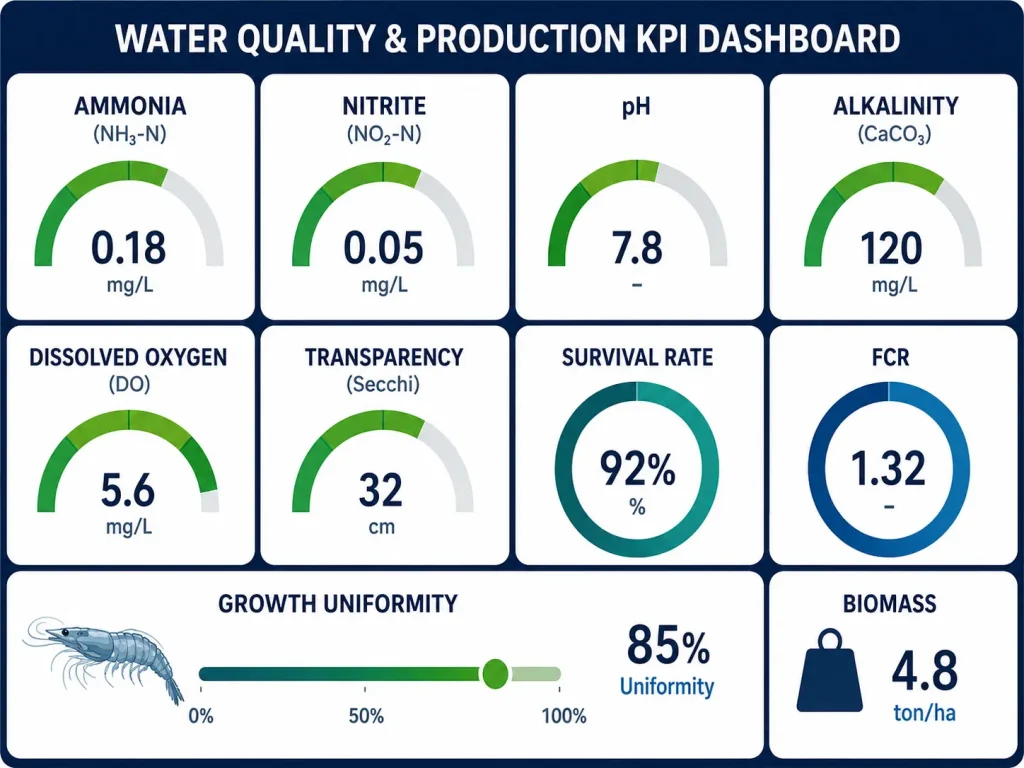
5. HYGEM / GEMBIOZ Technology Perspective: From Single Product to Pond Microbiome Management Workflow
GEMBIOZ aquaculture solutions should not be positioned as a single water-quality product or a single feed additive. They should be presented as a pond microbiome management workflow. This workflow can combine water application, feed application, stress-period intervention, sediment management and rapid field monitoring to form a more complete aquaculture health resilience solution.
For HYGEM, the strongest international communication point is to show how microbial technology is screened, manufactured, applied and validated. This includes functional strain screening, fermentation stability, postbiotic development, water-quality indicator tracking, Vibrio pressure monitoring and field KPI validation. When these data are organized into product dossiers, field trial reports and distributor training materials, GEMBIOZ becomes more than a product name. It becomes an aquaculture microbiome platform with scientific credibility and commercial execution capability.
| Application Stage | Microbiome Operation Focus | Field Observation Indicators |
|---|---|---|
| Before Stocking | Water microbial preparation, sediment management, algae and alkalinity stabilization | Transparency, daily pH fluctuation, dissolved oxygen, ammonia, sediment odor |
| Early Culture Stage | Establish stable beneficial microbial communities and reduce early water fluctuation | Feeding, vitality, gut fullness, total bacterial count and Vibrio pressure |
| Rapid Growth Stage | Adjust with feeding volume to control organic load and nitrogen metabolism pressure | Ammonia, nitrite, COD, sediment blackening, FCR |
| High Temperature or Low Oxygen Period | Strengthen dissolved oxygen management and microbiome support during stress periods | Nighttime dissolved oxygen, surface gasping, reduced feeding, mortality, pH fluctuation |
| Before Harvest | Maintain water stability, reduce pathogen pressure and minimize stress fluctuation | Size uniformity, survival rate, market weight, pond bottom condition |
6. Application Scenarios and Market Value
This topic can be used for distributor education, technical articles, product pages, field trial reports, exhibition materials and customer training. For shrimp farming, the focus may include Vibrio pressure, sediment organic load, white feces risk, water nitrogen metabolism and survival rate. For fish farming, the focus may include water stability, gut health, feed efficiency and stress resilience. For recirculating aquaculture systems, the topic can extend to nitrification systems, biofilter beds, sensor data and precision microbiome control.
In SEO and international B2B communication, the article should naturally cover aquaculture microbiome management, HYGEM, GEMBIOZ microbiome technology, microbial fermentation, field validation, sustainable agriculture, precision application and aquaculture health resilience. The writing should remain professional, readable and suitable for international market communication.
More importantly, HYGEM should not sell aquaculture microbiome products only as “water quality improvers.” It should establish a replicable customer adoption workflow: field diagnosis, indicator testing, microbiome intervention, KPI tracking, ROI analysis and long-term database accumulation. This allows the product to move from one-time procurement into long-term technical service and brand trust.
Conclusion: Building Pond Resilience Through Microbiome Management, Not Single-Point Treatment
Aquaculture microbiome management is not only an article topic. It is an important content asset for HYGEM / GEMBIOZ to build a science-driven microbiome brand position. By connecting water quality, gut health, organic load, pathogen pressure and production KPIs, HYGEM can translate microbial technology from abstract benefits into measurable, validated and executable international B2B solutions.
Truly stable aquaculture does not depend on single disinfection events or single-point treatment. It depends on a microbial ecosystem that can continuously metabolize organic load, reduce nitrogen pressure, maintain gut health, suppress the dominance of opportunistic pathogens and restore balance quickly. This is the most important scientific value and market position of the GEMBIOZ aquaculture microbiome platform.
Further Reading
- HYGEM Animal BioSolutions
- HYGEM Integrated Microbial Bioengineering Platform
- GEMBIOZ Microbiome Solutions
- Scientific Research Articles
Scientific References / Disclaimer
FAO. The State of World Fisheries and Aquaculture 2024. Blue Transformation in Action.
WOAH. Aquatic Animal Health Code. Standards for aquatic animal health, disease control, diagnosis, safe trade and biosecurity.
Rahayu et al., Frontiers in Marine Science, 2024. Probiotics application in aquaculture: potential effects, current status and future directions.
Ren et al., Frontiers in Microbiology, 2021. Multi-Strain Tropical Bacillus spp. as a Potential Probiotic Biocontrol Agent for Large-Scale Enhancement of Mariculture Water Quality.
Yun et al., Frontiers in Bioengineering and Biotechnology, 2022. Microbial communities in shrimp farms using biofloc technology and nitrogen control.
Scientific reference directions also include peer-reviewed studies on Bacillus, Lactobacillus, nitrifying bacteria, denitrifying bacteria, Vibrio pressure, ammonia, nitrite, pond microbiome management, biofloc systems and aquaculture water quality monitoring.
Disclaimer: This article is intended for scientific communication and educational purposes only. HYGEM / GEMBIOZ microbiome technologies are positioned as aquaculture health resilience and water-quality management support tools. They should not be interpreted as disease treatment, guaranteed pathogen elimination, or replacement for veterinary diagnosis, official aquatic animal health measures, biosecurity, responsible farm management or local regulatory requirements.