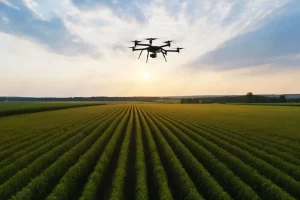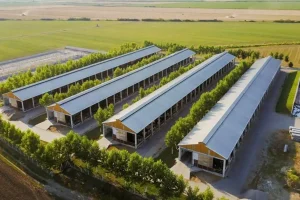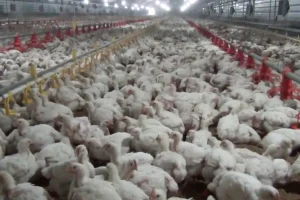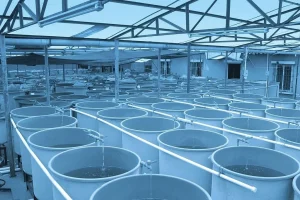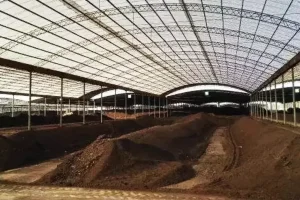

Next-generation microbial platforms integrate AI strain screening, synthetic microbial communities, metabolomics, sequencing, and field validation to create precision solutions for agriculture and animal nutrition.
Introduction: From Traditional Microbes to Precision Microbiome Technology
Microbial technology is entering a new era. In the past, microbial products were often developed through traditional isolation, fermentation, and field experience. While these methods created important foundations for probiotics, biofertilizers, and fermentation-based solutions, modern agriculture and animal production now require a more precise, data-driven, and application-specific approach.
Today, global agriculture faces increasing pressure from antibiotic reduction, feed cost volatility, soil degradation, climate stress, food safety requirements, and sustainability goals. In response, next-generation microbial platforms are transforming how beneficial microorganisms are discovered, evaluated, combined, manufactured, and validated in real production systems.
At HYGEM, we view microbial innovation not as a single product technology, but as an integrated platform. By combining artificial intelligence, strain libraries, multi-omics analysis, synthetic microbial communities, fermentation engineering, and field validation, we aim to develop precision microbiome solutions for animal nutrition, plant health, environmental improvement, and sustainable production.
Why Next-Generation Microbial Platforms Matter
Agriculture and animal nutrition are complex biological systems. Animal performance is influenced by gut microbiota, digestion, immunity, pathogen pressure, feed composition, environmental stress, and management conditions. Crop productivity is shaped by soil microbiota, rhizosphere interactions, nutrient availability, root health, climate stress, and disease pressure.
Because these systems are highly dynamic, simple “one strain, one function” thinking is no longer sufficient. A next-generation microbial platform must answer deeper questions:
Which strains perform best under specific application conditions?
How do microorganisms interact with each other and with the host or plant?
What metabolites are produced during fermentation or after application?
How can microbial functions be verified through sequencing, metabolomics, and field data?
How can laboratory discoveries be translated into stable, scalable, and commercially reliable solutions?
The future of microbial technology depends on building a closed-loop innovation system—from discovery to validation, and from field feedback back to product optimization.
AI-Driven Strain Screening: Accelerating Microbial Discovery
Artificial intelligence is changing the way microbial strains are selected and developed. Traditional microbial screening often depends on repeated laboratory testing, which can be time-consuming and limited in scale. AI-assisted screening enables researchers to analyze large datasets, including strain characteristics, genomic potential, enzyme activity, metabolite production, stress tolerance, antimicrobial activity, and application performance.
For animal nutrition, AI screening can support the identification of strains with potential benefits in feed digestibility, intestinal barrier function, immune modulation, pathogen inhibition, and heat stress resilience.
For precision agriculture, AI can help identify microorganisms associated with root development, nutrient solubilization, nitrogen cycling, phosphate availability, disease suppression, and tolerance to drought or salinity stress.
By combining biological data with computational analysis, AI-driven strain screening allows microbial R&D to move from experience-based selection toward predictive and targeted discovery.
Synthetic Microbial Communities: Designing Functional Microbiome Systems
In natural environments, microorganisms rarely act alone. They function as communities, exchanging metabolites, modifying local environments, competing with pathogens, and supporting host or plant physiology. This is why synthetic microbial communities are becoming a key direction in next-generation microbial platforms.
A synthetic microbial community is not a random mixture of strains. It is a designed consortium built with functional logic. Each strain may contribute a specific role, such as enzyme secretion, organic acid production, antimicrobial compound generation, biofilm formation, nutrient transformation, or immune signaling.
In animal nutrition, synthetic communities may support:
Improved breakdown of protein, fiber, starch, and phosphorus-bound nutrients.
Balanced gut microbiota and reduced pathogen colonization.
Enhanced short-chain fatty acid production and intestinal health.
More stable performance under stress conditions.
In agriculture, synthetic communities may support:
Rhizosphere activation and root growth.
Phosphorus and micronutrient solubilization.
Improved soil microbial diversity.
Disease suppression and plant stress tolerance.
Through synthetic community design, microbial products can become more stable, multifunctional, and adaptable to real-world production systems.
Metabolomics: Understanding What Microbes Actually Produce
Microbial function is not defined only by which strains are present. It is also defined by what they produce.
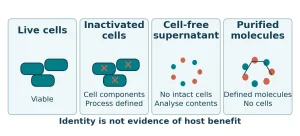
Metabolomics allows researchers to analyze microbial metabolites such as organic acids, amino acids, peptides, short-chain fatty acids, extracellular polysaccharides, antimicrobial compounds, nucleotides, and other functional molecules. These metabolites often explain the actual biological effects observed in animals, plants, and fermentation systems.
For animal nutrition, metabolomics can help clarify how microbial products influence digestion, nutrient absorption, gut barrier function, immune response, and metabolic efficiency.
For plant systems, metabolomics can reveal how microbial applications affect root exudates, soil nutrient cycling, plant defense signaling, and growth-promoting compounds.
For postbiotic and fermentation-based products, metabolomics provides a scientific foundation for quality control, functional positioning, and product differentiation.
By integrating metabolomics into microbial platform development, HYGEM can move beyond simple colony counts and build a deeper understanding of microbial performance.
Sequencing and Microbiome Analysis: Reading the Biological System
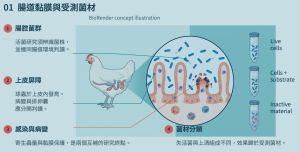
Sequencing technology has become essential for understanding complex microbial ecosystems. Through 16S rRNA sequencing, metagenomics, and strain tracking, researchers can observe how microbial products influence gut microbiota, soil microbial communities, fermentation systems, and environmental microbiomes.
In animal applications, sequencing can be used to evaluate changes in beneficial bacteria, potential pathogens, microbial diversity, and gut ecosystem stability. This is especially valuable in antibiotic-free production, where maintaining microbial balance is critical for animal health and performance.
In plant and soil applications, sequencing can help evaluate changes in rhizosphere microbiota, beneficial microbial enrichment, disease-associated organisms, and soil ecosystem resilience.
Sequencing also supports strain traceability. This is important for verifying whether selected microbial strains can survive, colonize, or influence the target environment after application.
With sequencing-based validation, microbial products can be developed and positioned with stronger scientific evidence.
Field Validation: Closing the Gap Between Laboratory and Real Production
Laboratory performance does not always guarantee field success. Temperature, feed composition, water quality, soil condition, disease pressure, farm management, and regional differences can all influence microbial product performance.
This is why field validation is a core part of next-generation microbial platforms.
For animal nutrition, field validation may include indicators such as feed conversion ratio, average daily gain, survival rate, egg production, diarrhea rate, intestinal health, immune indicators, pathogen pressure, and production cost efficiency.
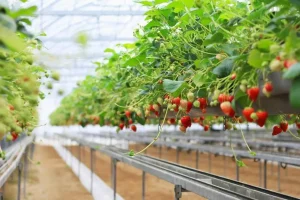
For crop applications, validation may include germination rate, root development, nutrient uptake, disease incidence, yield, fruit quality, soil health, and stress tolerance.
For aquaculture, validation may include water quality, survival rate, feed efficiency, pathogen control, pond stability, and harvest performance.
A true microbial platform must create a feedback loop. Field data should not only prove product value—it should also guide future strain selection, formulation design, dosage optimization, and application strategy.
Building a Closed-Loop Microbial Innovation System
The next stage of microbial technology is not simply about discovering more strains. It is about building a closed-loop platform that connects science, production, and real-world application.
At HYGEM, this platform can be understood through five connected layers:
1. AI Strain Screening
Identifying high-potential microorganisms through data-driven analysis.
2. Multi-Omics Characterization
Using genomics, metabolomics, and microbiome analysis to understand function and mechanism.
3. Synthetic Community Design
Combining strains into stable, targeted, and multifunctional microbial systems.
4. Fermentation and Manufacturing Optimization
Ensuring microbial stability, activity, scalability, and product consistency.
5. Field Validation and Feedback
Testing solutions in real production environments and using results to improve the next generation of products.
This closed-loop model allows microbial technology to become more precise, more reliable, and more aligned with modern agricultural and animal nutrition challenges.
Applications in Precision Animal Nutrition
In animal nutrition, next-generation microbial platforms can support the transition from conventional feed additives to precision microbiome nutrition.
Potential application areas include:
Digestibility Enhancement
Microbial enzymes and metabolites can support the breakdown of protein, fiber, starch, and mineral-bound nutrients, helping improve feed utilization.
Gut Health and Immunity
Beneficial microorganisms and postbiotic metabolites can support intestinal barrier integrity, immune balance, and microbial ecosystem stability.
Antibiotic-Free Production
Microbial solutions can help reduce reliance on antibiotic growth promoters by supporting competitive exclusion, organic acid production, antimicrobial activity, and gut microbiota balance.
Stress Resistance
Microbiome-based solutions may support animals during heat stress, weaning, transportation, stocking density pressure, and dietary transitions.
Sustainability and ESG Performance
Improved nutrient utilization may help reduce nitrogen and phosphorus waste, lower environmental pressure, and improve production efficiency.
Through precision microbial nutrition, animal production can become healthier, more efficient, and more sustainable.
Applications in Precision Agriculture
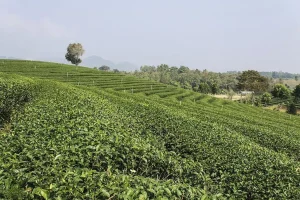
In crop production, next-generation microbial platforms can help transform soil and plant management from chemical-input dependence toward biological regulation.
Potential application areas include:
Rhizosphere Activation
Beneficial microorganisms can interact with plant roots and support a more active root-zone ecosystem.
Nutrient Availability
Microbial functions may support phosphorus solubilization, nitrogen transformation, organic matter decomposition, and micronutrient availability.
Root Development
Microbial metabolites can help promote root growth, root hair formation, and nutrient absorption capacity.
Disease Suppression
Selected microbial communities may help compete with soil-borne pathogens and support plant defense responses.
Abiotic Stress Tolerance
Microbial technologies may improve plant resilience under drought, salinity, temperature stress, and poor soil conditions.
As agriculture moves toward sustainability, microbial platforms will become an essential part of soil health, crop productivity, and regenerative production systems.
From Microbial Products to Microbiome Intelligence
The future of microbial technology is not limited to selling microbial products. It is about building microbiome intelligence.
Microbiome intelligence means understanding which microbial functions are needed, which strains can deliver those functions, how they interact in complex ecosystems, and how their performance can be measured in real production systems.
This shift is important for both agriculture and animal nutrition. It allows companies, farms, and producers to make decisions based on biological data rather than assumptions.
With AI, sequencing, metabolomics, synthetic communities, and field validation, microbial technology can evolve into a precision platform that supports productivity, health, and sustainability at the same time.
HYGEM’s Vision: Precision Microbiome Solutions for a Sustainable Future
HYGEM is committed to advancing microbial technology from traditional fermentation toward next-generation microbiome platforms. Our goal is to develop practical, science-based, and scalable solutions for animal nutrition, plant health, environmental management, and industrial biotechnology.
By integrating AI-driven discovery, multi-omics analysis, synthetic microbial community design, fermentation engineering, and field validation, HYGEM aims to create microbial solutions that are not only innovative in the laboratory, but also effective in real-world production.
The future of agriculture and animal nutrition will be shaped by biological precision. Microorganisms are no longer invisible background players. They are active partners in improving feed efficiency, animal health, soil vitality, crop resilience, and environmental sustainability.
Next-generation microbial platforms represent a new foundation for precision agriculture and animal nutrition—and HYGEM is building that future through microbiome science, engineering, and field-proven innovation.