

From Fermentation Process to Stable Microbial Formulation
Stable microbial products depend on strain activation, fermentation control, metabolite quality, drying technology, and formulation stability.
Introduction: Stability Is the Foundation of Microbial Product Performance
Microbial technology is becoming an essential part of modern agriculture, animal nutrition, aquaculture, environmental management, and sustainable biotechnology. However, the value of a microbial product does not depend only on the strain name or the initial colony count. A truly reliable microbial solution must remain active, stable, consistent, and functional from production to storage, transportation, and final application.
This is why the journey from fermentation process to stable microbial formulation is one of the most important technical foundations in the microbial industry.
At HYGEM, we understand that microbial product development is not simply about growing microorganisms. It requires a complete biotechnology system that integrates strain activation, fermentation control, metabolite production, drying technology, carrier selection, formulation design, quality assurance, and application validation.
Stable microbial products are built through process science.
Why Stability Matters in Microbial Products
Microbial products are living or biologically active systems. Their performance can be affected by temperature, moisture, oxygen, pH, pressure, storage time, feed processing, water quality, soil conditions, and application methods. Without strong formulation stability, even a high-quality strain may lose activity before it reaches the target environment.
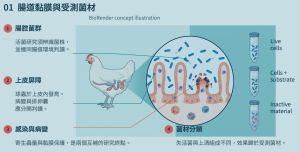
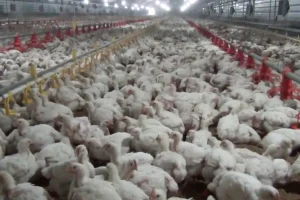
In animal nutrition, poor microbial stability may reduce the product’s ability to support gut microbiota balance, feed digestibility, immune function, and pathogen control.
In crop production, unstable microbial products may fail to maintain sufficient activity in the rhizosphere, soil, or leaf surface.
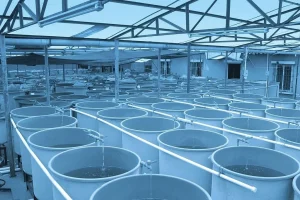
In aquaculture, stability is especially important because microbial products must withstand complex water environments, organic load, temperature changes, and microbial competition.
Therefore, microbial formulation stability is not only a manufacturing issue. It directly determines field performance, customer trust, product positioning, and commercial value.
Strain Activation: Preparing Microorganisms for High-Performance Fermentation
Every stable microbial product begins with strain activation.
Before large-scale fermentation, microbial strains must be recovered from preserved cultures and gradually activated under controlled conditions. This step ensures that the microorganisms enter a strong physiological state before production.
Strain activation may involve optimization of culture medium, incubation temperature, oxygen level, pH, growth phase, and seed culture timing. The goal is to prepare a healthy and active seed culture with strong growth potential, stable morphology, and predictable fermentation behavior.
For bacterial probiotics, activation helps ensure rapid growth and high viable cell density during fermentation.
For spore-forming bacteria, activation and seed preparation influence sporulation efficiency, stress resistance, and final product stability.
For yeast and fungal strains, activation affects biomass formation, enzyme secretion, metabolite production, and fermentation consistency.
A strong seed culture system reduces batch variation and lays the foundation for stable industrial production.
Fermentation Control: Turning Microbial Growth into Scalable Biotechnology
Fermentation is the core process that transforms selected strains into microbial biomass and functional metabolites. However, successful fermentation requires precise control of multiple parameters.
Key fermentation control factors include:
Temperature
Temperature influences microbial growth rate, enzyme activity, metabolite production, and stress tolerance.
pH
pH control affects nutrient uptake, organic acid production, enzyme secretion, and cell survival.
Dissolved Oxygen
Aerobic, facultative anaerobic, and anaerobic microorganisms require different oxygen strategies. Proper aeration and agitation are essential for stable performance.
Nutrient Supply
Carbon sources, nitrogen sources, minerals, growth factors, and fermentation substrates must be designed according to strain physiology and target functions.
Fermentation Time
Harvest timing determines whether the product is optimized for viable cell count, spore formation, metabolite production, or functional activity.
Contamination Control
Microbial purity is critical. Production systems must prevent contamination from unwanted bacteria, fungi, or environmental microorganisms.
Through controlled fermentation, microbial production becomes more than cultivation. It becomes an engineered process for consistent biological performance.
Metabolite Quality: The Functional Signature of Fermentation
Microbial products are not defined only by viable cell counts. Many important biological effects are also linked to fermentation-derived metabolites.
These metabolites may include organic acids, peptides, amino acids, enzymes, short-chain fatty acids, extracellular polysaccharides, antimicrobial compounds, nucleotides, vitamins, and signaling molecules.
In animal nutrition, fermentation metabolites may support digestion, gut health, immune balance, pathogen inhibition, and nutrient utilization.
In plant applications, metabolites may support root development, nutrient solubilization, stress tolerance, and disease suppression.
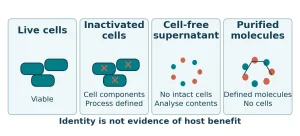
In postbiotic products, metabolite quality becomes the core functional indicator because the product’s value depends on biologically active compounds rather than live microbial colonization alone.
This is why metabolite profiling and quality control are becoming increasingly important in modern microbial manufacturing. Stable fermentation must generate not only sufficient biomass, but also consistent functional metabolites.
Drying Technology: Protecting Microbial Viability and Function
Drying is one of the most technically challenging steps in microbial product manufacturing. During drying, microorganisms may face heat stress, dehydration stress, oxidative stress, osmotic pressure, and membrane damage.
The choice of drying technology directly affects final viability, shelf life, solubility, flowability, and field performance.
Common drying technologies include:
Spray Drying
Suitable for scalable production, but requires careful control of inlet temperature, outlet temperature, drying time, and protective agents.
Freeze Drying
Gentler for sensitive microorganisms, but usually more expensive and less suitable for some large-scale agricultural applications.
Fluidized Bed Drying
Useful for granulation, coating, and improving powder properties.
Low-Temperature Drying
Helps protect heat-sensitive strains and metabolites.
Solid-State Drying
Can be applied in certain fermented feed, enzyme, or fungal fermentation systems.
Protective agents such as sugars, proteins, polysaccharides, minerals, and stabilizers may be used to protect cell membranes, proteins, and spore structures during drying.
For probiotic and microbial feed additive products, drying technology is not only a production step. It is a biological preservation strategy.
Formulation Stability: Designing Products for Real-World Conditions
After fermentation and drying, microorganisms must be formulated into a stable commercial product. This includes selection of carriers, excipients, moisture control, particle size, solubility, coating methods, packaging, and compatibility with application systems.
A stable formulation should maintain microbial activity during storage and transportation while also supporting ease of use in feed mills, farms, water systems, soil applications, or industrial processes.
Important formulation factors include:
Moisture Control
Excess moisture can reduce shelf life and increase microbial degradation. Low water activity is essential for many powdered microbial products.
Carrier Compatibility
Carriers must protect microorganisms without damaging viability or interfering with product function.
Oxygen and Heat Resistance
Some strains require protection from oxygen exposure, temperature fluctuation, or processing heat.
Particle Size and Flowability
Good powder properties improve mixing uniformity and feed or fertilizer application consistency.
Solubility and Dispersion
Liquid or water-applied microbial products must disperse effectively and remain stable during use.
Packaging Protection
Packaging must reduce exposure to moisture, oxygen, light, and temperature stress.
A formulation is successful only when it protects microbial quality and delivers reliable performance under practical production conditions.
Liquid and Powder Formulations: Different Technical Challenges
Microbial products may be developed as liquid formulations, powder formulations, granules, coated particles, fermented substrates, or postbiotic concentrates. Each format has specific advantages and technical challenges.
Liquid Formulations
Liquid products are convenient for drinking water systems, spraying, aquaculture ponds, irrigation, and rapid field use. However, they require strong control of pH, microbial stability, preservative strategy, sedimentation, contamination risk, and storage conditions.
Powder Formulations
Powder products are widely used in feed additives, premixes, fertilizers, and long-distance transportation. They usually provide better shelf life, but require advanced drying, carrier protection, moisture control, and mixing stability.
Granular and Coated Formulations
Granules and coated products can improve handling, reduce dust, support controlled release, and improve resistance to processing stress.
Postbiotic Formulations
Postbiotic products focus on microbial metabolites and cellular components. Their stability depends on metabolite preservation, functional consistency, and biochemical quality control.
The ideal formulation depends on the target market, application method, strain characteristics, and performance requirements.
Quality Control: Building Trust Through Consistency
Quality control is essential for stable microbial products. A microbial product must be tested not only at the end of production, but throughout the entire manufacturing process.
Key quality indicators may include:
Viable Cell Count
Ensures that the product contains the declared level of active microorganisms.
Purity and Contamination Testing
Confirms that the product is free from unwanted microbial contamination.
Moisture and Water Activity
Evaluates shelf-life risk and powder stability.
pH and Physical Properties
Supports liquid product stability and application performance.
Metabolite Profile
Verifies functional compounds generated during fermentation.
Shelf-Life Testing
Confirms stability under defined storage conditions.
Application Compatibility
Tests product performance in feed, water, fertilizer, soil, aquaculture, or other target systems.
A strong quality control system allows microbial products to be consistent across production batches and reliable across markets.
From Production Stability to Field Performance
The final goal of microbial formulation is not only shelf stability. It is field performance.
A microbial product must survive production, remain stable during storage, and express its intended function after application. This requires connection between manufacturing data and real-world validation.
For animal nutrition, stable microbial formulations may support feed efficiency, intestinal health, immune balance, pathogen control, and antibiotic-free production.
For agriculture, stable formulations may support soil health, root development, nutrient availability, disease suppression, and climate stress tolerance.
For aquaculture, stable microbial products may support water quality, pond microbiota balance, pathogen pressure reduction, and survival rate improvement.
The best microbial products are developed through a complete chain: strain selection, fermentation optimization, formulation protection, quality control, and field validation.
HYGEM’s Approach: Engineering Stability into Microbial Innovation
At HYGEM, we believe that microbial product quality must be engineered from the beginning. Stability should not be corrected only at the final formulation stage. It must be designed across the entire development process.
Our approach connects:
Strain activation to prepare microorganisms for strong and stable production.
Fermentation control to optimize biomass, spores, enzymes, and metabolites.
Metabolite analysis to define biological function and product differentiation.
Drying technology to protect microbial viability and activity.
Formulation design to improve shelf life, handling, and application performance.
Quality assurance to maintain consistency from batch to batch.
Field validation to confirm performance under real production conditions.
This integrated system allows HYGEM to develop microbial products that are not only scientifically advanced, but also commercially reliable and practically effective.
Conclusion: Stability Creates Value
The future of microbial technology depends on stability, consistency, and application precision. A microbial product must be more than a strain in a package. It must be a carefully engineered biological system.
From strain activation to fermentation control, from metabolite quality to drying technology, and from formulation stability to field validation, every step determines the final value of a microbial solution.
As agriculture, animal nutrition, aquaculture, and environmental industries move toward biological and sustainable solutions, stable microbial formulation will become a key competitive advantage.
HYGEM is committed to building this foundation through advanced fermentation science, formulation technology, and microbiome-based innovation.
Stable microbial products create stable performance. Stable performance creates long-term trust.