
Food Security: Can Artificial Intelligence and Gene Editing Solve Global Hunger?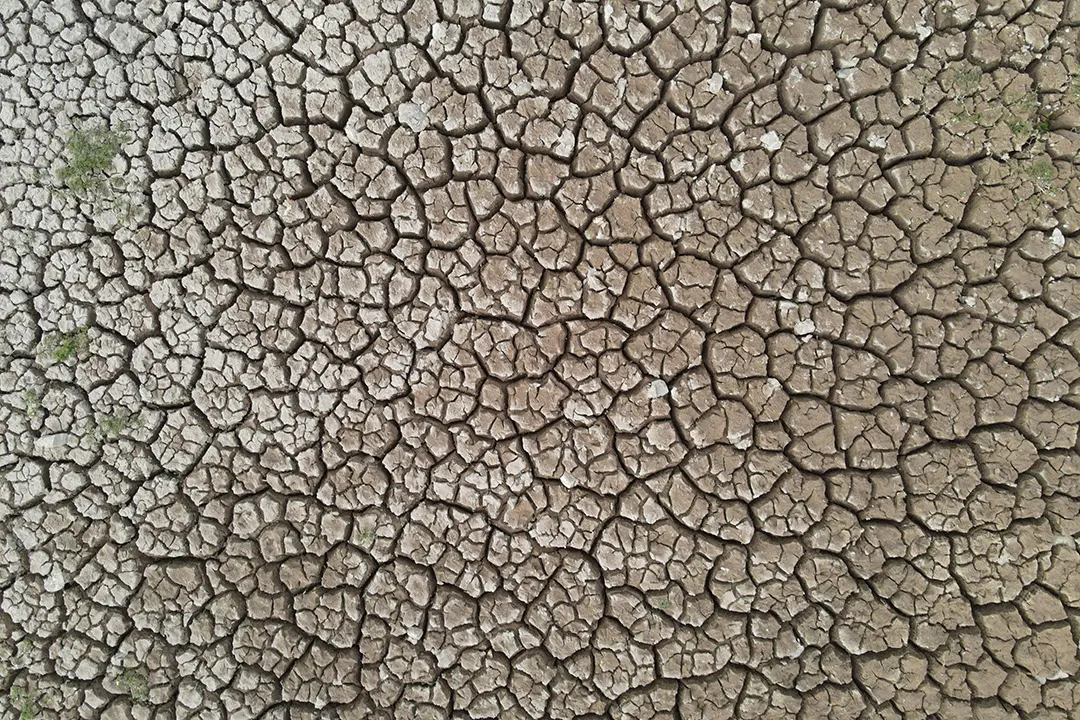
Introduction and Background: Global food security is facing multiple pressures at the same time. Population growth, extreme climate events, soil degradation, water scarcity, pest and disease pressure, and supply chain instability are all challenging agricultural production systems. Future agriculture cannot rely only on expanding farmland or increasing inputs. It must produce more food, more stable yields, and higher nutritional value under limited land, water, and fertilizer resources.
Artificial intelligence (AI) and CRISPR-Cas gene editing technologies are becoming important tools for the next generation of crop improvement. AI can rapidly identify key patterns from genomic, phenotypic, environmental, soil, climate, and field management data. Gene editing can more precisely modify genes associated with yield, drought tolerance, disease resistance, nutritional quality, and resource-use efficiency. When combined, these technologies may help crop breeding move from long-term experience-based selection toward a more precise, faster, and more predictable design-driven agriculture model.
However, AI and gene editing are not the only answers to global hunger. Food security is not only about whether enough food can be produced. It is also connected to soil health, farmer affordability, seed access, regulatory governance, consumer trust, supply chain distribution, and climate adaptation capacity. For HYGEM / GEMBIOZ, the true new era of agriculture should not be limited to crop improvement at the gene level. It should integrate AI-driven crop design, gene editing, agricultural microbiomes, and field validation.
──>
【 Climate & Resource Pressure 】
──>
【 AI Trait Prediction 】
──>
【 CRISPR Precision Breeding 】
──>
【 Microbiome-Enabled Field Resilience 】
1. The Core Challenge of Global Food Security: Not Only Yield, but Resilience
For decades, the primary goal of agricultural technology has been to increase yield per unit area. However, under accelerating climate change, yield improvement alone is no longer sufficient to support future food systems. Extreme heat, drought, flooding, disease spread, and soil degradation can affect crops during critical growth stages, causing major fluctuations in both yield and quality.
Future crops therefore need not only high yield but also stronger climate resilience. This includes drought tolerance, heat tolerance, salinity tolerance, disease resistance, pest resistance, improved nutrient efficiency, stronger root development, stable flowering and grain filling, and higher water-use efficiency. These traits are usually not controlled by a single gene. They are shaped by multiple genes, environmental conditions, soil microbiomes, and field management practices.
This explains why AI and gene editing must develop together. AI can help scientists predict which genes, regulatory regions, or metabolic pathways are most worth modifying from massive datasets. Gene editing can then translate these predictions into specific crop improvement strategies. However, for these traits to perform reliably in real fields, they must still be combined with soil management, rhizosphere microorganisms, fertilization strategies, and environmental monitoring.
2. How AI Accelerates Crop Breeding: From Data Recognition to Trait Prediction
Traditional breeding relies on extensive field observation, hybrid selection, and multi-generation screening. It often takes many years, or even more than a decade, to develop a stable variety. The value of AI lies in integrating data that were previously scattered across different systems, making breeding decisions more precise.
2.1 Integration of Genomic and Phenotypic Data
AI can simultaneously process gene sequences, transcriptomic data, metabolomic profiles, phenotypic images, soil conditions, climate data, and field management records. Through machine learning models, researchers can identify associations between specific genetic variants and drought tolerance, disease resistance, yield, root architecture, or nutritional quality. This can greatly narrow the range of candidate genes and reduce the cost of trial-and-error experimentation.
2.2 High-Throughput Phenotyping and Image Analysis
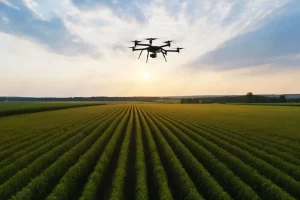
Drones, greenhouse sensors, multispectral imaging, and automated phenotyping platforms can collect large amounts of growth data under different stress conditions. AI can detect early stress responses from leaf area, canopy temperature, plant height, photosynthetic efficiency, root morphology, and water status. This allows breeding programs to move beyond single harvest-time yield measurements and continuously monitor crop development throughout the growth cycle.
2.3 Gene Editing Target Selection and Off-Target Risk Prediction
In CRISPR applications, AI can also be used to design guide RNA, predict editing efficiency, reduce potential off-target risks, and select more suitable gene targets. This makes AI not only a data analysis tool but also an increasingly important component of the gene editing design workflow.
3. CRISPR Gene Editing: From Random Breeding to Precise Trait Regulation
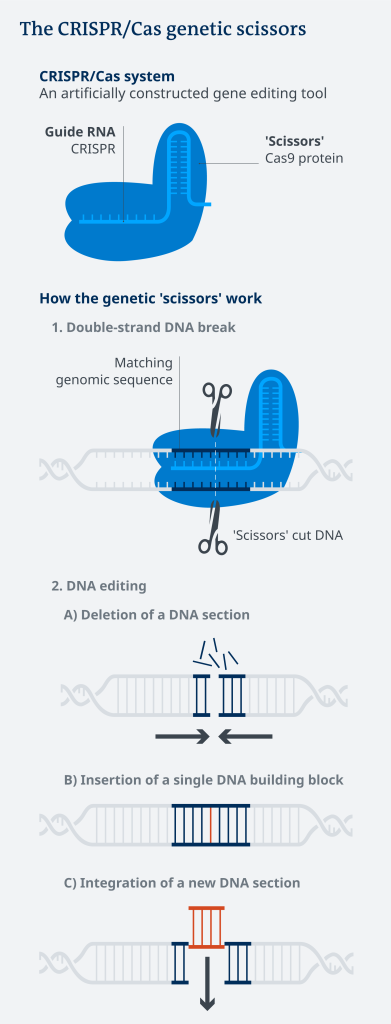
Gene editing is different from traditional genetic modification. Conventional genetic engineering often involves the introduction of foreign genes, while many new gene editing technologies can delete, replace, regulate, or make small changes to a crop’s own genes without introducing foreign DNA. This gives certain gene-edited crops a different regulatory and communication basis from traditional GMOs.
CRISPR-Cas technology can be viewed as a precise molecular tool. It can help researchers validate gene function more quickly and can be used to develop crops with drought tolerance, heat tolerance, disease resistance, reduced browning, higher nutritional content, or improved processing quality. Compared with traditional hybrid breeding, which requires long-term backcrossing and trait stabilization, gene editing can validate specific genes or regulatory regions in a much shorter period.
| Technology Direction | Agricultural Problems Addressed | Scientific and Market Value |
|---|---|---|
| Drought and Heat Tolerance | Yield instability caused by drought, high temperature, and extreme climate events | Supports climate-resilient agriculture and reduces yield fluctuation under environmental stress. |
| Disease and Pest Resistance | Losses caused by viral, fungal, bacterial, and insect pressure | May reduce partial pesticide dependence and improve crop protection efficiency. |
| Nutritional Quality Improvement | Insufficient protein, trace minerals, vitamins, and functional compounds | Moves agriculture from “feeding enough” toward “feeding better,” supporting nutritional security. |
| Post-Harvest Loss Reduction | Browning, softening, spoilage, and processing losses | Reduces food waste and improves supply chain efficiency. |
| Resource-Use Efficiency | Increasing pressure from water, nitrogen, phosphorus, and fertilizer inputs | Improves output per unit of resource and reduces the environmental burden of agriculture. |
4. AI and Gene Editing Still Cannot Solve Hunger Alone
Even though AI and CRISPR can greatly accelerate crop R&D, they still cannot solve global hunger on their own. Hunger is caused by poverty, conflict, insufficient infrastructure, supply chain disruption, food price volatility, policy failure, and lack of farmer resources. Improved crop varieties can increase production potential, but without seed access, technical services, irrigation, storage, logistics, financial support, and fair distribution, scientific progress may not translate into real food security.
Gene-edited crops also face challenges related to social acceptance, intellectual property rights, seed monopoly concerns, labeling rules, ecological impact, and cross-border trade. Different countries define and regulate new breeding technologies differently, which affects product development speed, market entry, and international cooperation models.
Therefore, the more complete answer is that AI and gene editing can become important tools for food security, but they must work together with sustainable agriculture, soil health, microbiome technologies, farmer education, open data, regulatory governance, and supply chain improvement.
5. HYGEM Perspective: An Integrated Platform from Crop Genes to Rhizosphere Microbiomes
For HYGEM / GEMBIOZ, AI and gene editing represent an upgrade in agricultural R&D methods, while microbiome technology serves as a critical bridge that helps crops perform reliably under real field conditions. Crop genes define potential, but soil and rhizosphere microbiomes determine whether that potential can be expressed under stress environments.
Rhizosphere microorganisms can participate in nutrient solubilization, nitrogen-phosphorus-potassium transformation, plant hormone regulation, stress-response signaling, pathogen competition, and soil structure improvement. When AI can analyze crop genotype, soil data, climate data, and microbial community data together, HYGEM can further establish a precision application model for “crop-soil-microbe” systems, designing more suitable microbiome solutions for different crops, soils, and climate zones.
──>
【 AI Phenotype Prediction 】
──>
【 Rhizosphere Microbiome 】
──>
【 Nutrient & Stress Efficiency 】
──>
【 Field Resilience & Food Security 】
6. R&D Validation Framework HYGEM Can Establish
To truly transform AI, gene editing, and agricultural microbiome technologies into an international technology platform, HYGEM needs to establish a validation framework that connects data, experiments, and field applications. This framework should not pursue conceptual innovation alone. It should be capable of producing product dossiers, field trial reports, distributor education content, and regulatory-compliant communication language.
| Validation Module | Core Tools | Tracking Indicators | Product Development Value |
|---|---|---|---|
| AI Trait Prediction | Genomic data, phenotypic imaging, climate data, soil data, machine learning models | Drought tolerance, root architecture, yield, disease risk, nutrient efficiency | Narrows candidate traits and application scenarios, improving R&D efficiency. |
| Gene Function Validation | CRISPR, transcriptomics, metabolomics, gene expression analysis | Candidate gene expression, metabolic pathways, stress-response signaling | Builds mechanistic evidence for crop trait design. |
| Rhizosphere Microbiome Design | 16S / ITS, metagenomics, strain screening, synthetic microbial consortia | PGPR, phosphate and potassium solubilization, nitrogen fixation, IAA, ACC deaminase, pathogen competition | Establishes microbiome-based support strategies for crop resilience. |
| Greenhouse and Field Validation | Pot trials, greenhouse stress models, field trials, sensors | Yield, water-use efficiency, fertilizer-use efficiency, disease incidence, soil health | Transforms laboratory mechanisms into real agricultural value. |
| Regulatory and Market Translation | Compliance review, product dossiers, customer education, ESG indicators | Safety, traceability, product claim boundaries, carbon and resource efficiency | Supports international market entry and B2B cooperation. |
7. From High-Yield Crops to Sustainable Food Systems
The future of global food security will not depend on a single super crop or a single technology company. A truly sustainable solution must integrate crop genetic improvement, soil microbiomes, agricultural management, supply chain efficiency, food waste reduction, and nutrition policy into one system.
AI can help humans understand complex data faster. Gene editing can accelerate crop trait validation. Microbiome technologies can help plants grow more consistently under real soil and climate pressure. Only by combining these three can agriculture move from “high yield” toward the next generation of farming: high resilience, high nutritional value, and low resource consumption.
For HYGEM / GEMBIOZ, this represents a clear technical direction: building data-driven crop and microbial screening platforms with AI, supporting rhizosphere functions through microbial fermentation and synthetic microbial consortia, and establishing international customer trust through field validation. Ultimately, this can form a scalable portfolio of sustainable agricultural BioSolutions.
Conclusion: AI and Gene Editing Are Tools; Microbiomes and Governance Determine Real-World Impact
Can artificial intelligence and gene editing solve global hunger? The answer is not simply “yes” or “no.” They can greatly accelerate crop improvement and create new possibilities for drought-tolerant, high-yielding, disease-resistant, and nutrient-rich crops. However, global hunger is a systemic issue involving climate, land, water, poverty, conflict, supply chains, and governance.
Therefore, AI and gene editing should be viewed as key tools within the food security solution, not as the only solution. Only when they are integrated with soil microbiomes, precision agriculture, affordable farmer technologies, transparent regulation, and sustainable supply chains can they help open a truly new era of agriculture. This is also the core meaning behind HYGEM’s continued development in agricultural microbiome technologies and BioSolutions.
Further Reading
- HYGEM Agriculture BioSolutions
- HYGEM Integrated Microbial Bioengineering Platform
- GEMBIOZ Microbiome Solutions
- Scientific Research Articles
Scientific References / Disclaimer
World Resources Institute. Creating a Sustainable Food Future / How to Sustainably Feed 10 Billion People by 2050.
FAO. The State of Food Security and Nutrition in the World 2024.
EFSA. New Genomic Techniques: scientific and regulatory assessment directions for plants, animals and microorganisms.
Chen et al., 2024. Integrating machine learning and genome editing for crop improvement.
Bradbury et al., 2025. Integrating genome editing with omics, artificial intelligence and crop production innovation.
Scientific reference directions also include peer-reviewed studies on CRISPR-Cas crop breeding, machine learning in genomic selection, high-throughput phenotyping, drought tolerance, rhizosphere microbiomes, plant growth-promoting rhizobacteria, sustainable agriculture and food security.
Disclaimer: This article is intended for scientific communication and educational purposes only. AI, gene editing and microbiome technologies are positioned as agricultural innovation tools. They should not be interpreted as guaranteed solutions to global hunger, replacement for responsible agricultural policy, or substitute for local regulatory approval, food safety assessment, biodiversity protection, farmer access, and public-sector food security programs.