
Customer Testimonial Stories for Microbial Farming Transformation
Introduction and Background:
At the heart of every successful microbial product adoption is a farmer who tried something new, saw a meaningful change, and gained enough confidence to continue. However, a strong testimonial is not simply a sentence saying “it worked.” In microbial agriculture, credibility comes from a more complete story: authentic farm language, measurable field indicators, management changes, scientific explanation and a clear link between biological function and practical value.
For HYGEM / GEMBIOZ, customer testimonial stories should not be treated as casual marketing content. They are an important bridge between microbial science and field adoption. A farmer’s experience can help distributors, agronomists and technical buyers understand how microbial BioSolutions fit into real production systems, but only when the story is transparent, evidence-aware and carefully framed.
The following examples are representative composite stories designed for educational and communication purposes. They are not presented as verified individual customer cases. Instead, they illustrate how HYGEM / GEMBIOZ can structure future customer stories by combining field pain points, measurable indicators, practical changes and microbiome-based explanation.
1. Why Testimonial Stories Matter in Microbial Agriculture
Microbial farming technologies are different from many conventional inputs. Their effects are biological, context-dependent and strongly influenced by soil, climate, crop stage, application timing and farm management. This makes customer education especially important. Farmers often do not adopt microbial solutions only because of a technical datasheet. They adopt them when they can understand how the technology works in a field situation similar to their own.
A strong testimonial story gives life to field validation. It explains what the farmer was struggling with, what changed in the management routine, what indicators were tracked and why the outcome mattered. When combined with scientific explanation, the story becomes more than promotion. It becomes a learning tool.
For HYGEM / GEMBIOZ, this is particularly important because the company’s positioning is not simply “selling probiotics.” The stronger positioning is an integrated microbial bioengineering and microbiome BioSolutions platform that connects strain discovery, functional screening, fermentation, formulation, application protocols and field validation.
2. Composite Story 1: Breaking the Cycle of Soil-Borne Disease Pressure
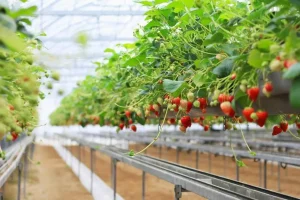
Farm scenario: A strawberry grower had been facing repeated root-zone disease pressure across multiple seasons. Crop rotation, chemical soil treatment and bed removal helped only temporarily. The farmer described the field as “tired soil,” with weak runners, uneven establishment and repeated early plant loss before the first harvest window.
Management change: Instead of relying only on broad soil suppression practices, the farm introduced a rhizosphere-focused microbial program. The program used a compatible consortium of Bacillus- and Pseudomonas-type beneficial bacteria through drip irrigation at transplanting, followed by a booster application during early flowering. The farm also adjusted fungicide use in the root zone to reduce disruption of beneficial microbial establishment.
Measurable indicators to track: In a real HYGEM / GEMBIOZ field case, this type of story should be supported by disease incidence records, plant survival rate, marketable yield, root observation, qPCR-based pathogen pressure, microbial colonization indicators and input cost changes.
Scientific explanation: Beneficial rhizosphere microorganisms may support root-zone balance by occupying root surfaces, competing for nutrients and space, producing enzymes or metabolites, and influencing the microbial environment around plant roots. A simple farmer-friendly explanation might describe this as “beneficial microbes taking the first seats around the root before harmful organisms dominate.”
Communication boundary: This should not be written as guaranteed disease elimination. It should be framed as root-zone pressure management and crop resilience support under validated conditions.
3. Composite Story 2: Turning Rice Production Toward Climate-Smart Management
Farm scenario: A rice cooperative faced increasing pressure to reduce methane emissions from flooded paddy systems. However, some water-saving practices created concern among growers because they feared yield penalties, uneven crop growth or operational complexity.
Management change: The cooperative tested a combined strategy using alternate wetting and drying irrigation with microbial technologies designed to support soil and water biological balance. A climate-smart program could include methanotroph-related research directions, organic matter management, root oxygenation support and monitoring of methane-related indicators.
Measurable indicators to track: A credible field story should include water-use reduction, methane flux measurement where available, yield stability, root vitality, soil redox condition, input changes and farmer operation records. If carbon credit or climate finance claims are involved, third-party verification and transparent methodology are required.
Scientific explanation: Flooded soil can create low-oxygen conditions where methanogenic microorganisms produce methane. Water management and microbial ecology can influence methane pathways, soil oxygen status and root performance. Microbial technologies may contribute to climate-smart rice systems, but their effects must be measured carefully and should not be described as guaranteed methane reduction without validation.
Communication boundary: Climate-related claims require extra caution. HYGEM / GEMBIOZ should use language such as “may support methane-aware management,” “should be validated under local field conditions,” and “can be integrated with water management and monitoring.”
4. Composite Story 3: Restoring Vegetable Soil Through Microbiome Intelligence
Farm scenario: A leafy-green grower had used continuous cropping for many years. Seedlings became weak, soil structure declined and early-stage damping-off pressure increased. The farmer had tried compost tea, general biofertilizers and imported microbial products, but performance was inconsistent.
Management change: A microbiome intelligence approach was introduced. Soil samples were analyzed using microbial community profiling, and the results were combined with farm records, nitrogen input, irrigation timing and crop history. A targeted microbial consortium and management protocol were then designed to support soil biological balance, reduce excessive nitrogen pressure and improve root-zone resilience.
Measurable indicators to track: A strong testimonial should include seedling survival rate, average plant weight, soil aggregate stability, microbial community shifts, pathogen pressure indicators, fertilizer reduction, irrigation management and crop quality data.
Scientific explanation: Continuous cropping can shift the soil microbiome and create biological imbalance. A targeted microbial approach may help support beneficial functional groups, root-zone competition and soil structure recovery. AI-assisted microbiome data can help move farm decisions from guessing to evidence-based intervention.
Communication boundary: This story should not claim that AI or microbes can solve every soil problem. It should show how data-driven microbial management can support more precise decision-making when combined with agronomy and field monitoring.
5. Why These Testimonial Stories Work
These composite stories work because they connect the farmer’s lived experience with measurable evidence. They do not only say the product worked. They show what the farm problem was, how daily management changed, which indicators improved and how the science can be explained in language that farmers, distributors and technical buyers can understand.
| Story Element | What It Should Include | Why It Builds Trust |
|---|---|---|
| Real Farm Language | Descriptions such as tired soil, weak seedlings, unstable pond, uneven crop, high pressure season | Makes the story recognizable and practical for other farmers. |
| Measurable Improvement | Yield, survival, disease pressure, qPCR counts, soil structure, water use, FCR, ROI | Moves the story from opinion to evidence-aware communication. |
| Management Change | Application timing, irrigation, fertilizer adjustment, reduced broad-spectrum disruption, monitoring protocol | Shows that microbial success depends on system management, not only product addition. |
| Scientific Explanation | Microbial competition, nutrient cycling, root-zone balance, methane pathways, microbiome dysbiosis | Helps buyers understand the mechanism without oversimplifying the science. |
| Claim Boundary | Clear distinction between support, pressure management, field validation and guaranteed claims | Protects credibility and supports international B2B communication. |
6. HYGEM / GEMBIOZ Testimonial Collection Framework
To collect high-impact customer stories, HYGEM / GEMBIOZ should standardize the testimonial process. The goal is not to force every farmer into a marketing script, but to capture the real adoption pathway with enough data and context to be technically credible.
| Collection Step | Key Questions or Data | Output Value |
|---|---|---|
| Open Interview | What did you try before? What changed in your daily routine? What problem mattered most? | Captures authentic farm language and practical decision context. |
| Record Collection | Yield tickets, input costs, disease logs, water data, soil tests, farm photos | Provides evidence behind the narrative. |
| Field Comparison | Before-after data, control-treatment areas, seasonal comparison, batch records | Helps separate product effect from general management changes. |
| Science Explanation | Mechanism summary, microbial function, qPCR, sequencing, metabolite or soil indicators | Turns a testimonial into technical education. |
| Compliance Review | Claim boundary, customer approval, data verification, local regulatory fit | Reduces overclaiming and improves international usability. |
7. How to Use Testimonial Stories in International B2B Marketing
Customer testimonial stories can be used across multiple channels: website impact pages, product education articles, distributor training decks, exhibition materials, field trial reports and technical sales presentations. The same story can be adapted for different audiences if the claim boundary remains consistent.
For farmers, the story should emphasize practical management change. For distributors, it should highlight repeatable application protocols and customer value. For technical buyers, it should include measurable indicators, mechanism and validation method. For international brand positioning, it should show that HYGEM / GEMBIOZ connects microbial science with field adoption.
The strongest testimonial stories do not only sell a product. They show a replicable path for solving a production problem, supported by biological logic and field evidence.
Conclusion: Trust Is the Catalyst for Microbial Farming Transformation
Microbial farming transformation depends on trust. Farmers need to see that a technology can fit into their field reality, not only into a laboratory report. Distributors need stories that are credible enough to explain. Technical buyers need data that can be reviewed. International customers need clear claim boundaries and practical validation.
HYGEM / GEMBIOZ can build stronger market trust by turning customer experience into structured testimonial stories. When farmer language, measurable indicators, management change and scientific explanation are woven together, microbial BioSolutions become easier to understand, easier to adopt and easier to validate.
That is the real power of a customer testimonial story: it transforms microbial science into field confidence.