
Can Postbiotics Support the Intestinal Barrier Without Live Bacteria? A Scientific Insight
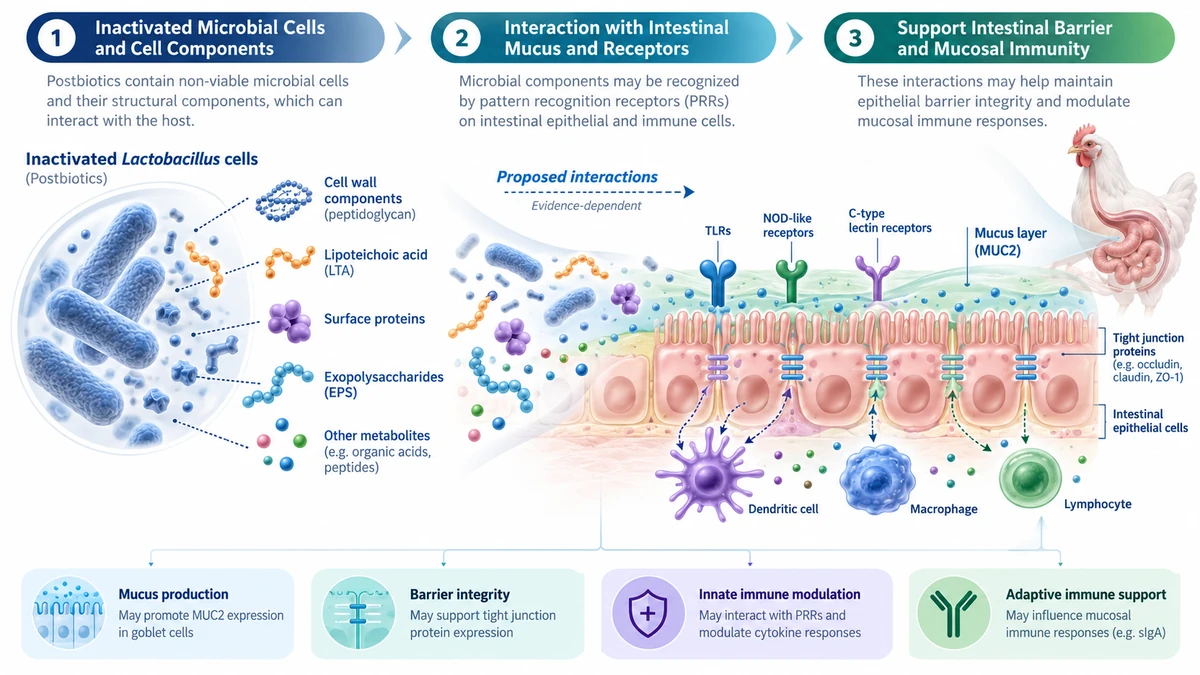
Postbiotics are often discussed as if their effectiveness required live bacteria. That assumption overlooks how the host recognizes microbial structures. An inactivated microorganism no longer multiplies, yet parts of its cell wall, surface molecules and co-present constituents may continue interacting with the intestinal environment. The important scientific question is not simply whether live cells remain, but whether a well-characterized preparation produces a measurable benefit in its intended host. This distinction underlies the International Scientific Association for Probiotics and Prebiotics (ISAPP) definition and provides a more rigorous way to discuss gut-barrier support.
1. What Counts as a Postbiotic? Start With the ISAPP Definition
ISAPP defines a postbiotic as a preparation of inanimate microorganisms and/or their components that confers a health benefit on the host. This includes a material identity requirement and an evidence requirement. An isolated organic acid, vitamin, purified protein or cell-free filtrate is not automatically a postbiotic merely because a microorganism originally produced it. Conversely, inanimate cells and microbial fragments may be part of a qualifying preparation when evidence of host benefit exists.
This definition helps explain why older studies can be valuable without being direct evidence for a modern commercial postbiotic product. A Lactobacillus culture supernatant, a purified secreted protein and a heat-inactivated fermented preparation are not interchangeable. Source strains, processing conditions, retained cell structures and co-existing metabolites may all affect what the final material does.
2. How Can an Inanimate Microbe Still Influence the Gut?
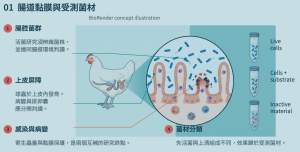
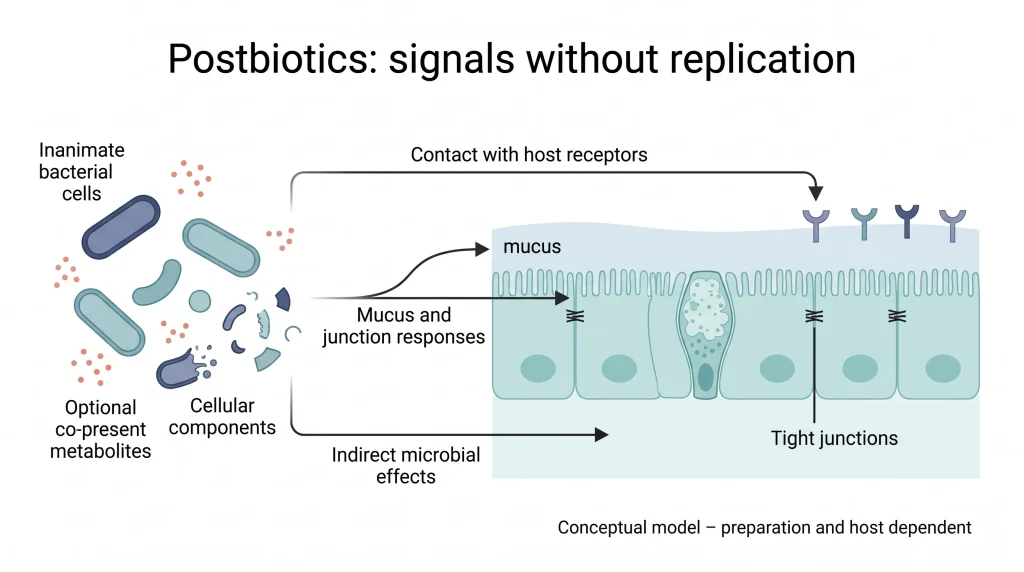
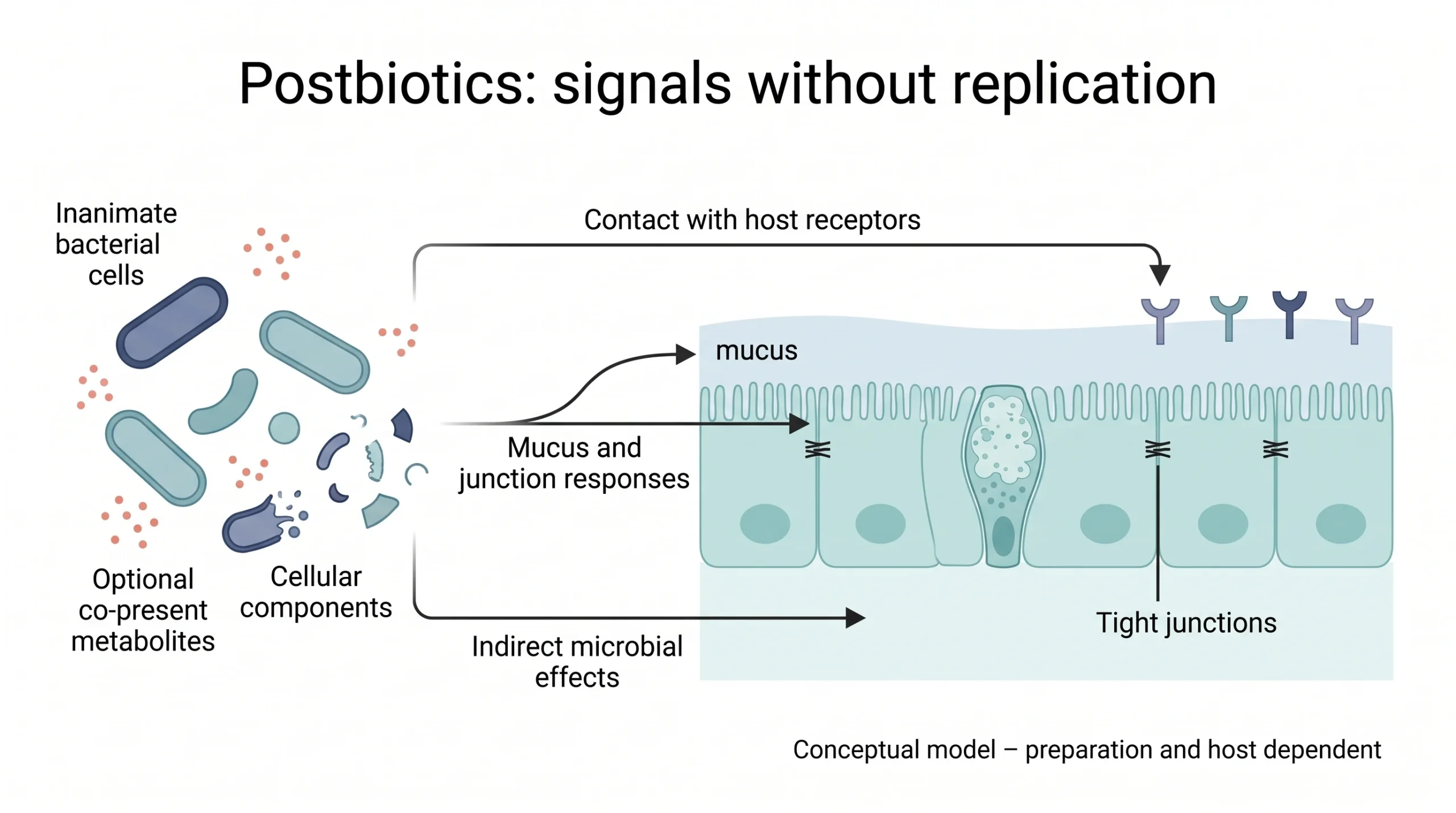
Intestinal epithelial and immune cells do not merely detect whether a microorganism can reproduce. They can respond to recognizable microbial-associated molecular structures through host receptors. Components such as peptidoglycan, lipoteichoic acids or surface proteins may provide signals, although the pathway and net outcome depend on the actual preparation. These interactions may be direct or mediated indirectly through the existing intestinal microbial ecosystem.
The intestine itself contains several complementary defenses: a mucus layer, epithelial cells joined by tight junctions and local immune activity. A change in one molecular marker can provide a mechanistic clue, but it should not be confused with a demonstrated improvement in barrier function or disease resistance.
3. What Do MUC2 and TEER Actually Show?
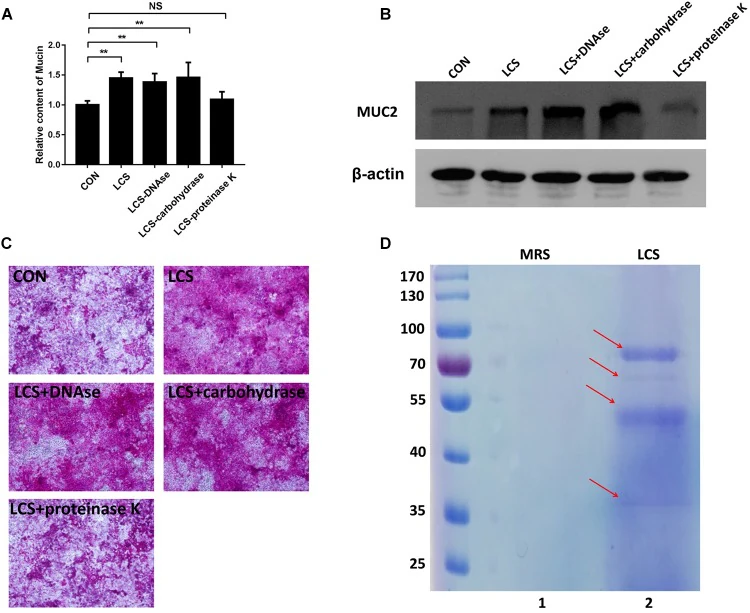
Gao and colleagues studied conditioned culture supernatant from Lactobacillus rhamnosus GG (LGG) in Caco-2 cells. The researchers observed a mucus-related response that was diminished after protease treatment. Further work identified the protein HM0539 as a candidate bioactive molecule. The finding is useful for understanding the role of a microbial protein in a cellular model. It does not show that every Lactobacillus species produces HM0539, nor that feeding an unrelated inactive preparation improves broiler health.
Barrier studies should examine both structural markers and functional readouts. MUC2 is relevant to intestinal mucus, whereas tight-junction proteins help organize contacts between epithelial cells. Transepithelial electrical resistance (TEER) assesses electrical resistance across a cell layer, while permeability tracers such as FITC-dextran offer complementary information about passage through the barrier. Functional measurements make the argument substantially stronger than a single gene-expression result.
In a 2025 study, Guo and colleagues tested an inactivated, fermented JY062 preparation in an LPS-stimulated co-culture model. After 72 hours, the LPS condition showed a TEER reduction of 238.2 ± 0.35 Ω·cm², versus 107.93 ± 3.64 Ω·cm² with JY062 (reported p < 0.001). These are in-vitro barrier measurements; they are not percentages of improvement in poultry feed efficiency or absorption.
4. What Animal and Human Studies Add
A 2025 study of inactivated Akkermansia muciniphila AKK PROBIO used a DSS-induced colitis model with 24 male mice divided into three groups. The intervention group showed changes in disease activity and intestinal histology. The study supports the possibility that a specific inactivated microbial preparation can affect outcomes in a defined mouse model. DSS-induced chemical injury, however, is not a poultry coccidiosis challenge.
In a randomized, double-blind trial involving 443 adults with irritable bowel syndrome, heat-inactivated Bifidobacterium bifidum MIMBb75 produced a higher rate of reaching a predefined composite symptom endpoint than placebo after eight weeks: 74/221 (33.5%) versus 43/222 (19.4%), with a reported risk ratio of 1.7 and p = 0.0007. The study concerned one preparation and one clinical population. It neither proves universal postbiotic efficacy nor establishes efficacy in chickens.
5. Is an Inactivated Preparation Automatically Easier to Manufacture?
Eliminating the need to maintain viable cells may simplify certain storage and handling concerns, but it does not automatically guarantee heat stability, shelf life or retained biological activity. The parent strain, growth medium, inactivation treatment, drying process and final composition can influence product identity. Even different batches bearing the same species name may differ if the manufacturing controls are not reproducible.
Quality assessment should begin with strain identity and production records, continue with measures of inactivation and component consistency, and end with evidence connecting the final preparation to an appropriate host endpoint. Safety also remains relevant: non-living microbial components, fermentation residues and substrates are not inherently inert.
6. What Does This Mean for Poultry Nutrition?
For poultry producers, the practical lesson is to resist treating ‘contains inactivated Lactobacillus’ as an efficacy claim. A credible product dossier needs to identify the tested preparation and its intended endpoint. Growth performance, feed conversion, intestinal pathology and immune measurements should be investigated separately and then interpreted together.
Frequently Asked Questions
Does a postbiotic have to contain live bacteria? No. The ISAPP concept explicitly concerns inanimate microorganisms and/or their components with demonstrated host benefit.
Can a cell-free supernatant be called a postbiotic? Not automatically. Materials consisting solely of separated metabolites do not satisfy the definition without the requisite microbial biomass or cell components.
Does an increase in MUC2 prove protection against intestinal disease? No. It is a useful molecular observation that must be interpreted alongside barrier function and relevant host outcomes.
Further Reading
References & Notes
- [1] Salminen S, Collado MC, Endo A et al. (2021). The International Scientific Association of Probiotics and Prebiotics (ISAPP) consensus statement on the definition and scope of postbiotics. Nature Reviews Gastroenterology & Hepatology 18: 649–667. doi:10.1038/s41575-021-00440-6
- [2] Vinderola G, Sanders ME, Cunningham M et al. (2024). Frequently asked questions about the ISAPP postbiotic definition. Frontiers in Microbiology 14: 1324565. doi:10.3389/fmicb.2023.1324565
- [3] Gao J, Li Y, Wan Y et al. (2019). A Novel Postbiotic From Lactobacillus rhamnosus GG With a Beneficial Effect on Intestinal Barrier Function. Frontiers in Microbiology 10: 477. doi:10.3389/fmicb.2019.00477
- [4] Guo J, Zhao Y, Guo W et al. (2025). Effects of Lactobacillus paracei JY062 Postbiotic on Intestinal Barrier, Immunity, and Gut Microbiota. Nutrients 17(7): 1272. doi:10.3390/nu17071272
- [5] Zhang H, Liu C, Huang Y et al. (2025). Inactivated Akkermansia muciniphila AKK PROBIO Preserves Intestinal Homeostasis and Ameliorates DSS-Induced Colitis in Mice. Foods 14(23): 4063. doi:10.3390/foods14234063
- [6] Andresen V, Gschossmann J, Layer P (2020). Heat-inactivated Bifidobacterium bifidum MIMBb75 (SYN-HI-001) in the treatment of irritable bowel syndrome: a multicentre, randomised, double-blind, placebo-controlled clinical trial. The Lancet Gastroenterology & Hepatology 5(7): 658–666. doi:10.1016/S2468-1253(20)30056-X
Disclaimer: This article is scientific education only, not a veterinary prescription or evidence for a specific HYGEM/GEMBIOZ product. Cell, mouse and human research cannot establish broiler-product efficacy without studies in the target species.