Broiler Postbiotic Field Validation: How to Evaluate OPG, ACI, FCR and ROI
Postbiotics have attracted interest as dietary tools for supporting broiler intestinal health, yet a credible farm-level evaluation is more demanding than comparing a favorable before-and-after percentage. The production question must specify whether the primary goal is feed conversion, growth, mortality or a pathogen-related outcome. If the claim concerns coccidiosis, the study must distinguish oocysts per gram of feces (OPG), anticoccidial index (ACI), lesion severity and production metrics rather than treating them as interchangeable.
1. Define the Farm Question Before Selecting Indicators
A product may plausibly influence microbiome composition or epithelial markers without causing a detectable change in feed conversion or oocyst shedding. Therefore the trial needs a primary endpoint chosen in advance. For routine nutritional performance, mortality-corrected FCR, daily gain and feed intake may be appropriate. For a coccidiosis-specific hypothesis, standardized OPG measurements and lesion scores become necessary, with veterinary oversight and applicable farm health protocols.
No single endpoint can establish every desired result. Lower OPG is not the same as fewer clinical cases. Improved intestinal morphology is not a replacement for direct lesion assessment. Better FCR could arise from feed management or environmental factors rather than the tested preparation. These differences belong in the trial protocol before data collection begins.
2. A 12,000-Bird Example Is a Trial Design, Not a Result
The previously proposed 12,000-bird Ross 308, 35-day example is a hypothetical planning scenario only. No source report supplied here validates a HYGEM flock outcome of 64.2% lower OPG, 0.06 FCR improvement, 85 g higher body weight or a 1:4.2 ROI. These values must not appear as completed field results. A prospective farm study should define the number of independently managed pens or houses, the assignment procedure, the concurrent control and the farm conditions being held comparable.
A treatment and control group should be contemporaneous and as similar as practicable in breed, starting weight, age, feed, housing, vaccination, management and disease pressure. Pen- or house-level randomization and replication are important because birds sharing the same environment are not statistically independent. If a multi-house field study cannot be randomized, disclose the matching method and potential confounders.
3. OPG and ACI: Two Different Measures
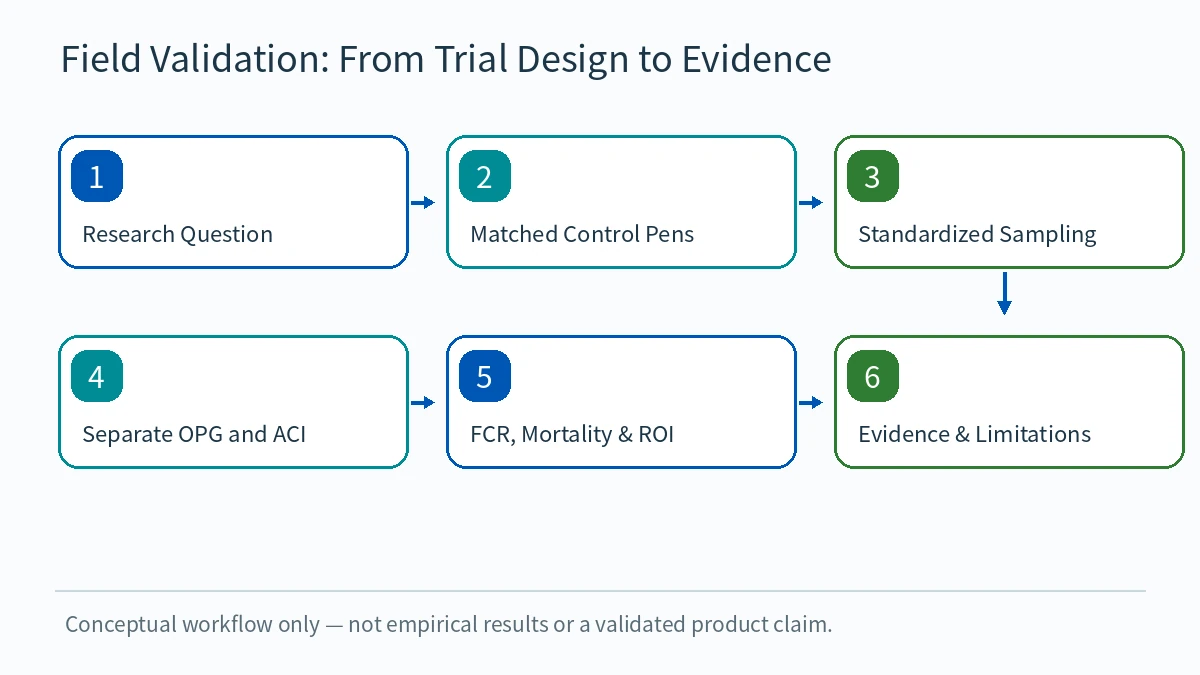
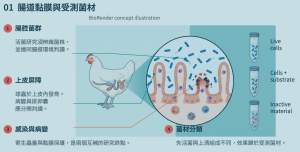
OPG is the number of Eimeria oocysts detected per gram of feces under a defined counting procedure. The measurement is sensitive to sampling day, collection method, parasite stage, fecal moisture and laboratory technique. It is useful for monitoring oocyst shedding but should not be interpreted alone as proof that a flock is clinically protected.
ACI is a composite research index derived from survival, relative weight gain, lesion severity and an oocyst-related component according to a specified study method. Different published protocols may use different calculation details or thresholds. ACI must therefore be reported with its exact formula and source. A low OPG value cannot be substituted as a complete ACI, and ACI should not be applied to routine commercial field cases lacking its required inputs.
The 2025 Eimeria challenge study of a sugarcane polyphenol feed material (Polygain) is useful as a methodological illustration, not HYGEM efficacy evidence. It reported its oocyst measurements, lesions and ACI components together; the compound treatments showed indices of approximately 143–146, below the reported drug comparator near 160. The example illustrates why favorable oocyst counts do not automatically establish the same composite performance as a drug treatment.
4. Create a Reliable Field KPI Dashboard
For every pen or house, record the production day, actual live-bird count, mortality, culls, feed delivered and remaining, sampled body weight, weight uniformity and any concurrent veterinary interventions. Environmental conditions—including ventilation, ammonia, heat stress, water intake and bedding condition—should be logged to identify changes that could bias the comparison. For gastrointestinal challenge work, specify the sampling schedule and laboratory method in the internal study protocol.
The public-facing result should present the endpoint definition, a clear denominator, comparable controls and appropriate uncertainty. It is not enough to report that OPG fell or that birds gained weight: readers need the measurement timing and context. When original data are not supplied, publish the KPI structure and methods, not fabricated results.
5. FCR and ROI Must Use Auditable Inputs
Basic FCR is total feed consumed divided by the corresponding weight gain. In commercial flocks, clarify whether the calculation is adjusted for mortality, culling and remaining biomass. The same method and time frame must be used for both arms. Savings attributed to an additive should be based on the observed difference in feed use or saleable output and then adjusted for incremental additive, handling, testing and implementation costs.
A transparent economic assessment can express net benefit as the validated change in revenue or avoided feed cost minus the incremental program cost, and ROI as net benefit divided by that cost. State whether this is a net-return ratio, an investment multiple or another commercial measure. A number such as ‘ROI 1:4.2’ has no reliable interpretation unless the calculation, assumptions and original input data are available.
6. Read Positive and Neutral Broiler Studies Together
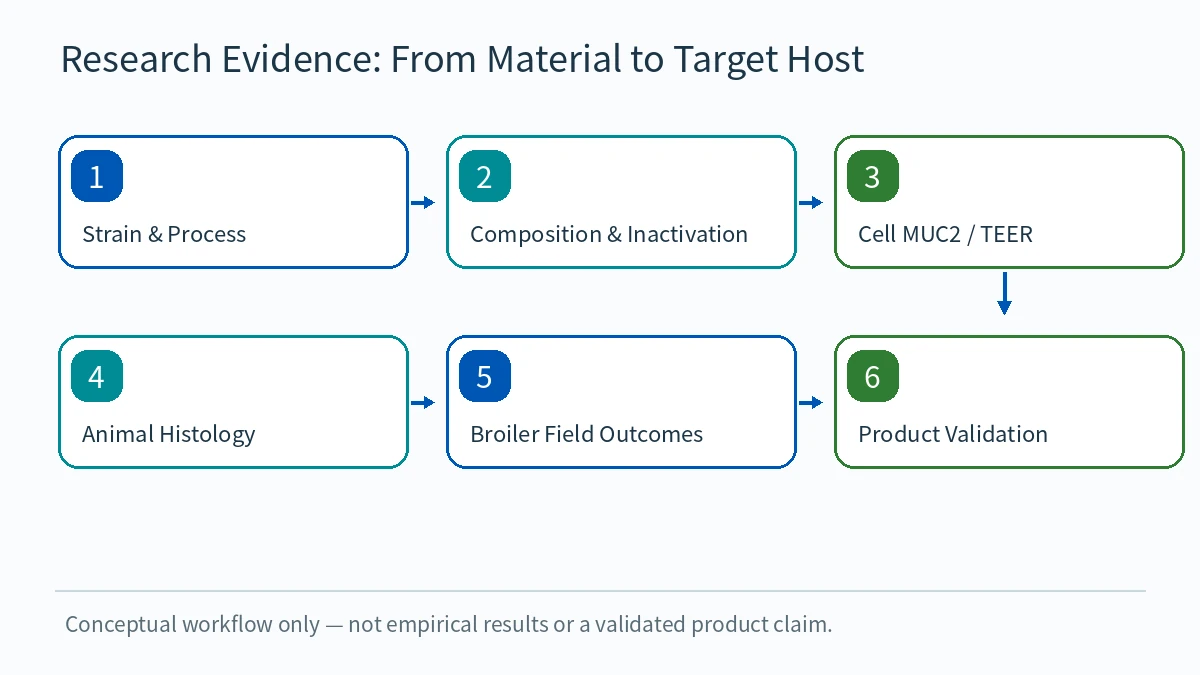
Zhu et al. studied 480 broilers and reported preparation-dependent responses to viable Bacillus subtilis and inactivated Lactobacillus plantarum. By contrast, Danladi et al. studied 336 broilers and found no statistically significant treatment effect on final body weight, cumulative gain or FCR, despite changes in certain intestinal or immune indices. Humam et al. examined preparations produced from Lactobacillus plantarum under heat stress and reported outcomes that were not uniformly favorable across all metrics. A subsequent meta-analysis summarized heterogeneous evidence across 30 studies.
This variation does not make field validation pointless; it makes it necessary. Environmental pressure, formulation, starting bird health, feed composition and true replication can change observed responses. A strong HYGEM trial should define both a useful primary production endpoint and secondary mechanistic endpoints, while allowing for a genuine ‘no detectable difference’ conclusion.
7. What May Be Published and What Must Remain Internal?
A public case study may present approved total program investment, study period, sample frame, anonymized baseline and outcome KPIs, and limitations. It should not disclose proprietary inclusion rates, application frequency, strain ratios, complete company SOPs or identifiable customer information without explicit authorization. Commercial partners requiring operational guidance should receive the controlled internal version through an authorized technical-service channel.
Before public release, an authorized reviewer must approve the source dataset, verify units and replicate counts, check statistical comparisons, and confirm consent for any farm identifiers, photographs or partner details. No publication status should be inferred merely because a draft has been prepared.
8. Conclusion: Good Field Trials Report More Than One Attractive Percentage
Field validation is complete only when it connects a defined intervention with a trustworthy experimental comparison and the intended commercial endpoint. OPG describes a measurement of parasite shedding; ACI is a composite experimental metric; FCR evaluates feed efficiency; and ROI translates independently verified production changes into economic value. None of these should substitute for the others.
Frequently Asked Questions
Can OPG alone be called an ACI result? No. ACI requires multiple specified components and the actual study formula.
Is 12,000 birds equal to 12,000 replicates? No. The independent unit normally follows the experimental assignment and pen/house structure.
Can we publish the proposed ROI figure now? No. The supporting cost and verified production dataset have not been supplied.
Further Reading
References & Notes
- [1] Zhu X, Zhang X, Zhang Y et al. (2026). Supplemental Probiotics, Postbiotics, and Their Combination on the Growth, Slaughter Variables, Organ Development, Intestinal Morphology, and Cecal Microbiota of Broilers. Probiotics and Antimicrobial Proteins 18(1): 382–394. doi:10.1007/s12602-025-10494-6
- [2] Humam AM, Loh TC, Foo HL et al. (2019). Effects of Feeding Different Postbiotics Produced by Lactobacillus plantarum on Growth Performance, Carcass Yield, Intestinal Morphology, Gut Microbiota Composition, Immune Status, and Growth Gene Expression in Broilers under Heat Stress. Animals 9(9): 644. doi:10.3390/ani9090644
- [3] Danladi Y, Loh TC, Foo HL et al. (2022). Effects of Postbiotics and Paraprobiotics as Replacements for Antibiotics on Growth Performance, Carcass Characteristics, Small Intestine Histomorphology, Immune Status and Hepatic Growth Gene Expression in Broiler Chickens. Animals 12(7): 917. doi:10.3390/ani12070917
- [4] Riaz R, Nouman HM (2026). A Meta-analysis on the Effects of Postbiotics on Growth Performance and Gut Morphology in Broiler Chickens. Probiotics and Antimicrobial Proteins 18(4): 5565–5586. doi:10.1007/s12602-025-10816-8
- [5] Nouri A (2022). Anticoccidial and immunogenic effectivity of encapsulated organic acids and anticoccidial drugs in broilers infected with Eimeria spp. Scientific Reports 12: 17060. doi:10.1038/s41598-022-20990-2
- [6] Llalla Vidal TM, Boobphahom S, Tongkamsai S et al. (2025). Effect of Polygain™ Supplementation on Growth Performance, Lesion Severity, and Oocyst Shedding in Eimeria-Challenged Broiler Chickens. Animals 15(21): 3130. doi:10.3390/ani15213130
- [7] Salminen S, Collado MC, Endo A et al. (2021). The International Scientific Association of Probiotics and Prebiotics (ISAPP) consensus statement on the definition and scope of postbiotics. Nature Reviews Gastroenterology & Hepatology 18: 649–667. doi:10.1038/s41575-021-00440-6
- [8] Vinderola G, Sanders ME, Cunningham M et al. (2024). Frequently asked questions about the ISAPP postbiotic definition. Frontiers in Microbiology 14: 1324565. doi:10.3389/fmicb.2023.1324565
Disclaimer: This field validation article describes a proposed experimental and KPI framework; it does not report a completed HYGEM clinical or commercial trial. No anticoccidial treatment claim, validated ROI or confidential application protocol is provided.