
Postbiotics, Intestinal Barrier and Mucosal Immunity: A Scientific Evidence Review
Statements such as ‘multiple studies demonstrate that postbiotics improve intestinal health’ are common in technical marketing. The difficulty is that the studies often examine unlike materials and answer fundamentally different questions. An LGG culture supernatant affecting mucus in cells, an inactivated JY062 fermentation preparation changing TEER, a mouse colitis experiment modifying disease activity and a clinical irritable bowel syndrome trial are distinct lines of evidence. Combining them into one undifferentiated efficacy claim exaggerates consistency.
1. Begin With Material Identity, Not Marketing Terminology
The 2021 ISAPP consensus describes postbiotics as preparations of inanimate microorganisms and/or their components that confer a health benefit on the host. The 2024 follow-up discussion clarified that purified metabolites, free organic acids or a cell-free filtrate alone are not automatically postbiotics. Many older papers used the same word for unlike preparations. Their experiments can remain valuable, but researchers should report precisely what was tested.
This distinction has practical consequences for biological mechanism, quality control and commercial claims. A heat-killed whole-cell product, a fermented mixture retaining biomass, a soluble secreted protein and a culture supernatant may have different active constituents. A claim supported for one of these materials cannot simply be assigned to another.
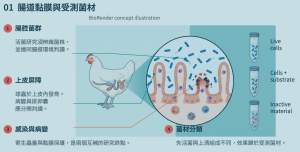
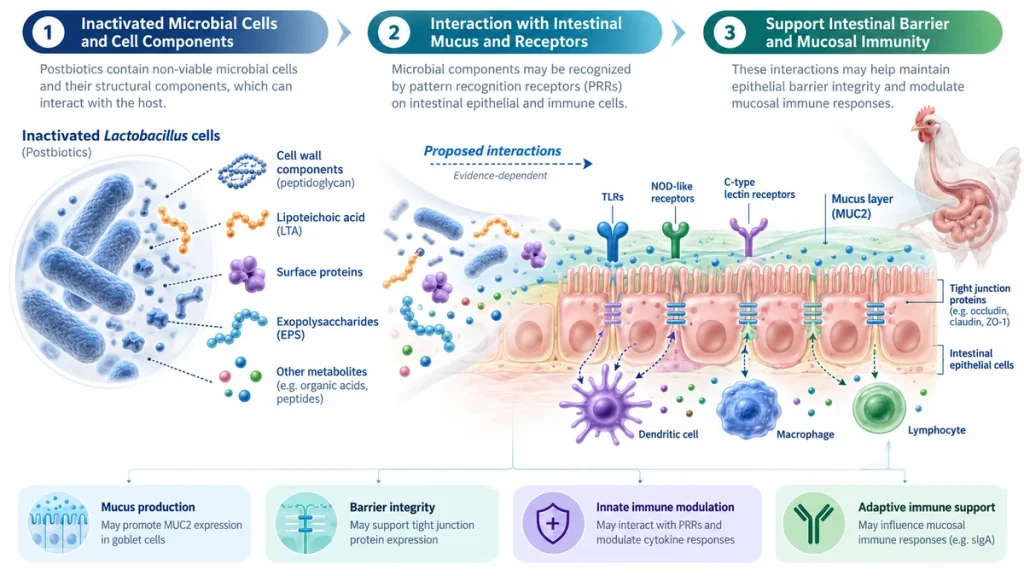
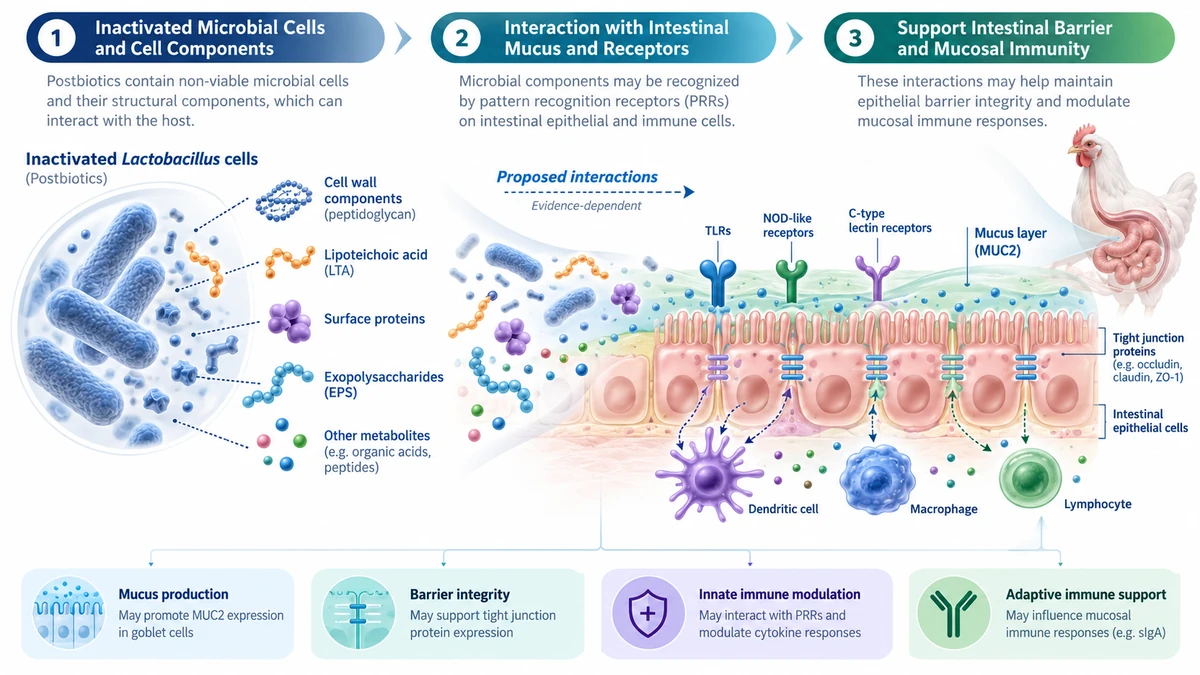
2. LGG Supernatant, HM0539 and the Mucus Layer
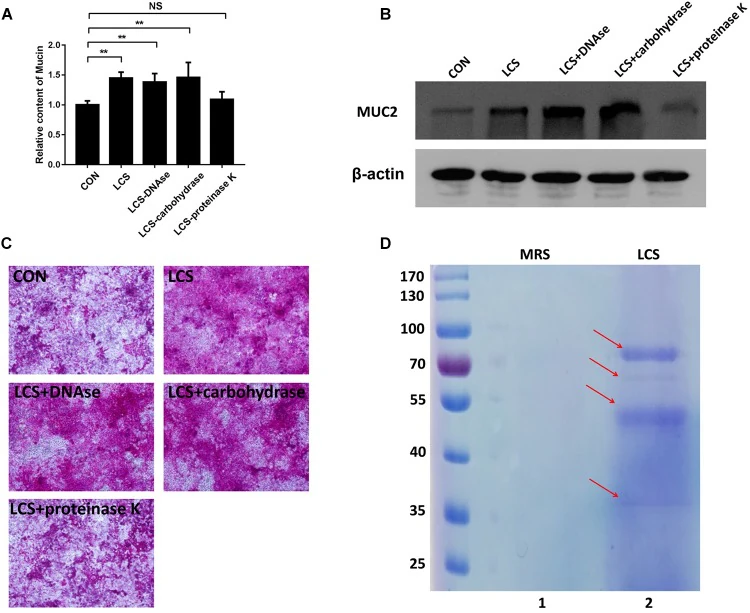
Gao et al. examined the culture supernatant of Lactobacillus rhamnosus GG in Caco-2 cells, focusing on mucus and MUC2-related responses. Comparing DNase, carbohydrate-degrading enzyme and protease treatments, they found that protease diminished the mucus response. The researchers subsequently characterized HM0539 as a protein associated with the reported effect. Selected comparisons in the original research figure had p < 0.01; that statistical result must not be copied onto unrelated panels or outcomes.
Mechanistically this moves the discussion from ‘fermentation product works’ toward a possible molecular effector. It does not mean that every LGG-containing preparation retains the same protein after thermal processing, nor that any inactivated Lactobacillus product confers disease protection. In particular, the study concerns culture supernatant rather than a fully defined inanimate-cell postbiotic under the current ISAPP framework.
3. JY062 and a Functional Barrier Endpoint
Guo et al. studied an inactivated JY062 fermented preparation using an LPS-stimulated Caco-2/RAW264.7 co-culture system. After 72 hours, TEER declined by 238.2 ± 0.35 Ω·cm² in the LPS condition and by 107.93 ± 3.64 Ω·cm² with JY062; the paper reported p < 0.001 for the comparison. FITC-dextran transport and selected epithelial junction indicators were examined alongside the functional resistance measurement.
TEER measures electrical resistance across a cell layer. FITC-dextran offers another indicator of permeability. In contrast, ZO-1, occludin and claudin measures describe structural or regulatory processes. Reading these outcomes together is preferable to claiming ‘barrier repair’ on the basis of one upregulated gene. Importantly, this model is not a broiler production trial, and its measured TEER difference cannot be converted into an expected FCR effect.
4. Inactivated AKK PROBIO in a Mouse Colitis Model
A 2025 trial with 24 male C57BL/6J mice evaluated inactivated Akkermansia muciniphila AKK PROBIO in a DSS-induced chemical colitis model. The study reported differences in disease activity and intestinal measures between experimental groups. However, the intervention overlapped the injury-induction period and not every outcome returned to the healthy control level. It should not be described as treatment initiated only after established colitis.
The DSS model is useful in experimental gastroenterology but differs substantially from Eimeria infection of poultry. In a broiler coccidiosis study, lesion sites, oocyst output, survival and productive performance would be essential. The mouse study does not constitute evidence of anticoccidial efficacy.
5. Human Trials: Positive and Null Results Must Coexist
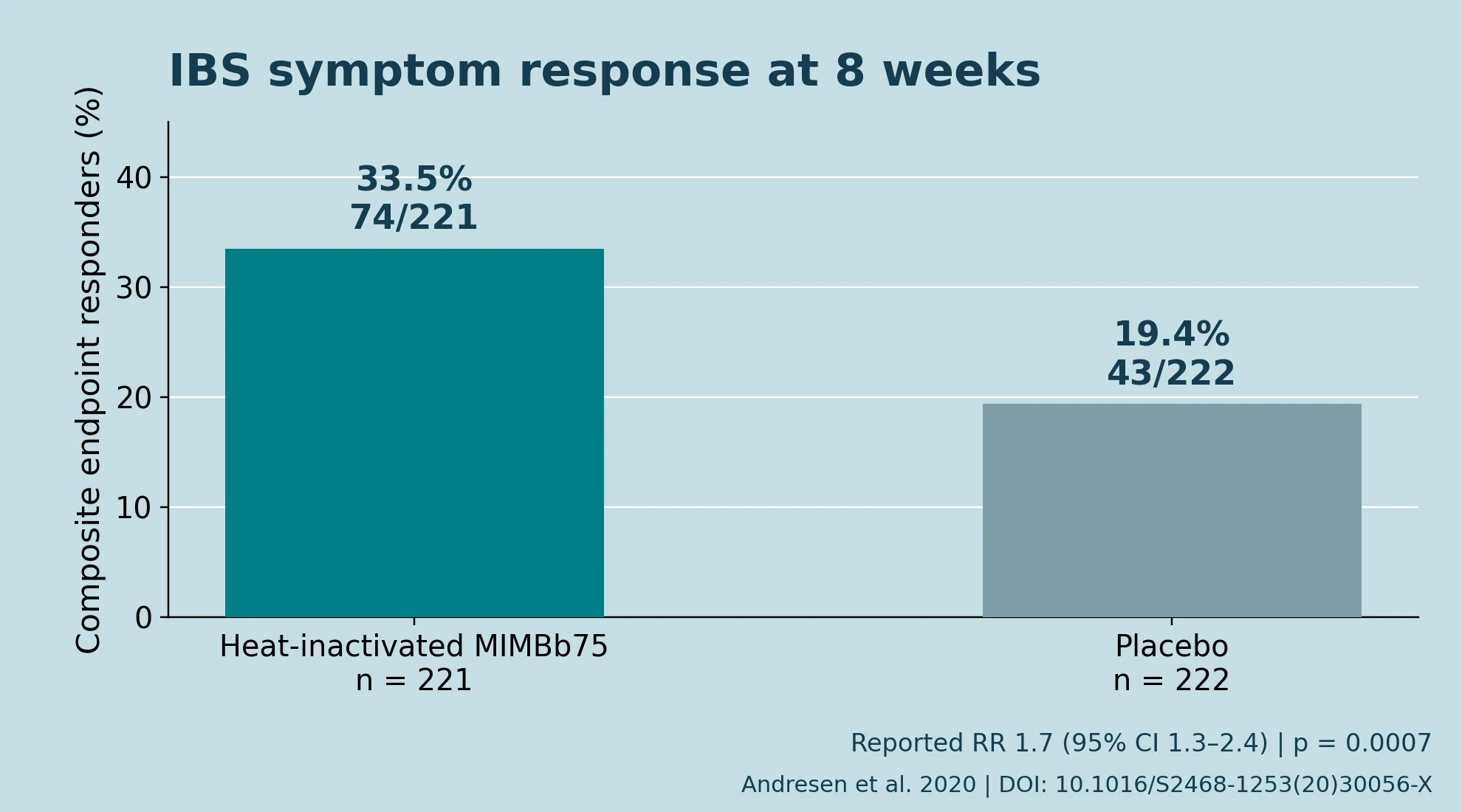
Andresen et al. randomized 443 adults with irritable bowel syndrome to heat-inactivated Bifidobacterium bifidum MIMBb75 or placebo for eight weeks. The predefined combined endpoint was met by 74 of 221 participants receiving MIMBb75 (33.5%) and 43 of 222 receiving placebo (19.4%). The reported risk ratio was 1.7 and p = 0.0007. The endpoint required improvement in abdominal pain as well as adequate global symptom relief over a defined minimum number of weeks.
These data demonstrate a product-specific clinical observation, not a category-wide effect, and the control was placebo rather than a live-bacteria version of the same material. In a separate metabolic application, Mount et al. evaluated pasteurized Akkermansia muciniphila MucT during weight-maintenance after substantial diet-induced loss, observing 1.2 kg regain versus 3.2 kg with placebo (p = 0.012). This is not evidence for weight loss without the preceding dietary intervention.
A further randomized study by Suenaert et al. did not identify a significant between-group difference for the primary Matsuda insulin-sensitivity endpoint. Exploratory subgroup signals should not replace the prespecified primary result. Looking at both positive and neutral studies is essential for interpreting the real limits of a biological intervention.
6. What Is the Evidence More Directly Relevant to Broilers?
Zhu and colleagues evaluated 480 broilers over 42 days, comparing viable Bacillus subtilis, inactivated Lactobacillus plantarum and their combination. Certain individual treatments showed differences in body weight gain or feed conversion, while the combined treatment did not consistently yield an additive result. The research is substantially more relevant to poultry production than a human gastrointestinal trial, but the outcome still belongs to the tested diets and experimental setting.
A 2022 trial in 336 Cobb 500 broilers compared several preparations termed postbiotics and paraprobiotics. Final body weight, cumulative gain and FCR were not significantly altered by treatments, even though certain intestinal morphology and immune indices changed. In heat-stressed broilers, Humam et al. (2019) likewise reported preparation-dependent responses rather than a uniform improvement in every measure. This cautions against assuming that barrier markers, weight gain and FCR must move in the same direction.
A meta-analysis published in 2026 synthesized 30 studies and described heterogeneity in effects on growth and gut morphology. Differences in preparation, age, study design and endpoints reduce the value of generalized statements. Individual product validation remains necessary.
7. Evidence Translation for Product R&D
A meaningful evidence matrix must contain the identity of the preparation, exact host model, number of independent experimental units, intervention period, prespecified primary outcome, uncertainty and statistical comparison. MUC2 is a marker of mucus biology; TEER is an in-vitro barrier-function measurement; mouse disease activity represents a different experimental process; human symptom-response proportions are clinical outcomes; and broiler FCR is a production metric. These values cannot be ranked as though they share a common denominator.
For products containing several live or inactivated microbes and fermentation materials, claims should refer to the full tested formulation unless a study has separately isolated the effect of one component. Microbiome compositional measurements, functional metabolite measurements, pathogen-specific PCR and histopathology each answer different questions. One method cannot replace the others.
8. Research Gaps and the Next Verification Step
Important gaps include poor comparability of microbial materials across laboratories, incomplete details of inactivation and fermentation, inconsistent measurement periods, and the frequent use of surrogate outcomes instead of functional or production endpoints. A stronger study should document material fingerprints and batch identity, avoid statistical pseudoreplication, and predefine the endpoint most relevant to its proposed claim.
The practical research question is not ‘which postbiotic has the biggest percentage change?’ but ‘which carefully characterized preparation demonstrates a reproducible and meaningful benefit in the intended host under controlled conditions?’ For poultry products, target-species controlled trials remain the decisive translational step.
Frequently Asked Questions
Do all postbiotics increase MUC2? No. The data concern defined research preparations, not an entire category.
Can JY062 TEER data predict broiler performance? No. Cell-layer resistance must not be converted into flock-level FCR or mortality estimates.
Can human trials support animal marketing claims? They may provide biological context but cannot establish poultry-product efficacy.
Further Reading
References & Notes
- [1] Salminen S, Collado MC, Endo A et al. (2021). The International Scientific Association of Probiotics and Prebiotics (ISAPP) consensus statement on the definition and scope of postbiotics. Nature Reviews Gastroenterology & Hepatology 18: 649–667. doi:10.1038/s41575-021-00440-6
- [2] Vinderola G, Sanders ME, Cunningham M et al. (2024). Frequently asked questions about the ISAPP postbiotic definition. Frontiers in Microbiology 14: 1324565. doi:10.3389/fmicb.2023.1324565
- [3] Gao J, Li Y, Wan Y et al. (2019). A Novel Postbiotic From Lactobacillus rhamnosus GG With a Beneficial Effect on Intestinal Barrier Function. Frontiers in Microbiology 10: 477. doi:10.3389/fmicb.2019.00477
- [4] Guo J, Zhao Y, Guo W et al. (2025). Effects of Lactobacillus paracei JY062 Postbiotic on Intestinal Barrier, Immunity, and Gut Microbiota. Nutrients 17(7): 1272. doi:10.3390/nu17071272
- [5] Zhang H, Liu C, Huang Y et al. (2025). Inactivated Akkermansia muciniphila AKK PROBIO Preserves Intestinal Homeostasis and Ameliorates DSS-Induced Colitis in Mice. Foods 14(23): 4063. doi:10.3390/foods14234063
- [6] Andresen V, Gschossmann J, Layer P (2020). Heat-inactivated Bifidobacterium bifidum MIMBb75 (SYN-HI-001) in the treatment of irritable bowel syndrome: a multicentre, randomised, double-blind, placebo-controlled clinical trial. The Lancet Gastroenterology & Hepatology 5(7): 658–666. doi:10.1016/S2468-1253(20)30056-X
- [7] Mount S, Canfora EE, Jocken JW et al. (2026). Pasteurized Akkermansia muciniphila MucT for weight loss maintenance in people with overweight and obesity: a controlled randomized trial. Nature Medicine 32: 2107–2116. doi:10.1038/s41591-026-04394-7
- [8] Suenaert P, Segers A, Rymenans L et al. (2026). Effect of pasteurized Akkermansia muciniphila MucT on insulin sensitivity, body composition, and GLP-1 production in subjects with metabolic syndrome: impact of low baseline gut Akkermansia levels. Gut Microbes 18(1): 2690689. doi:10.1080/19490976.2026.2690689
- [9] Zhu X, Zhang X, Zhang Y et al. (2026). Supplemental Probiotics, Postbiotics, and Their Combination on the Growth, Slaughter Variables, Organ Development, Intestinal Morphology, and Cecal Microbiota of Broilers. Probiotics and Antimicrobial Proteins 18(1): 382–394. doi:10.1007/s12602-025-10494-6
- [10] Humam AM, Loh TC, Foo HL et al. (2019). Effects of Feeding Different Postbiotics Produced by Lactobacillus plantarum on Growth Performance, Carcass Yield, Intestinal Morphology, Gut Microbiota Composition, Immune Status, and Growth Gene Expression in Broilers under Heat Stress. Animals 9(9): 644. doi:10.3390/ani9090644
- [11] Danladi Y, Loh TC, Foo HL et al. (2022). Effects of Postbiotics and Paraprobiotics as Replacements for Antibiotics on Growth Performance, Carcass Characteristics, Small Intestine Histomorphology, Immune Status and Hepatic Growth Gene Expression in Broiler Chickens. Animals 12(7): 917. doi:10.3390/ani12070917
- [12] Riaz R, Nouman HM (2026). A Meta-analysis on the Effects of Postbiotics on Growth Performance and Gut Morphology in Broiler Chickens. Probiotics and Antimicrobial Proteins 18(4): 5565–5586. doi:10.1007/s12602-025-10816-8
Disclaimer: This narrative review compares different preparations, species and endpoints. No pooled postbiotic efficacy or HYGEM/GEMBIOZ product claim is implied. Human or mouse observations are not substitutes for controlled poultry evidence.