
│
▼
[ Stage 2: Fermentation Control ] — High-density cascade systems targeting >5×10^10 CFU/mL
│
▼
[ Stage 3: Metabolite Recovery ] — Low-temperature (4–10°C) continuous isolation & fingerprinting
│
▼
[ Stage 4: Advanced Dehydration ] — Sub-lethal stress adaptation & multi-protective glass matrices
│
▼
[ Stage 5: Formulation Stability ] — Moisture-barrier embedding, microencapsulation & Arrhenius modeling
1. Strain Activation: Establishing the Physiological Foundation
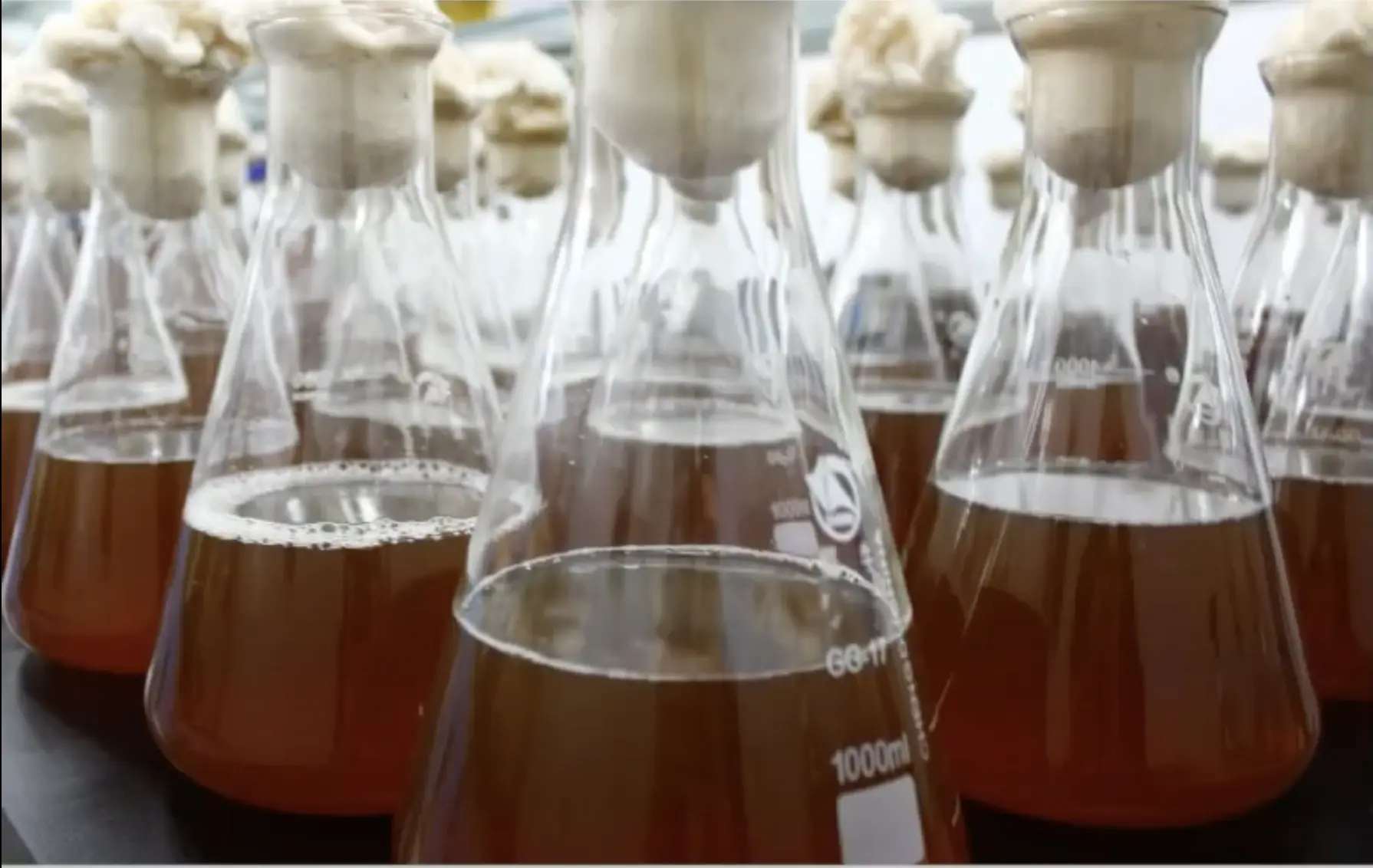
Working master seed stocks retrieved from liquid nitrogen or ultra-low temperature glycerol freezers must be subjected to an extraordinarily precise activation protocol to fully recover metabolic kinetics and cellular division capacity. Successful activation transcends simply “awakening” the culture; it dictates the uniform physiological state of the biomass prior to industrial inoculation. Fluctuations in temperature gradients, initial media composition, exact transfer windows, and inoculation volumes alter generational stability and subsequent performance in large-scale bioreactors.
From an engineering standpoint, a disciplined two-stage or three-stage seed expansion strategy is employed—systematically scaling up volume from laboratory shake flasks to seed tanks and finally into production bioreactors while tightly regulating the specific growth rate. If metabolic by-products accumulate excessively or bacteriophage contamination occurs during seed preparation, subsequent optimization of fermentation parameters cannot rescue batch uniformity. Consequently, HYGEM deploys strict quality control gates at the activation stage, including rapid purity microscopy, OD600 growth curve alignment, and automated multi-enzyme activity assays to guarantee every inoculation utilizes a highly synchronized seed culture.
2. Fermentation Control: Spatiotemporal Engineering of Microbial Networks
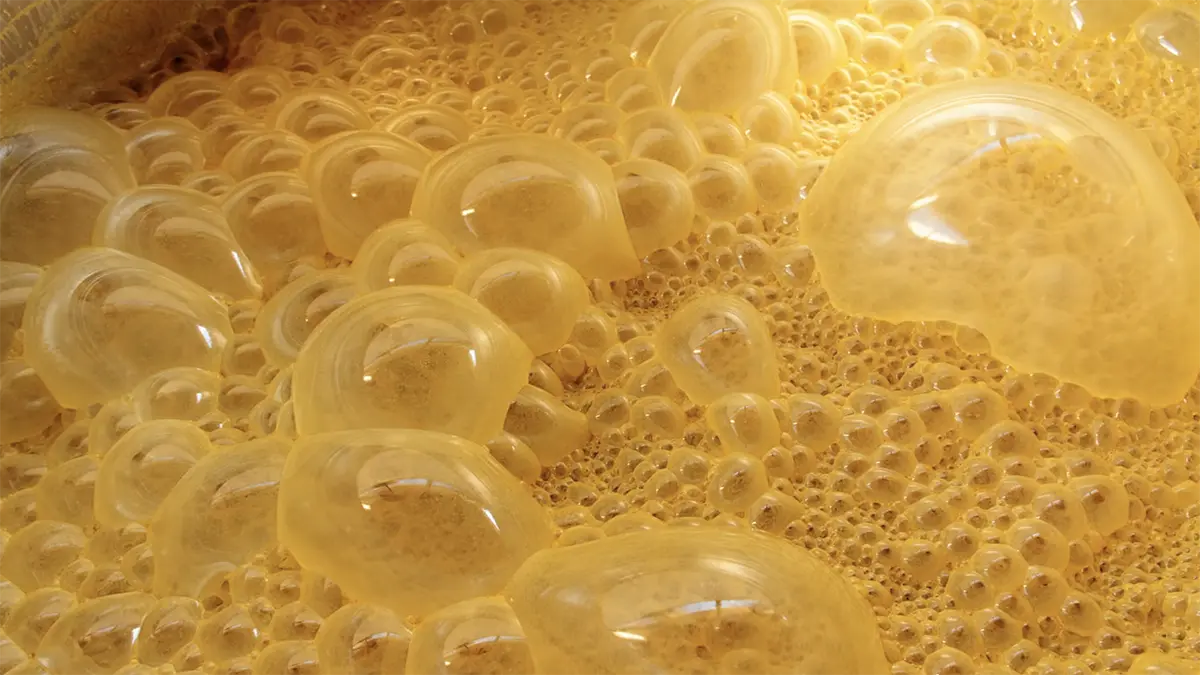
Microbial behavior inside an industrial fermenter is the direct product of dynamic interactions between the physical microenvironment and the underlying biochemical network. Achieving high-density cell masses while simultaneously locking in a targeted functional metabolite profile demands a continuous multi-parameter equilibrium across temperature, pH, dissolved oxygen (DO), nutrient feeding, and agitation shear forces.
Taking lactic acid bacteria (LAB) as a case study, constant pH regulation prevents the autoinhibition of growth caused by organic acid accumulation. Concurrently, precision adjustments of DO levels influence cellular antioxidant enzyme expression and cell membrane fatty acid profiles, determining downstream drying tolerance. HYGEM leverages a multi-parameter cascade control fermentation system integrated with real-time off-gas analysis and automated metabolite monitoring. By triggering nutrient feed streams during exponential growth, we keep residual carbon concentrations below the critical threshold of the Crabtree effect. This diverts the carbon flux toward target biomass accumulation and postbiotic synthesis rather than metabolic side products, regularly pushing living cell counts past the high-density threshold of 5×10^10 CFU/mL while reducing downstream concentration and processing costs.
3. Metabolite Quality: Preserving the Invisible Dimensions of Efficacy
The field efficacy of premium microbial products is rarely driven by live cell counts alone; it is heavily determined by co-expressed metabolites such as exopolysaccharides, short-chain fatty acids (bacteriocins), functional enzymes, and vitamins. However, these bioactive molecules are highly labile, displaying extreme sensitivity to thermal, oxidative, pH, and radiant stresses that can induce rapid denaturation during downstream harvesting, concentration, and dehydration.
Securing metabolite quality requires minimizing the cumulative effects of “time-temperature-shear” forces. Following fermentation termination, HYGEM introduces continuous low-temperature centrifugation and gentle membrane filtration lines, rapidly extracting bulk water and residual process by-products under strict 4–10°C conditions. This slashes processing time to one-third of traditional batch concentration systems. Furthermore, using HPLC-MS/MS setups, we cross-reference every production run against a verified metabolite fingerprint, establishing strict acceptance ranges for key index compounds to keep batch-to-batch variance within ±5%.
4. Advanced Dehydration: Bridging Cellular Dormancy and Resuscitation
Transforming liquid microbial concentrates into shelf-stable dry powders represents the most technically challenging phase of probiotic survival. Whether deploying lyophilization (freeze-drying), spray drying, or fluid-bed granulation, cell structures must endure structural dehydration, extreme thermal shifts, and oxidative stressors. The configuration of lyoprotectants and the execution of the drying curve dictate whether cell membranes and proteins can successfully rehydrate without losing structural integrity.
While freeze-drying preserves high initial viability, it requires lengthy primary drying cycles and carries high operating costs; conversely, spray drying demands superior thermal tolerance from the chosen strain. HYGEM addresses this via a proprietary three-tiered platform: “Sub-lethal Stress Adaptation — Multi-Protective Matrix — Controlled Thermal Trajectory”. Prior to drying, sub-lethal environmental conditioning induces the accumulation of heat-shock proteins and intracellular compatible solutes. Our protective formulation combines trehalose, skim milk, maltodextrin, and patented antioxidant peptides to create an amorphous glass state that actively neutralizes free radicals.
By utilizing Differential Scanning Calorimetry (DSC), we map the exact collapse temperature of the protective matrix, keeping primary freeze-drying temperatures exactly 5°C below the glass transition temperature (Tg’). This maintains structural integrity, consistently delivering a final water activity (aw) below 0.15 and securing a 24-month room-temperature survival rate exceeding 80%.

5. Formulation Stability: Safeguarding the Finished Product
Even the highest quality dried powder will degrade rapidly if the final formulation architecture is poorly designed. Moisture migration, oxidative chain reactions, and negative matrix interactions with blending excipients will cause viability curves to decay. Different delivery formats—capsules, powder sachets, tablets, or oil suspensions—present unique bioengineering challenges: tableting introduces intense compression pressures and frictional heat, while dry powders remain highly vulnerable to ambient relative humidity.
HYGEM counters these destabilization vectors via a dual-axis strategy focusing on “Carrier Barriers” and “Moisture Management.” For hygroscopic powder sachets, we engineered a dual-layer granular architecture using pregelatinized starch and microcrystalline cellulose. This embeds the core microbial powder within an internal matrix, creating a physical moisture-blocking shell, supplemented by smart inline molecular desiccant inserts within the aluminum foil packaging to keep headspace relative humidity under 10%. For instant beverage lines or functional lipid suspensions, we utilize calcium alginate-chitosan microencapsulation to co-embed biomass and target metabolites, effectively isolating them from atmospheric oxygen and gastric acid to achieve controlled targeted delivery.
6. The HYGEM Perspective: Holistic Bioprocess Integration
A truly stable microbial product is never the result of a single manufacturing step; it requires seamless integration across seed expansion, bioreactor kinetics, downstream filtration, dehydration engineering, and advanced formulation physics. Employing a strict Quality by Design (QbD) framework, HYGEM defines Critical Quality Attributes (CQAs) and Critical Process Parameters (CPPs) for every unit operation. By running Multivariant Statistical Process Control (MSPC) across our production floors, we monitor and eliminate batch-to-batch variation in real-time, achieving vertical process integration from strain to shelf.
This holistic engineering approach does not merely chase temporary peak cell counts at the factory gate; it focuses entirely on long-term formulation stability, ensuring that when the end consumer opens the package months later, the product delivers its full declared potency. As the global biotechnology sector competes to discover novel strains, HYGEM remains anchored in a core operating truth: only microbial formulations verified by rigorous process engineering can reliably translate laboratory science into real-world impact.