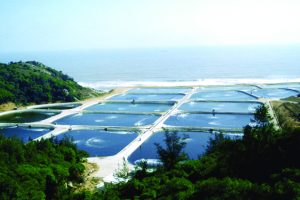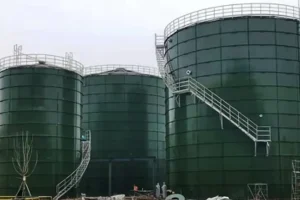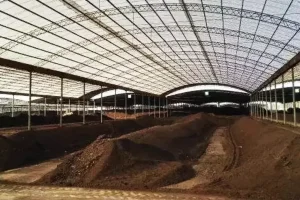

Aquaculture is fundamentally different from terrestrial livestock production. Aquatic animals live, respire, and excrete directly within their culture medium. In modern fish and shrimp farming, water quality, organic loading, pond bottom chemistry, gut microbiota, and pathogen pressure are lock-step interconnected.
This total environmental fluidity makes aquaculture microbiome management the single most vital biological lever for sustainable, high-density farming.
For HYGEM International Inc., managing the aquatic micro-ecosystem is a matter of ecological engineering. Instead of treating isolated symptoms—such as a sudden ammonia spike or a localized disease outbreak—our platform deploys beneficial microorganisms, tailored consortia, and functional postbiotic metabolites to build an environmental buffer. We seamlessly connect strain discovery, high-density fermentation, and practical field application into a robust, commercialized B2B framework.
1. The Aquaculture Ecosystem: A Multi-Layered Microbial Arena
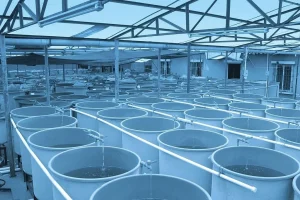
Unlike static land-based farming, a commercial aquaculture pond or Recirculating Aquaculture System (RAS) is an open, dynamic bioreactor. Every pellet of uneaten feed, every gram of fecal waste, and every shift in dissolved oxygen flips the microbial balance.
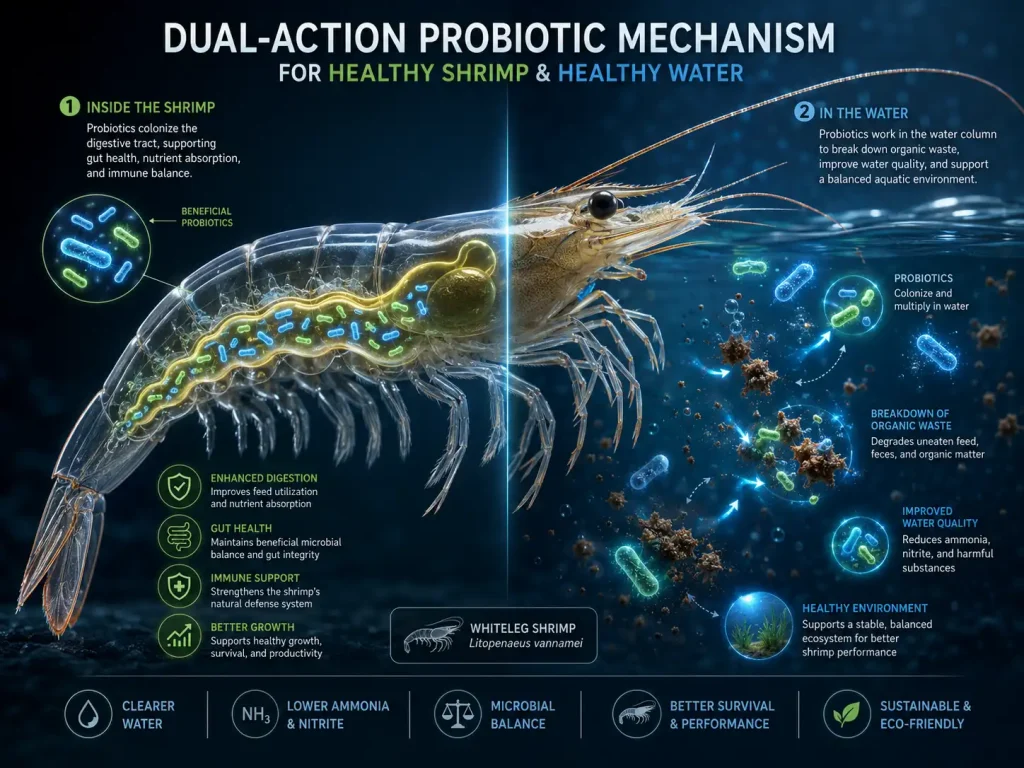
HYGEM’s platform approaches this challenge by optimizing two closely connected biological layers: Environmental Bioremediation and Gastrointestinal Resilience.
📊 Table 1: Dual-Action Core Mechanisms of HYGEM Aquaculture Solutions
| Targeted Arena | Key Biological Challenges | Microbial Intervention Strategy | Commercial Production ROI |
| Water Column & Pond Bottom |
• Organic sludge accumulation
• Toxic ammonia ($NH_3$) & nitrite ($NO_2^-$) spikes
• Dissolved oxygen crashes
• Opportunistic pathogen proliferation |
• Deployment of robust Bacillus spore formers for rapid extracellular enzyme secretion.
• Enhanced heterotrophic nitrogen assimilation.
• Competitive exclusion of harmful vibrios. |
• Maintained water clarity & optimal algal blooms.
• Drastically reduced pond bottom dredging costs.
• Stabilized dissolved oxygen profiles. |
| Gastrointestinal Tract |
• Immature or disrupted gut microbiota
• High vulnerability to enteric pathogens
• Reduced nutrient absorption under stress
• Hepatopancreas vulnerability (in shrimp) |
• Colonization by functional lactic acid bacteria & Bacillus strains.
• In situ production of short-chain organic acids.
• Upregulation of localized mucosal immunity. |
• Improved Feed Conversion Ratio (FCR).
• Accelerated growth uniformity.
• Enhanced survival rates during high-density stress or water temperature shifts. |
2. Advanced Microbial Architecture: Choosing the Right Modality
Developing products for aquatic environments requires superior formulation stability. Unlike terrestrial feed additives, aquaculture inputs face immediate water dilution, osmotic shock, varied salinities, and UV exposure. HYGEM offers four specific technological formats designed to survive these field conditions:
📊 Table 2: Technical Breakdown of Aquaculture Microbial Formats
| Format | Primary Application Vehicle | Biological Core & Advantages | B2B Manufacturing Focus |
| Probiotics (Spores & Live Cells) | Water column broadcast, pond bottom tablets, or feed top-dressing. | Live, active bio-agents. Bacillus spores excel in environmental survival and enzymatic sludge degradation, while lactic acid bacteria optimize gut pH. | Salinity & osmotic tolerance testing, batch-to-batch count validation ($\text{CFU/g}$), and rapid germination kinetics upon water contact. |
| Synbiotics | Water conditioning and early-stage nursery feed. | Combines targeted beneficial strains with specific prebiotic oligosaccharides to guarantee initial microbial proliferation in unstable water. | Precision pairing of strain-substrate kinetics to avoid feeding non-target or undesirable environmental bacteria. |
| Postbiotics | Advanced functional feed milling and pelleting. | Non-living cell walls, peptidoglycans, and structural fractions that directly interface with animal pattern recognition receptors (PRRs) to boost immunity. | 100% heat, pressure, and extrusion stability. Unaffected by commercial feed pelleting temperatures exceeding $85^\circ\text{C}$. |
| Microbial Metabolites | Liquid water conditioners or liquid feed coatings. | Fermentation-derived organic acids, bacteriocins, and highly concentrated exogenous enzymes that act immediately upon application. | Stabilization of liquid shelf-life, preventing degradation from UV exposure and oxidation in open farm storage. |
3. Targeted Commercial Scenarios
Different aquaculture systems possess highly distinct microbial ecologies. HYGEM translates biotechnology into practical protocols tailored to specific commercial operational models:
📈 Shrimp Farming: Mitigating Vibrio & Sludge Pressure
High-density shrimp ponds suffer from organic accumulation at the pond bottom, causing anaerobic zones that foster pathogenic Vibrio species (the root cause of Early Mortality Syndrome/AHPND).
-
The HYGEM Strategy: A dual approach combining high-potency Bacillus tablets designed to sink directly into the sludge layer to digest organic debris, paired with postbiotic-enriched feed to reinforce the shrimp’s gut-hepatopancreas axis.
🐟 Intensive Fish Farming: Optimizing Feed Efficiency & Water Safety
In cage or pond cultures of tilapia, catfish, and marine species, feed represents up to 60-70% of total operating expenses. Undigested proteins leak into the water, triggering catastrophic ammonia spikes.
-
The HYGEM Strategy: Incorporating heat-stable probiotics into the feed matrix to maximize protein digestibility, paired with heterotrophic water conditioners to quickly convert toxic nitrogen compounds into cellular protein.
🔄 Recirculating Aquaculture Systems (RAS): Biofilter Protection
RAS operations rely entirely on fixed-film biofilters. Sudden chemical treatments can kill the nitrifying bacteria, crashing the entire system.
-
The HYGEM Strategy: Deploying highly specific, non-disruptive microbial inoculants that complement the biofilter’s native nitrifying community, accelerating organic carbon removal without clogging delicate filtration membranes.
4. The HYGEM Platform Advantage: Commercializing with Compliance
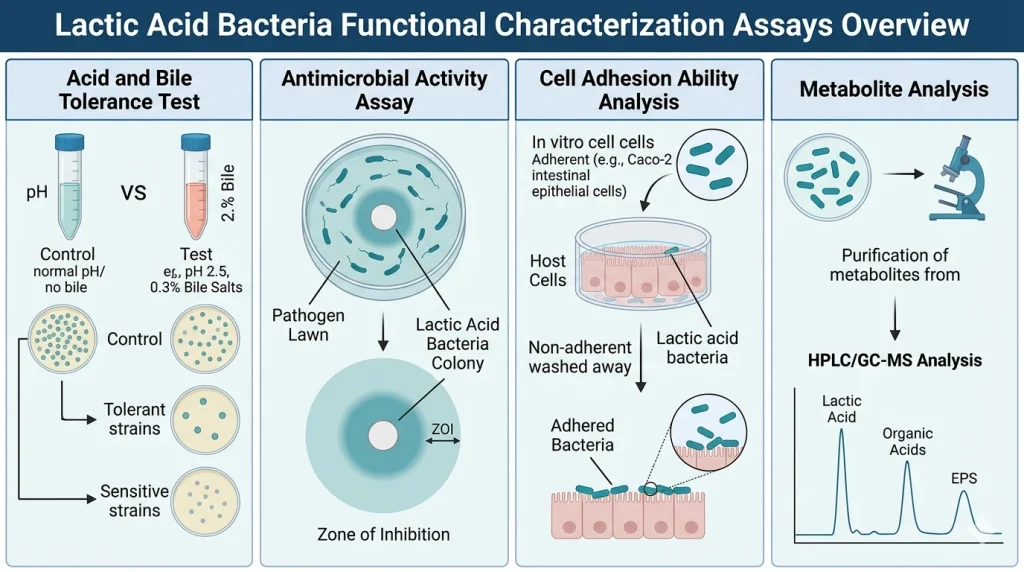
A strain that exhibits strong pathogen zone inhibition in a laboratory setting often fails when introduced to a dynamic, multi-hectare commercial pond. HYGEM eliminates this discrepancy through an end-to-end industrialization workflow:
-
Absolute Regulatory Safety: Every strain undergoes complete genome sequencing to certify the total absence of transmissible Antimicrobial Resistance (AMR) genes, aligning perfectly with strict FAO, WOAH, and EFSA standards for clean aquaculture exports.
-
Compliant Market Positioning: In international B2B commerce, HYGEM rejects unscientific “disease cure” or “veterinary drug” claims. We position our solutions to “optimize environmental balance, accelerate bioremediation, and bolster biological resilience,” providing our OEM and ODM partners with an uncompromised, swift route to global market registration.