
Research Background: Why Does Salt Stress Limit Maize Growth?
Soil salinization is becoming an increasingly important abiotic stress in global agricultural production. When salts accumulate excessively in soil, especially sodium and chloride ions, plant roots are among the first organs affected. As root water uptake becomes restricted, plants may show drought-like physiological responses, even when water is still present in the soil.
For maize, salt stress can affect germination, root elongation, leaf expansion, chlorophyll synthesis, photosynthetic efficiency, dry matter accumulation, and final yield. Although maize is an important food and feed crop worldwide, it is relatively sensitive to salinity changes during the seedling stage. If early root development is inhibited, nutrient uptake, plant uniformity, biomass accumulation, and later growth potential may all be affected.
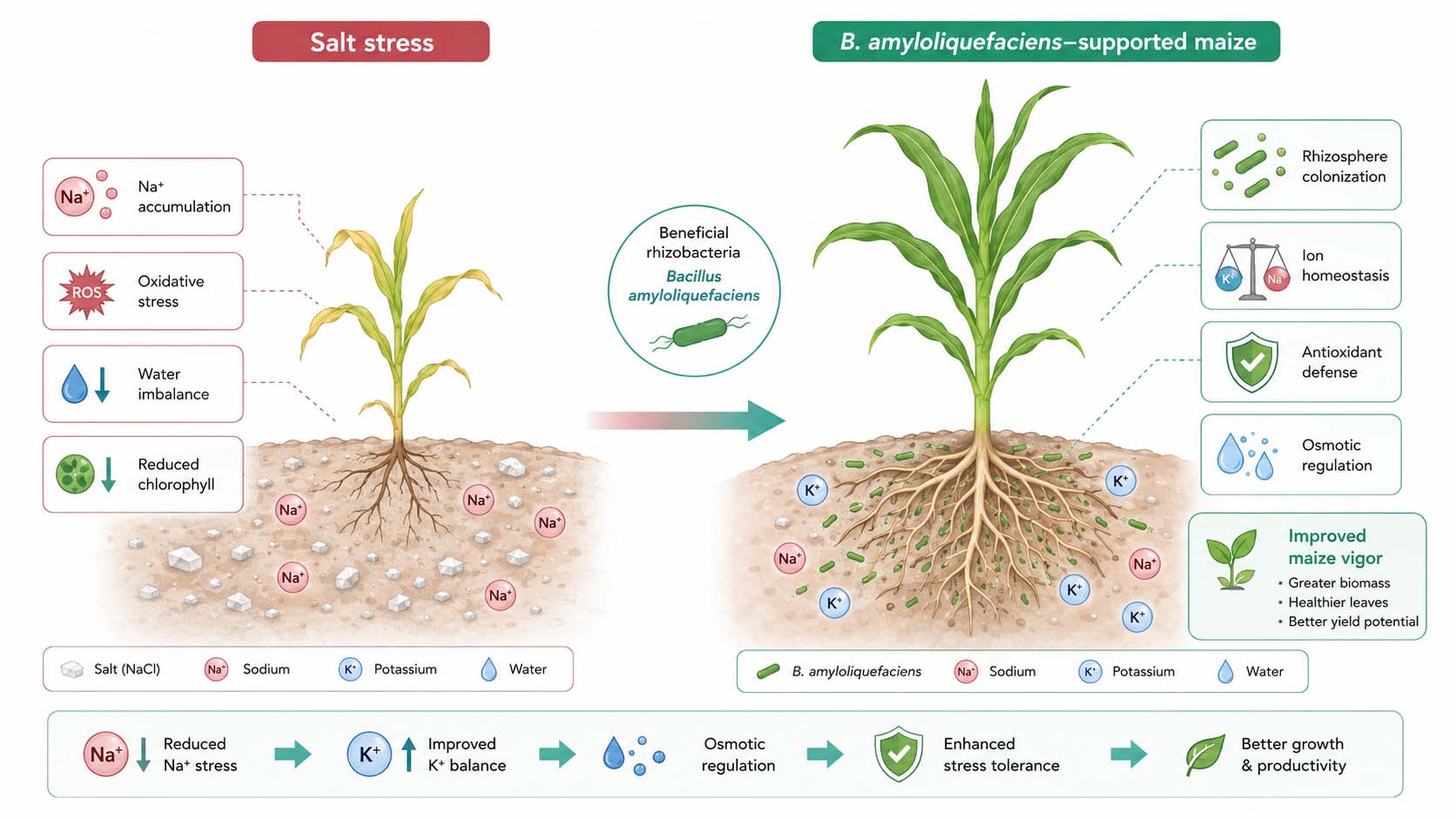
The damage caused by salt stress mainly comes from three interconnected levels. The first is osmotic stress, which makes water uptake more difficult for the root system. The second is ionic toxicity, especially excessive sodium accumulation. The third is oxidative stress, because salinity can induce reactive oxygen species accumulation, leading to damage in cell membranes, proteins, and chloroplasts.
Therefore, helping maize maintain root vitality, ion balance, water status, and antioxidant capacity under saline conditions has become an important direction for the development of plant microbial fertilizers and biostimulants.
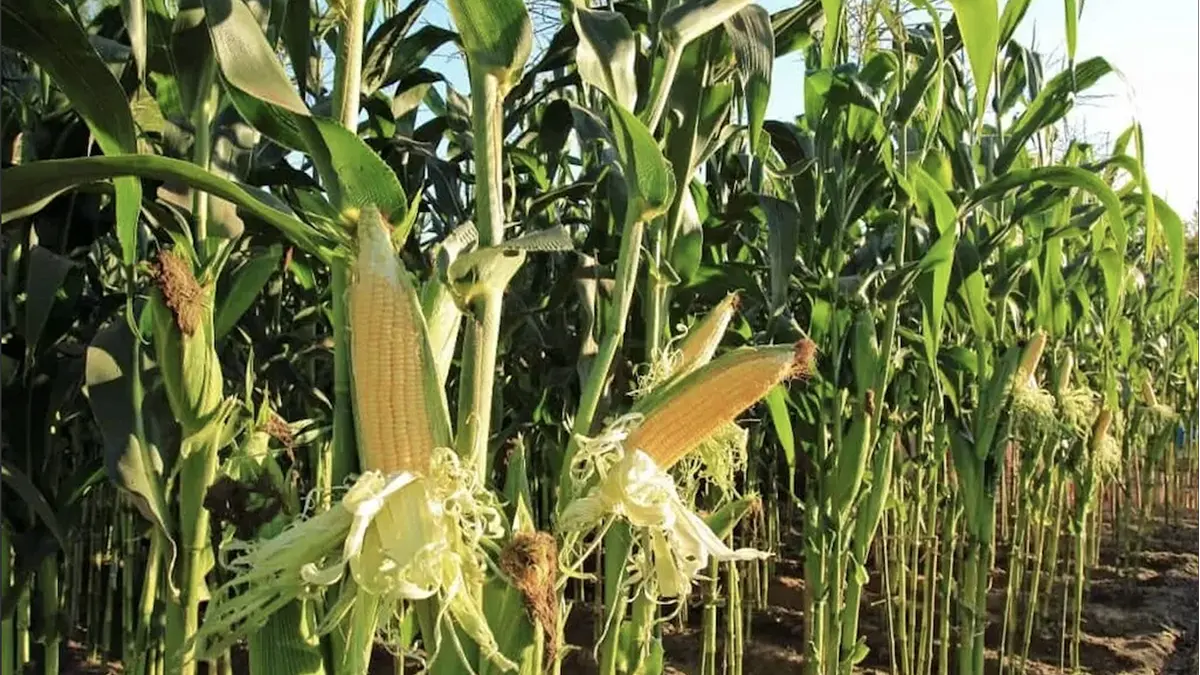
Maize salt tolerance is not a single trait. It is a systemic response shaped by root vitality, ion homeostasis, water status, antioxidant capacity, and rhizosphere microbial interactions.
Core Indicators for Salt Tolerance: Roots, Na+/K+ Balance, and Cellular Stability
To determine whether a microorganism can truly enhance maize salt tolerance, it is not enough to simply observe whether plants become taller or leaves appear greener. A more complete physiological evaluation framework is required. Salt stress is a systemic stress, so the assessment should include root development, physiological metabolism, ion balance, and oxidative damage.
In maize salt-tolerance research, the root system is usually one of the earliest and most important indicators. A healthy root system means the plant can still maintain water uptake, nutrient absorption, and rhizosphere exchange. If microbial inoculation improves root length, root surface area, root dry weight, and root activity under salinity, it suggests that the strain may help protect root development under salt stress.
The second core indicator is sodium-potassium balance. Under high-salt conditions, sodium ions can accumulate excessively in plant tissues and interfere with normal potassium uptake and utilization. Potassium is essential for enzyme activity, stomatal regulation, osmotic adjustment, and photosynthesis. Therefore, the Na+/K+ ratio is a key indicator for evaluating the degree of salt injury in plants.
The third indicator is cell membrane stability and antioxidant capacity. Salt stress can promote reactive oxygen species generation and increase membrane lipid peroxidation. Common indicators include MDA content, electrolyte leakage, SOD, POD, CAT antioxidant enzyme activities, and osmoprotectants such as proline and soluble sugars.
| Assessment Dimension | Core Indicators | Biological Meaning |
|---|---|---|
| Root Development | Main root length, lateral root number, root surface area, root dry weight, root activity | Reflects whether plants can still maintain water uptake, nutrient absorption, and rhizosphere exchange under salinity. |
| Ion Balance | Na+, K+, Na+/K+ ratio | Evaluates sodium toxicity and whether plants can maintain potassium-related enzyme activity and osmotic regulation. |
| Cell Membrane Stability | MDA, electrolyte leakage | Indicates membrane lipid peroxidation and cell membrane damage. |
| Antioxidant Capacity | SOD, POD, CAT activities | Reflects the plant’s ability to remove excessive reactive oxygen species. |
| Osmoprotection | Proline, soluble sugars, betaine | Helps maintain cellular water status and stabilize protein structures under stress. |
From an R&D perspective, a strong salt-tolerant plant microbial product should build a clear evidence chain across these indicators rather than relying on a single statement such as “promotes plant growth.”
Application Value of Bacillus amyloliquefaciens in the Maize Rhizosphere
Bacillus amyloliquefaciens is a common plant growth-promoting rhizobacterium. It has several characteristics that make it suitable for agricultural product development, including spore formation, strong environmental tolerance, good rhizosphere colonization potential, and compatibility with scalable microbial formulation systems. Unlike conventional chemical fertilizers, rhizosphere microorganisms do not mainly work by directly supplying large amounts of nutrients. Instead, they support plants by modulating the root-zone environment and plant physiological status.
In maize salt-stress studies, inoculation with Bacillus amyloliquefaciens has been reported to help maize seedlings maintain better growth under saline conditions. Relevant research suggests that rhizosphere inoculation may support maize growth, chlorophyll performance, and salt-tolerance-related physiological status under salt stress. This indicates that B. amyloliquefaciens is not only a plant growth-promoting bacterium, but may also function as a stress-supportive rhizosphere microorganism.
The value of this type of strain is not simply to “make maize grow faster.” Its deeper value lies in helping plants maintain physiological stability under stress. For saline-alkali soils, areas with elevated irrigation water salinity, and regions facing combined drought and salinity stress, rhizosphere microorganisms may become part of an integrated crop stress management solution.
Root-Zone Establishment
Root Vigor
Na+ / K+
SOD / POD / CAT
Stress Tolerance
Four Mechanisms: From Rhizosphere Colonization to Systemic Salt-Stress Response
Mechanism 1: Promoting Root Development and Rhizosphere Colonization
Under salt stress, the maize root system is affected before many visible shoot symptoms appear. Once roots are damaged, water uptake decreases, absorption of nitrogen, phosphorus, potassium, and micronutrients becomes restricted, and shoot growth is suppressed. Therefore, improving maize salt tolerance should begin with maintaining root function rather than focusing only on leaf-level responses.
Bacillus amyloliquefaciens can colonize the root surface and rhizosphere soil, using root exudates as nutrient sources and forming a mutually beneficial relationship with plant roots. Once a stable microbial population is established in the rhizosphere, the bacterium may support maize root structure under salt stress by producing plant growth-promoting metabolites, improving the root-zone microenvironment, promoting root hair development, and enhancing root vitality.
From a product development perspective, this mechanism should be verified through measurable indicators. Under different salinity treatments, inoculated and uninoculated groups can be compared for main root length, lateral root number, root surface area, root dry weight, root activity, and rhizosphere bacterial population. If the inoculated group maintains better root development under salt stress, the strain may have potential for development into a salt-tolerant plant microbial product.
A salt-tolerant microbial strain should not be evaluated only by whether it can grow in high-salt culture media. It should also be assessed by whether it can stably colonize the plant rhizosphere and truly improve root function.
Mechanism 2: Maintaining Na+/K+ Balance and Salt Homeostasis
One of the central causes of salt injury is excessive sodium accumulation. When Na+ enters plant cells in large amounts, it interferes with K+ uptake and utilization. Potassium is essential for enzyme activity, cellular osmotic pressure, stomatal movement, and photosynthesis. For this reason, Na+/K+ balance is a core indicator in salt-tolerance research.
Bacillus amyloliquefaciens may help maize reduce sodium toxicity and maintain potassium stability by modulating root absorption status, improving the rhizosphere ionic environment, and influencing plant ion transport-related responses. In practical terms, salt tolerance does not mean that plants completely avoid sodium uptake. Instead, it means plants can maintain a more appropriate ion distribution and cellular function under saline conditions.
Studies have suggested that plant growth-promoting Bacillus amyloliquefaciens can induce systemic salt-tolerance responses and influence stress-related gene expression. Although different crops, strains, and experimental models may lead to different outcomes, these findings support an important concept: rhizosphere microorganisms do not act only in soil. They may also affect how plants respond to salinity through plant signaling pathways.
For R&D validation, it is recommended to analyze Na+ and K+ contents in roots, stems, and leaves, and calculate the Na+/K+ ratio. If inoculation reduces excessive Na+ accumulation in leaves, maintains higher K+ levels, and simultaneously improves chlorophyll content and biomass, this can support the product positioning of “ion homeostasis regulation.”
Mechanism 3: Enhancing Antioxidant Capacity and Reducing Oxidative Damage
Salt stress can lead to reactive oxygen species accumulation. A moderate level of reactive oxygen species can function as a plant signal, but excessive accumulation can cause membrane lipid peroxidation, chloroplast damage, protein oxidation, and reduced cellular function. This is why salt injury is often associated with leaf yellowing, growth stagnation, and cell membrane damage.
Plants have their own antioxidant systems, including enzymes such as SOD, POD, and CAT, which help remove excessive reactive oxygen species. However, under high-salt conditions, the antioxidant system may become overloaded. If rhizosphere microorganisms help improve antioxidant capacity, they may reduce salinity-induced damage to cell membranes and chloroplasts.
Bacillus amyloliquefaciens has been reported in various abiotic stress studies to support plant tolerance to salinity, drought, temperature stress, and other stress factors. These effects may be associated with osmoprotection, plant hormone signaling, and stress-related gene expression.
For maize salt-stress product development, antioxidant capacity is a valuable scientific evidence direction. Recommended indicators include SOD, POD, and CAT activities, together with MDA content and electrolyte leakage. If the inoculated group maintains lower MDA, lower electrolyte leakage, and better antioxidant enzyme activities under salinity, this may indicate that the strain helps reduce oxidative damage caused by salt stress.
Mechanism 4: Regulating Osmoprotectants and Plant Growth-Promoting Signals
Saline conditions disrupt plant cellular water balance. To maintain osmotic pressure inside and outside cells, plants accumulate osmoprotectants such as proline, soluble sugars, and betaine. These compounds help cells retain water, stabilize protein structures, and reduce physiological damage under stress.
Bacillus amyloliquefaciens may influence plant metabolism and rhizosphere signaling, helping maize more effectively activate osmotic adjustment under salt stress. Some plant growth-promoting rhizobacteria may also produce IAA, siderophores, organic acids, extracellular polysaccharides, or influence ACC deaminase-related pathways. These functions may jointly improve root growth, nutrient uptake, ethylene stress regulation, and cellular water status.
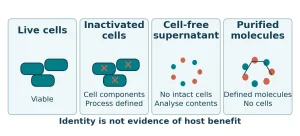
Recent research has also begun to focus on the biostimulant effects of bacterial metabolites or cell-free supernatants. Salt-tolerant Bacillus amyloliquefaciens cell-free supernatants may improve germination and radicle growth in maize and soybean under saline conditions, suggesting that microbial metabolites themselves may have value in plant stress management.
This provides an important implication for product development: future products do not necessarily need to be limited to live microbial fertilizers. They may also extend to fermentation metabolites, postbiotic-type plant biostimulants, or combined products containing both live microbes and microbial metabolites.
R&D Application Recommendations: How to Design Maize Salt-Tolerance Validation for Bacillus amyloliquefaciens
To develop Bacillus amyloliquefaciens into a maize salt-tolerance microbial product, it is recommended to establish a clear R&D workflow rather than relying on a single pot experiment.
| R&D Stage | Recommended Tests | Purpose |
|---|---|---|
| 1. In Vitro Functional Screening | NaCl tolerance, growth curve, spore formation, IAA production, phosphate solubilization, siderophore production, extracellular polysaccharides, biofilm formation | Confirms whether the strain has basic salt tolerance and plant growth-promoting potential. |
| 2. Seed and Seedling Tests | Germination rate, radicle length, shoot length, seedling fresh weight and dry weight | Rapidly compares different strains, fermentation broths, concentrations, or formulations. |
| 3. Greenhouse Pot Trial | Plant height, leaf area, root length, root surface area, root dry weight, chlorophyll, relative water content, root activity | Builds a more complete dataset for plant growth and root performance. |
| 4. Physiological and Molecular Analysis | Na+, K+, Na+/K+, MDA, electrolyte leakage, SOD, POD, CAT, proline, soluble sugars | Explains how the strain supports salt tolerance at the mechanistic level. |
| 5. Field Plot Validation | Soil EC, pH, organic matter, emergence rate, plant uniformity, roots, plant height, leaf color, biomass, ear traits, yield | Confirms whether the product has stable application value under real saline-alkali field conditions. |
These data help elevate product positioning from “plants look better” to “we understand why plants become more salt-tolerant.” Only when the product shows stable performance under field conditions can it support commercial promotion.
Product Development Direction: From Microbial Fertilizer to Saline-Alkali Soil Management Solution
The application of Bacillus amyloliquefaciens for maize salt tolerance should not be positioned merely as a general “growth promotion” product. A stronger positioning is to develop it as a rhizosphere microbiome tool for salt-stress management.
Potential product directions include:
- Maize seed-coating microbial agents
- Seedling-stage rhizosphere growth-promoting inoculants
- Microbial fertilizers for saline-alkali crop production
- Drip-irrigation liquid microbial formulations
- Combined products containing live microbes and fermentation metabolites
- Stress-management solutions combined with humic acid, organic matter, seaweed extracts, or mineral nutrition
For enterprise R&D teams, the real competitive advantage is not simply owning a strain. It is the ability to build a complete system integrating strain function, fermentation stability, formulation preservation, field performance, and application scenarios.
A salt-tolerant strain can become a market-ready product only when it passes validation across strain function, fermentation stability, formulation preservation, rhizosphere colonization, and field performance.
Industrial Application Value: Saline-Alkali Soil, Climate Pressure, and Sustainable Agriculture
Under climate change, drought, irrigation water salinization, and soil degradation, salt stress is likely to become increasingly important. Traditional management strategies include salt leaching, irrigation improvement, organic matter application, gypsum amendment, and salt-tolerant variety breeding. However, these methods often require longer timelines and higher investment.
Plant microbiome technology provides a more flexible complementary pathway. Bacillus amyloliquefaciens can be integrated with fertigation, soil improvement, organic matter supplementation, and precision agriculture to form a more complete saline-alkali crop production solution.
For maize, establishing stronger roots at the early growth stage and reducing the negative effects of salinity on plant physiology may improve emergence uniformity, growth stability, and yield potential. For agricultural microbiome companies, this type of product also aligns with market trends in sustainable agriculture, reduced chemical dependence, and improved stress resilience.
The core of maize salt-tolerance microbial product development is not only screening a salt-tolerant strain, but building a complete BioSolutions evidence chain from strain function, fermentation process, rhizosphere colonization, plant physiological indicators, and field performance.
Conclusion
Bacillus amyloliquefaciens has shown clear application potential in maize salt-stress research. Its value is not limited to promoting maize growth. More importantly, it may help maize maintain a more stable physiological state under salinity through rhizosphere colonization, root growth promotion, Na+/K+ balance, antioxidant regulation, and osmoprotection.
Future product development should not focus only on finding a strain that can tolerate salt in the laboratory. Instead, it should establish a complete R&D evidence chain, including in vitro salt-tolerance screening, seedling models, pot trials, physiological indicators, molecular mechanisms, field plot validation, and formulation stability. Only through this process can Bacillus amyloliquefaciens move beyond a general microbial fertilizer and become a maize salt-tolerance microbiome solution with real market value.
The key to improving maize salt tolerance with Bacillus amyloliquefaciens is not a single growth-promoting effect, but how rhizosphere microorganisms help plants integrate root development, ion homeostasis, antioxidant regulation, and osmoprotection into a validated, product-ready, and field-translatable stress management solution.
Further Reading
- Microorganisms in Sustainable Agriculture: Harnessing the Power of Beneficial Microbes
- Plant Microbiome Strategies for Root Health and Nutrient Availability
References & Notes
- Chen et al., 2016, Physiologia Plantarum. Induced maize salt tolerance by rhizosphere inoculation of Bacillus amyloliquefaciens.
- Liu et al., 2017, Scientific Reports. Transcriptome profiling of genes involved in induced systemic salt tolerance conferred by Bacillus amyloliquefaciens in Arabidopsis thaliana.
- Tiwari et al., 2017, Frontiers in Plant Science. Bacillus amyloliquefaciens Confers Tolerance to Various Abiotic Stresses and Modulates Plant Response to Phytohormones through Osmoprotection and Gene Expression Regulation in Rice.
- Naamala et al., 2022, Frontiers in Sustainable Food Systems. Cell-Free Supernatant Obtained From a Salt Tolerant Bacillus amyloliquefaciens Strain Enhances Germination and Radicle Length Under NaCl Stressed and Optimal Conditions.
- Nautiyal et al., 2013, Research in Microbiology. Plant growth-promoting bacteria Bacillus amyloliquefaciens modulates gene expression profile of leaf and rhizosphere community in rice during salt stress.
Disclaimer: This article is intended for scientific communication and educational purposes only. The application of Bacillus amyloliquefaciens, rhizosphere microorganisms, microbial fertilizers, plant biostimulants, and salt-stress management products should be validated under appropriate crop, soil, climate, formulation, safety, and regulatory conditions before commercial use. Any product performance, yield improvement, salt-tolerance claim, or field recommendation should be supported by controlled trials, field data, and approved documentation.