
 Driven by the global momentum toward sustainable agriculture and precision applications, the traditional farming industry is facing concurrent challenges: antibiotic growth promoter (AGP) replacement, soaring feed costs, and tightening environmental regulations. For agricultural decision-makers and international distributors looking to integrate new technologies, the primary objective is finding a clear, transparent pathway that translates laboratory science into robust field performance.For GEMBIOZ Microbiome Technology, client testimonials are never just superficial emotional endorsements. Instead, they serve as rigorous field validation under actual production conditions—turning real-world farming experiences into replicable, quantifiable technical evidence. This article outlines how microbiome technologies are screened, applied, and verified under our specialized R&D frameworks, bridging the gap between scientific credibility and commercial trust.
1. Why the International Market Demands “Systems-Driven” Success Stories
When communicating with a global audience, vague efficacy claims fail to satisfy the technical scrutiny of procurement officers, distributors, and R&D teams. To drive high-level commercial decisions, a success story must be built on a structured framework: production bottlenecks, biological mechanisms, daily management adaptations, quantifiable Key Performance Indicators (KPIs), and commercial value.
High-quality technical testimonials illuminate how specific farming issues are thoroughly diagnosed, how microbial solutions are standardized on-site, how daily husbandry practices adjust to maximize microbial efficacy, and what economic outcomes ultimately manifest. This approach elevates client experiences into vital strategic content assets for our brand.
2. Scientific Mechanisms of Action in Microbial Transformation
Outstanding field performance is invariably underpinned by rigorous scientific mechanisms. Rather than relying on abstract functional descriptions, GEMBIOZ microecological formulations focus on verifiable biological responses and standardized field protocols across three interconnected axes:
A. Intestinal Mucosal Barrier & Immune Induction
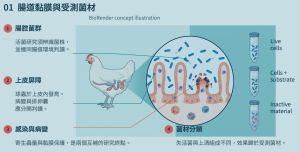
The core of microbiome efficacy lies in robust colonization. Superior strains (such as highly specific Bacillus subtilis or Lactobacillus sub-species) selected via high-throughput sequencing rapidly form biological barriers in the host gut, upregulating the expression of Tight Junction Proteins. This mechanism not only competitively excludes potential pathogens but also triggers Induced Systemic Resistance (ISR) or systemic immunity, activating macrophages and protective cytokines to boost baseline defense against field pathogens.
B. Microbial Fermentation & Complex Metabolic Relay
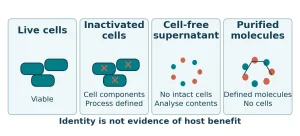
Premium microbial solutions deliver value far beyond cell counts alone. Whether during on-site application or raw material fermentation, these specialized microbes secrete a vast array of secondary metabolites, including digestive enzymes (proteases, amylases), organic acids (lactic, acetic), and bacteriocins (antimicrobial peptides). This complex metabolic relay directly optimizes feed architecture, pre-digesting macro-organic matter into highly bioavailable micro-nutrients to secure a closed loop of nutrient cycling.
C. Niche Exclusion & Environmental Bioremediation
Upon entering the host GI tract or the farming environment (such as aquaculture water or waste bedding), exogenous strains must withstand intense competition from indigenous flora. GEMBIOZ addresses this via intentional “Functional Redundancy” and ecological complementarity in community design. This ensures our functional strains maintain an aggressive competitive advantage under fluctuating environmental stresses (e.g., pH shifts, temperature shocks, organic waste buildup), actively suppressing noxious gases (ammonia, hydrogen sulfide) and environmental pathogens like Vibrio.
3. The R&D Validation Framework: Matching Biological Function with Field KPIs
To establish undeniable technical credibility, field trial reports and case studies must strictly evaluate data variance between the Control Group and the Treatment Group under commercial production conditions:
| Validation Domain | Key Performance Indicators (KPIs) | Biological Function Mapping | Observable Field Outcomes |
|---|---|---|---|
| Growth & Efficiency | Average Daily Gain (ADG), Feed Conversion Ratio (FCR) | Enhanced nutrient assimilation, upregulated endogenous enzyme activity | Reduced feed consumption per unit of biomass, accelerated growth rates |
| Health & Resilience | Survival Rate, Flock/Herd Uniformity, Mortality & Culling Rates | Fortified mucosal barrier integrity, optimized systemic immune competence | Marked decrease in runts/weak individuals, highly uniform group sizes |
| Pathogen Antagonism | Pathogen Detection Rates (e.g., PRRSV, PEDV, Coccidiosis, Vibrio) | Continuous bacteriocin secretion, active competitive niche exclusion | Suppressed diarrhea incidence, substantial reduction in antibiotic and veterinary medication costs |
| Environmental Microecology | Ambient Ammonia (NH₃), Water COD/BOD levels | Accelerated organic waste decomposition, optimized nitrogen/phosphorus cycling | Significant mitigation of barn odors, improved fecal consistency, and easier waste degradation |
4. Field Evidence: A Journey of Structural Transformation and Management Adaptation
A successful deployment of GEMBIOZ Microbiome Technology documents the journey from baseline problems to standardized, data-backed resolution:
A. Baseline Bottlenecks and Environmental Context
A large-scale commercial integrator suffered from chronic mixed pathogen infections, leading to high diarrhea rates during early nursery stages. As antibiotic regulations tightened, traditional medication-dependent management collapsed, leaving behind severe weight dispersion and a deteriorating feed conversion ratio.
B. Strategic Implementation and Husbandry Adaptations
Our technical service team avoided the trap of random, reactive dosing. Instead, a standardized inoculation protocol using target-specific GEMBIOZ probiotic strains was introduced during high-stress windows (weaning, nursery transition). In parallel, farm managers adapted ventilation and water acidification lines to create an environment optimized for probiotic colonization, while implementing precision inventory rules for powder additives to ensure absolute consistency across batches.
C. Quantifiable ROI & Empirical Evidence
Following a full production cycle, data tracking revealed structural improvements in the treatment group, marrying economic metrics with empirical satisfaction:
“Feed transitions used to be our operational nightmare. Now, the fecal consistency across our herds is excellent, and ambient ammonia odors in the barns have dropped by at least 70%. More importantly, herd uniformity is so high that we can harvest ahead of schedule—a massive advantage for our bottom-line margins.”
When verified against the control group, the data confirmed a sharp drop in culling rates and an optimized survival curve, vindicating our position as a science-first microecology brand.
5. The HYGEM Perspective: Replicable Science for Sustainable Agriculture
At HYGEM Biotech, we view every client success story as an extension of rigorous bioengineering. We recognize that true agricultural sustainability does not reside in abstract laboratory papers; it must live in the daily, replicable husbandry decisions executed on the farm floor.
By controlling the entire vertical pipeline—from metagenomic strain screening and precision manufacturing to comprehensive on-site technical support—HYGEM and GEMBIOZ deliver high-performing microbial prescriptions optimized for poultry, swine, aquaculture, and crop production globally. These verified field transformations serve as indispensable assets for international business development, distributor enablement, and industry-wide technical training.