
Introduction: Dynamic Multi-Stress Pressure in Modern Livestock Production
Postbiotics, animal microbiome solutions, gut immune barrier, pathogen pressure management, feed conversion ratio, digestibility, competitive exclusion
Modern intensive livestock and aquaculture industries are standing at a critical turning point. Feed raw material costs remain high due to global supply chain fluctuations. Antibiotic-reduction and AGP-free policies continue to advance across markets. Climate warming is increasing the frequency of heat stress, while pathogen pressure and emerging microbial challenges are creating additional uncertainty. Under these conditions, the tolerance margin of conventional production systems is becoming increasingly narrow.
Within this production landscape, the animal gut microenvironment sits at the intersection of many core challenges. The gut is not only the primary site of nutrient digestion and absorption, but also one of the most important peripheral immune organs in the animal body. When the gut microbiome is disrupted by feed formulation changes, pathogen pressure, or environmental stress, it may contribute to poor digestion, chronic intestinal inflammation, systemic immune cost, and reduced production performance.
For international technical buyers, regional distributors, large-scale farming groups, and research teams, microbiome technologies can no longer be communicated only through vague claims such as “improves gut health” or “supports survival.” HYGEM believes that animal microbiome communication should be built around a transparent technical structure: production pain point, biological mechanism, measurable R&D indicators, and field-level economic value.
Cost / Heat Stress / Pathogen Pressure
Digestion / Barrier / Competitive Exclusion
KPI / Molecular Markers / Field Data
FCR / Resilience / ROI
1. Three Core Biological Mechanisms
The commercial and scientific value of next-generation animal microbiome solutions, such as the GEMBIOZ system, should not be built on the accidental performance of a single strain. Instead, it should be based on highly connected and explainable biological mechanisms.
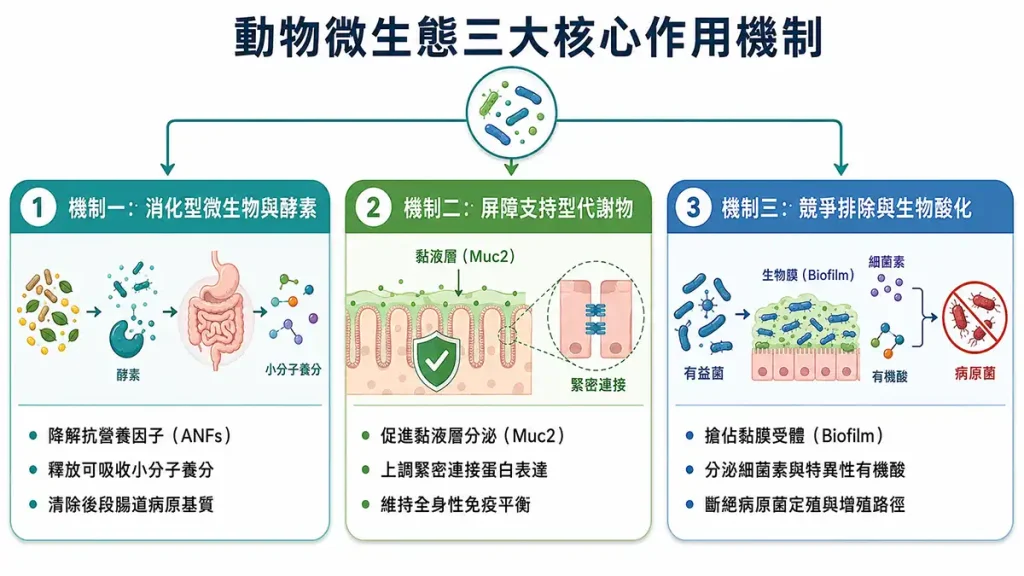
1.1 Digestive Microbes and Exogenous Enzymes: Improving Nutrient Release and Reducing Undigested Substrates
Traditional feed ingredients contain large amounts of non-starch polysaccharides, phytate, lectins, and other anti-nutritional factors. These components cannot be fully degraded by the animal’s endogenous enzymes and may accumulate in the distal gut, where they can become undigested substrates for opportunistic bacteria such as Clostridium perfringens and pathogenic E. coli.
Digestive microbiome solutions based on enzyme-producing Bacillus species and selected yeast strains can be understood through two complementary mechanisms:
- Efficient extracellular enzyme secretion during transit or colonization: Microbes can secrete xylanase, β-glucanase, cellulase, protease, and other enzymes in the gut, helping degrade complex carbohydrates and proteins into more absorbable monosaccharides, oligosaccharides, and short-chain peptides. This may support overall nutrient digestibility.
- Reducing undigested substrates in the distal gut: When nutrient release and absorption are improved in the upper gut, fewer undigested carbohydrate and protein residues may reach the ileum and cecum. This can reduce the fermentable substrate available to undesirable microbes and support pathogen pressure management from the nutritional substrate level.
1.2 Barrier-Supporting Metabolites: Maintaining the Mucus Layer, Epithelial Integrity, and Immune Priming
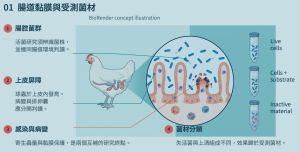
The gut barrier is the first line of defense against external pathogens and toxins. It includes the physical barrier, such as the mucus layer and epithelial cells; the chemical barrier, such as digestive secretions and antimicrobial peptides; and the immune barrier, including gut-associated lymphoid tissue.
Beneficial microbes such as Clostridium butyricum and Lactobacillus can generate postbiotics and small-molecule metabolites through fermentation. These components may support gut barrier function through several routes:
- Supporting mucin production: Microbial metabolites may support goblet cell function and Muc2-related expression, helping maintain the intestinal mucus layer.
- Supporting tight junction proteins: Short-chain fatty acids such as butyrate are important energy sources for enterocytes and are associated with barrier-related proteins such as Claudin-1, Occludin, and ZO-1.
- Maintaining appropriate immune priming: Next-generation microbiome products should not aim for excessive immune stimulation. Instead, microbial structures and metabolites should help maintain mucosal immune readiness and balance, reducing the risk of excessive inflammation and unnecessary energy cost.
1.3 Competitive Exclusion, Micro-Acidification, and Antimicrobial Metabolites: Managing Pathogen Colonization Pressure
Under pathogen pressure, microbiome solutions can provide multiple layers of ecological support through space competition, microenvironment modulation, and antimicrobial metabolites.
- Competitive exclusion: Dominant beneficial microbes may occupy mucosal surfaces and reduce available attachment sites for pathogens such as Salmonella and pathogenic E. coli.
- Micro-acidification: Organic acids such as lactic acid and acetic acid can reduce local intestinal pH, creating a less favorable microenvironment for some undesirable bacteria.
- Endogenous antimicrobial substances: Some Bacillus and lactic acid bacterial strains may produce bacteriocins, lipopeptides such as Surfactin and Iturin, or other antimicrobial metabolites that contribute to microbial ecological pressure.
Enzymes / Digestibility / FCR
Mucus / Tight Junctions / sIgA
Competitive Exclusion / Organic Acids / Bacteriocins
Performance Resilience
2. R&D Validation Framework: From Biological Function to Measurable Data
To move beyond vague qualitative descriptions, HYGEM’s R&D framework emphasizes standardized validation. Biological function claims should be supported by controlled data from realistic or production-relevant conditions, comparing control groups with microbiome treatment groups.
2.1 Production Performance and Clinical Observation Indicators
- Digestibility (%): Digestibility can be evaluated using insoluble external markers such as chromium oxide Cr2O3 or acid-insoluble ash to measure apparent total tract or ileal digestibility.
- Feed Conversion Ratio (FCR): FCR is one of the most important field-level indicators for feed efficiency and economic evaluation.
- Diarrhea rate and mortality: Continuous monitoring of fecal scoring and survival curves during specific production stages can help evaluate gut stability and herd or flock resilience.
- Lesion score: In necrotic enteritis or coccidiosis challenge models, intestinal congestion, bleeding, ulceration, and necrosis can be evaluated through standardized scoring systems.
Feed Conversion Ratio = Total Feed Intake / Total Weight Gain
FCR = total feed intake ÷ total weight gain
2.2 Molecular Biology and Immunology Indicators
- Pathogen load: qRT-PCR or metagenomic sequencing can be used to quantify specific pathogens or relative abundance in ileal digesta, cecal contents, or fecal samples.
- Immunoglobulins IgA and IgG: Secretory IgA reflects the mucosal immune barrier, while IgG can help evaluate systemic humoral immune status.
- Inflammatory cytokines: Markers such as IL-1β, IL-6, TNF-α, IL-10, and TGF-β can be used to assess the balance between pro-inflammatory and anti-inflammatory responses.
Core Indicator Matrix for Control Group and GEMBIOZ Microbiome Treatment Group
| Validation Dimension | Core Indicator | Biological Mechanism | Expected Trend |
|---|---|---|---|
| Production Performance | Apparent crude protein digestibility (%) | Extracellular enzyme secretion and anti-nutritional factor degradation | Increase ↑ |
| Production Performance | Feed conversion ratio (FCR) | Enhanced nutrient release and improved intestinal absorption efficiency | Decrease ↓ |
| Clinical Observation | Diarrhea rate (%) | Tight junction support and water reabsorption stability | Decrease ↓ |
| Intestinal Lesion | Intestinal lesion score (0–4) | Reduced pressure from pathogen toxins and inflammation on epithelial cells | Decrease ↓ |
| Biosecurity | Intestinal undesirable bacterial load (Log10) | Competitive exclusion, micro-acidification, and antimicrobial metabolites | Decrease ↓ |
| Immune and Inflammatory Balance | Local intestinal sIgA concentration | Support of GALT mucosal immunity and immune priming | Stable increase ↑ |
| Immune and Inflammatory Balance | Pro-inflammatory cytokines TNF-α and IL-6 | Modulation of inflammatory response and reduction of immune energy cost | Decrease ↓ |
3. Precision Microbiome Development for Different Species and Production Challenges
Animal microbiome solutions are not universal formulas. Different species have different digestive anatomy, physiology, immune characteristics, and stage-specific stress patterns. The GEMBIOZ animal microbiome strategy is therefore designed around species-specific and stage-specific precision formulation.
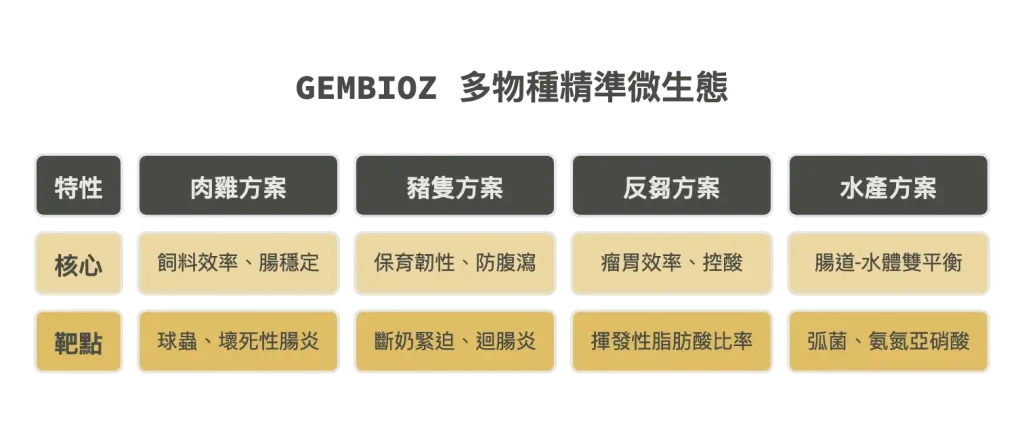
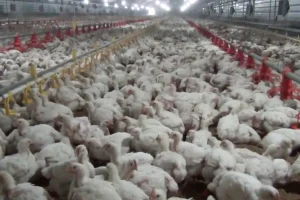
3.1 Poultry: High-Efficiency Growth and Dynamic Gut Stability
Broilers have a short life cycle and rapid growth rate. Their digestive system must complete efficient nutrient digestion and absorption within a limited time window. Therefore, poultry microbiome solutions should focus on early microbiota establishment, feed efficiency, and mid-to-late stage intestinal stability.
- Stage challenge: Early brooding-stage microbiota is fragile and may be affected by environmental Salmonella exposure and feed transition. During the grow-out phase, birds may face coccidiosis pressure and necrotic enteritis risk.
- GEMBIOZ strategy: Enzyme-producing Bacillus species and lactic acid bacteria can be used to support FCR, intestinal mucosal stability, fecal quality, and flock uniformity.
3.2 Swine: Weaning Resilience and Multi-Pathogen Pressure Management
One of the most important gut challenges in swine production is weaning stress. The sudden loss of milk, transition to solid feed, and environmental stress from relocation may contribute to villus atrophy, crypt hyperplasia, diarrhea pressure, and growth stagnation.
- Stage challenge: In the first one to two weeks after weaning, piglets often face post-weaning diarrhea pressure. During the grower-finisher stage, intestinal stability may also be challenged by Brachyspira, Lawsonia intracellularis, PRRSV, PEDV, and complex secondary pressure.
- GEMBIOZ strategy: Acid-tolerant and adhesive lactic acid bacteria, Bacillus strains, and postbiotics can support villus recovery, fecal stability, pathogen pressure management, and mucosal immune balance.
3.3 Ruminants: Optimizing Rumen Fermentation Efficiency and pH Stability
The nutritional foundation of ruminants is rumen microbial fermentation. When high-concentrate diets cause lactic acid accumulation and pH fluctuation, fiber-degrading microbial populations may be affected, influencing feed intake, milk fat, and overall production efficiency.
- Stage challenge: High-concentrate diets may increase the risk of subacute ruminal acidosis, affecting fiber digestion and rumen stability.
- GEMBIOZ strategy: Active yeast and lactate-utilizing bacteria can support rumen anaerobic conditions, lactate conversion, volatile fatty acid production, and pH stability.
3.4 Aquaculture: Balancing Gut Health, Water Microbiome, and Pathogen Pressure
Aquatic animals live in a microbe-rich water environment throughout their life cycle. Their gut microbiome and surrounding water microbiome are dynamically connected. Uneaten feed, feces, organic load, ammonia nitrogen, nitrite, and Vibrio pressure may jointly affect farming stability.
- Stage challenge: Excessive organic load may lead to increased ammonia nitrogen and nitrite, while also creating opportunities for Vibrio and other opportunistic pathogens.
- GEMBIOZ strategy: A combined internal and external approach can be used. External microbial applications support organic matter degradation and water quality stability, while oral microbiome solutions support gut microbiota, digestive function, and non-specific immune readiness.
4. Key to International Commercialization: Manufacturing Process and Quality Control
A strain that performs well in the laboratory must cross several engineering thresholds before becoming an internationally competitive commercial product. These include industrial scale-up, feed processing stability, gastric acid and bile tolerance, long-term shelf-life stability, and batch-to-batch consistency.
HYGEM integrates next-generation manufacturing processes into the GEMBIOZ product line, building a complete technical workflow from solid-state fermentation and matrix embedding to maturation drying, powder formulation, and quality traceability.
HYGEM Solid-State Fermentation and Postbiotics Manufacturing Workflow
SSF Platform
Matrix Self-Embedding
Low-Temp Drying
Formulation
QC / Stability

4.1 Solid-State Fermentation Matrix and Postbiotics Stability Technology
HYGEM’s manufacturing process uses the natural growth characteristics of solid-state fermentation, combined with the structural stability of next-generation postbiotics, to build a protective mechanism with both economic and technical advantages.
- Natural microenvironment barrier: During solid-state fermentation, microorganisms grow and metabolize along the microporous structure of natural organic substrates. After maturation and drying, the substrate can form a physical buffer network that helps improve powder stability during processing and storage.
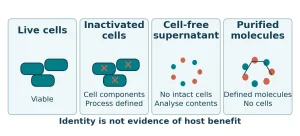
- Molecular-level stress resistance: GEMBIOZ focuses on postbiotics, short-chain fatty acids, peptidoglycan components, extracellular enzymes, and other functional molecules. Compared with products that depend entirely on live-cell viability, postbiotics may offer higher stability potential under processing, storage, and digestive tract conditions.
- Matrix-based slow release and targeted delivery: The solid-state fermentation matrix can provide physical adsorption and slow-release characteristics, helping functional components release progressively along the digestive tract and support dynamic gut barrier management.
4.2 Full-Process Traceability and International Quality Systems
For international feed companies and high-standard procurement teams, vague quality promises are not enough. Products must build trust through clear data, stable batches, and traceable production processes.
- Strain identity and traceability: GEMBIOZ strains should be supported by strain identification data, whole-genome sequencing information, antimicrobial resistance and virulence factor risk assessment, and safety documentation.
- International quality management: Production lines can be structured under ISO 22000, HACCP, or other relevant quality systems, covering raw materials, fermentation, drying, blending, packaging, and finished-product testing to support batch consistency and international customer confidence.
Conclusion: Transforming Microbiome Technology into Measurable Livestock ROI
In the new era of precision agriculture and animal nutrition, animal microbiome solutions are evolving from traditional “health additives” into tools for production resilience and biosecurity management in intensive farming systems.
Whether through extracellular enzyme activity that supports digestibility and FCR, postbiotic metabolites that support gut barrier integrity and immune readiness, or competitive exclusion mechanisms that help manage pathogen pressure in antibiotic-reduction systems, the ultimate value of microbiome technology must return to the core of commercial production: measurable, traceable, and validated return on investment.
Through the HYGEM.NET platform, HYGEM demonstrates not only a series of microbiome products, but also a next-generation integrated microbiome empowerment system that combines scientific research, technical validation, and intelligent manufacturing processes. Through precision technical customization and standardized R&D validation, HYGEM / GEMBIOZ can help animal nutritionists, large-scale farming groups, and microbiome product distributors build a more sustainable and resilient future for modern livestock production.
The real value of animal microbiome solutions is not only improving gut health, but connecting digestibility, immune barrier support, pathogen pressure management, and field KPIs into a validated next-generation precision nutrition platform capable of creating measurable ROI.
Further Reading
- Animal Microbiome Solutions for Digestibility, Immunity and Disease Control
- Microbiome Nutrition and Intestinal Barrier Function in Livestock
- Global Trends in Antibiotic-Free Production and Microbial Nutrition
Scientific References / Disclaimer
Reference directions include peer-reviewed studies and technical reports on animal gut microbiota, postbiotics, short-chain fatty acids, intestinal barrier function, tight junction proteins, competitive exclusion, Bacillus and Lactobacillus probiotics, feed digestibility, FCR, pathogen pressure management, immune priming, poultry necrotic enteritis models, swine weaning stress, rumen fermentation, aquaculture water-gut microbiome interaction, and animal microbiome validation frameworks.
Disclaimer: This article is intended for scientific communication and educational purposes only. HYGEM / GEMBIOZ animal microbiome technologies are positioned as supportive microbiome management and production resilience tools. They should not be interpreted as disease treatment, guaranteed pathogen elimination, replacement for veterinary diagnosis, vaccination, medication, biosecurity, or local regulatory approval. Any product performance, heat resistance, shelf-life stability, pathogen reduction, FCR improvement, or ROI claim should be validated through controlled trials, third-party testing, local production data, and approved documentation before commercial use.