
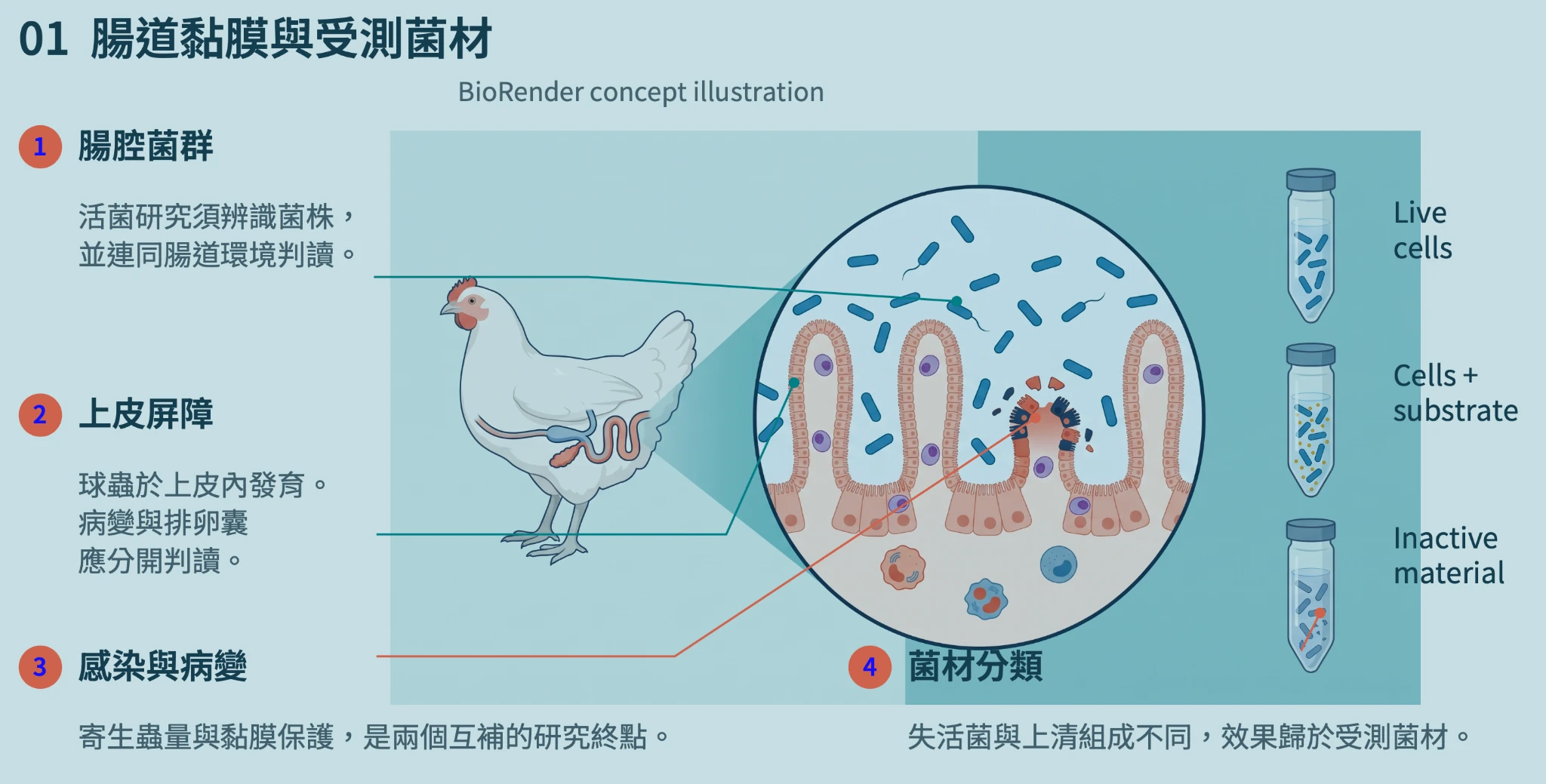
Lactobacilli, synbiotics and postbiotics have been studied in chicken coccidiosis with outcomes spanning parasite shedding, intestinal barrier function, inflammation and growth. Certain Lactiplantibacillus plantarum strains reduce oocyst output and intestinal lesions in experimental infection; some multi-component products primarily improve feed utilization, while other synbiotic trials show no anticoccidial benefit. These differences underscore the importance of strain, material composition and infection context. Effects of living organisms on the community and host, extracellular activity in cell-free supernatants, and immunomodulation by inactivated microbial preparations reflect distinct biological processes. Parasite, tissue injury and production outcomes must therefore be interpreted together. [1–7]
How Coccidiosis Changes the Intestinal Ecosystem
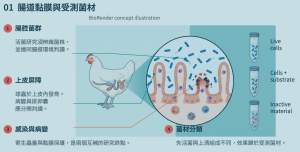
Chicken coccidiosis is caused by protozoa of the genus Eimeria. Different species predominantly damage different intestinal regions: E. acervulina affects the upper small intestine, whereas E. tenella principally damages the ceca. Intracellular development and epithelial disruption alter absorptive surface area, mucus and inflammation, and the microbiota may change as a result. Research on microbial preparations therefore concerns the interaction between parasite and host ecology, not simply an extension of antibacterial activity to a protozoan disease. [1,2]
Oocysts per gram of feces (OPG) measures shedding density at a particular sampling point; total oocyst output per bird also depends on fecal volume and collection duration. Lesion scores describe injury in specific intestinal regions, while feed conversion ratio (FCR) and weight gain integrate intake, digestion and recovery. The anticoccidial index (ACI) combines relative weight gain, survival, lesion scores and oocyst scores; it must be interpreted with the calculation used in each study. [1,2,7]
Table 1. Material identity and attribution of findings
| Material category | Material actually tested | Interpretation |
|---|---|---|
| Live lactic acid bacteria | L. plantarum P8 and chicken-derived BS22 [1,2] | Strain-specific; evaluate oocysts, lesions and barrier outcomes separately |
| Synbiotics or multi-component formulas | Mixtures of strains and substrates; some also contain enzymes [3–5] | Attribute findings to the tested formulation, not an isolated Lactobacillus strain |
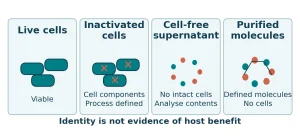
| Cell-free supernatants | CFS from L. rhamnosus NZRM 299 [6] | Extracellular mixture, distinct from inactivated bacterial cells |
| Inactivated microbial material | Heat-inactivated Blautia producta L1 [7] | Not a Lactobacillus; host benefit applies to the tested material |
Postbiotic and synbiotic classifications follow the ISAPP consensus statements [8,9]. Product labels and terminology used by individual authors should be recorded separately from the current definition of the material tested.
Anticoccidial Effects of L. plantarum Are Strain-Specific
Wang et al. studied L. plantarum P8 (now classified as Lactiplantibacillus plantarum) in 500 broilers divided into five groups with ten replicate cages per group. Five days after mixed challenge with four Eimeria species, OPG values for the infected control, low-dose P8, high-dose P8 and diclazuril groups were 11.96, 4.52, 1.28 and 0.55 × 10⁵/g, respectively. Both P8 groups showed improved cecal lesion outcomes, but the drug group had lower lesion scores. The greater reduction in shedding with high-dose P8 did not translate into a correspondingly lower lesion score. [1]
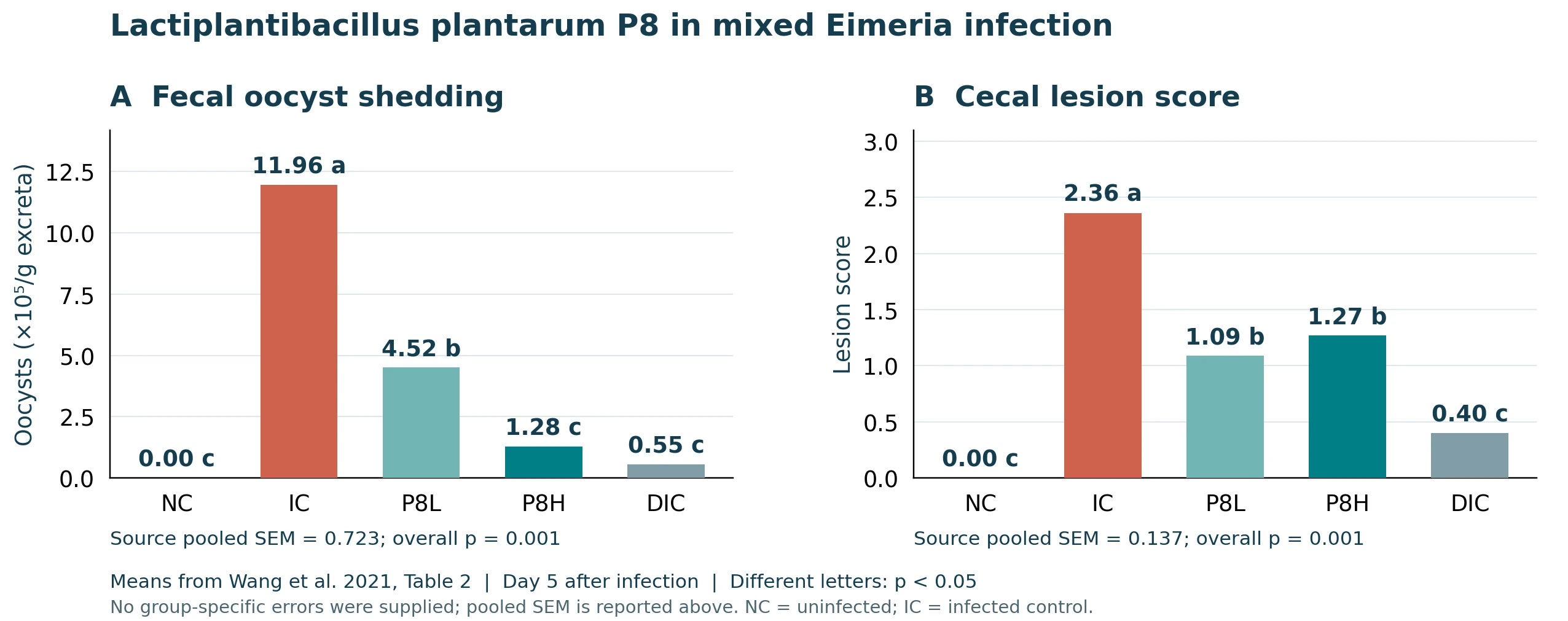
P8H and DIC shared a statistical grouping for OPG, while DIC had lower lesion scores. Thus, reduced shedding and tissue protection did not rank in exactly the same order. A non-significant difference does not establish that two treatments are equivalent.
In 2026, Zhang et al. investigated the chicken-derived strain BS22 in broilers co-infected with E. tenella and E. acervulina. The main experiment included four groups of 18 birds; a separate 20 birds were used to prepare parasite material, not as an additional treatment arm. Peak daily oocyst shedding was lower and delayed in the BS22 group, and duodenal and cecal lesions were reduced. However, both infected groups experienced mortality and tissue sampling occurred at different times. Later comparisons must account for sample sizes at each time point rather than assuming all 18 birds remained in every denominator. [2]
Barrier Proteins and Inflammation: Another Dimension of Host Protection
The P8 study also measured the jejunal tight-junction proteins claudin-1 and occludin. Protein signals declined in infected controls and improved in P8 groups, alongside reductions in serum D-lactate and, at some time points, diamine oxidase. Together these findings support mitigation of barrier injury. D-lactate was used as a permeability-associated marker here and should not be interpreted as evidence that bacterial lactic acid production declined. [1]
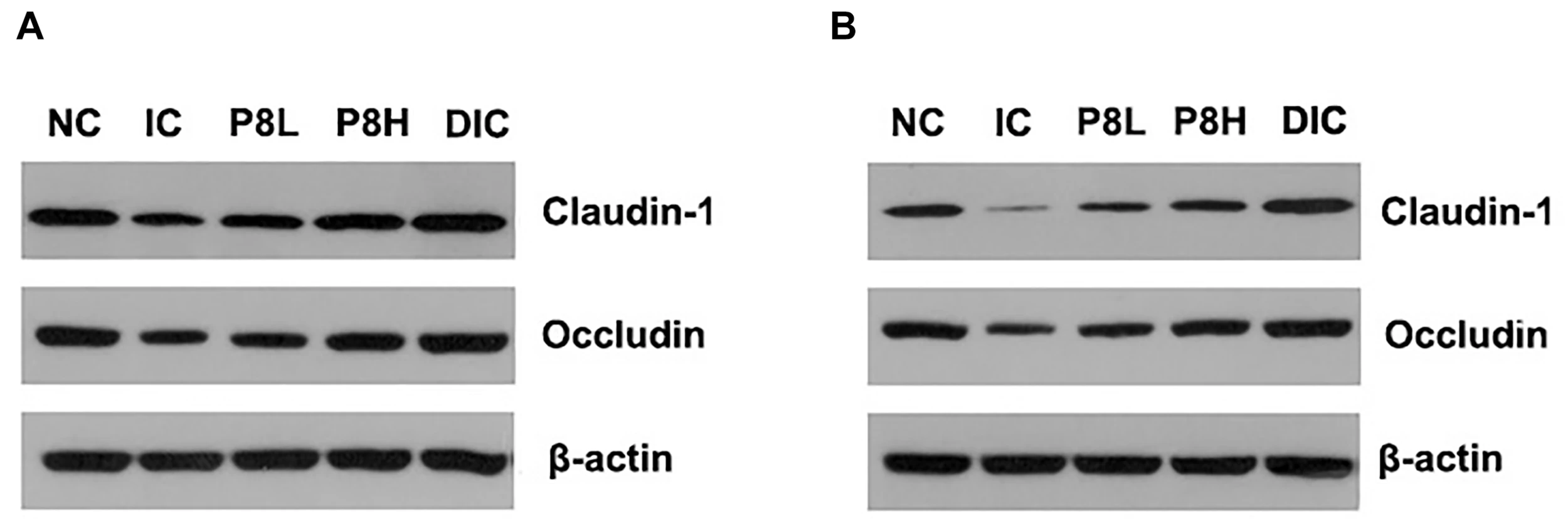
Claudin-1 and occludin bands were weaker in infected controls and more evident in the P8 and drug groups. The original quantitative analyses support partial recovery of barrier-associated proteins and should be interpreted alongside biochemical permeability-related measures.
Inflammation and antioxidant measures varied across sampling times in the same study; not every marker returned to the uninfected baseline. Some predicted microbial functions were inferred from sequencing rather than directly measured as metabolites. Changes in tight-junction proteins and cytokines in the BS22 study provide a second strain-specific host-response dataset. Such associations do not show that any single pathway is necessary for the entire anticoccidial effect. [1,2]
Synbiotics May Improve Performance, but Results Are Inconsistent
According to ISAPP, a synbiotic combines live microorganisms with a substrate selectively utilized by host microorganisms and must confer a health benefit. It cannot be defined simply as a mixture of several additives. Chhetri et al. studied 360 broilers in 2026 using infected and uninfected conditions crossed with three drinking-water treatments. The probiotic was the yeast Saccharomyces cerevisiae 1026; the synbiotic contained Clostridium butyricum, Bacillus, Enterococcus, Lactobacillus spp. and bifidus factor. Results therefore belong to the tested formulation as a whole. [3,9]
Pooled across infection status, both preparations improved weight gain and FCR. Interactions between infection status and treatment were not significant for weight gain or FCR. This supports general nutritional and growth effects but the paper did not provide oocyst shedding or coccidial lesion scores as parasite endpoints. The strain-level identification of synbiotic organisms and substrates was also insufficient to assign the observed benefit to one Lactobacillus strain. [3]
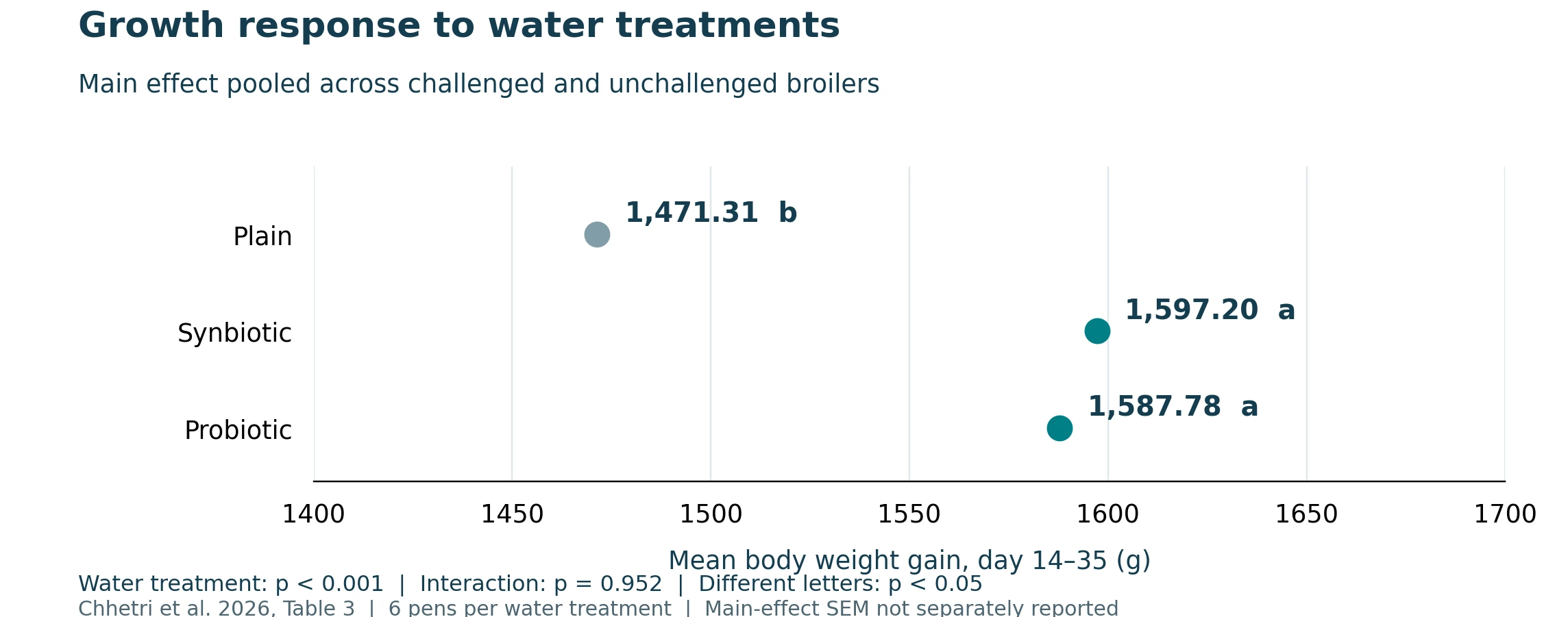
Both preparations were associated with greater weight gain in the pooled analysis; the data did not show a selectively stronger gain response in infected chickens. The figure presents a production endpoint, not evidence of a direct antiparasitic effect, because oocyst counts and lesion scores were not reported in that experiment.
By contrast, Santos et al. tested 960 broilers in eight groups and found that nutritional treatments, including a synbiotic, did not significantly reduce oocyst shedding or intestinal lesions after mixed Eimeria infection; decoquinate performed better as a comparator. In a 525-broiler study by Javanmiri et al., the Synbiozyme 500 formulation containing multiple enzymes, probiotics and prebiotics had an overall FCR of 2.26 versus 1.95 in the infected untreated group; a vaccine comparator was also included. Positive and null findings demonstrate that formulation, challenge model and assessment window influence outcomes. [4,5]
Cell-Free Supernatants and Postbiotics Must Be Evaluated by Their Actual Composition
In 2014 Molan investigated cell-free supernatant (CFS) from L. rhamnosus NZRM 299. The chicken experiment used 45 birds in three groups, with three cages per group. Oocyst shedding in the two CFS groups was lower than in infected controls, with reported reductions of 20% and 37%; sporulation capacity of recovered oocysts was also lower, but weight-gain differences were not significant. In-vitro sporulation and shedding in birds are distinct endpoints. The study did not identify one definitive active substance, so the overall effect cannot be assigned to lactate, bacteriocins or hydrogen peroxide. [6]
The ISAPP definition of a postbiotic centers on a preparation of inanimate microorganisms and/or their components that confers a health benefit to the host. A supernatant collected after removal of microbial cells differs compositionally from a preparation containing inactivated cells. Lack of viable bacteria alone does not make two products the same material category. The CFS findings should retain their actual material designation as evidence concerning microbial extracellular products. [8]
A more recent inactivated-organism study involved Blautia producta L1, not a Lactobacillus strain. In an accepted 2026 article, Liu et al. used 75 male Hy-Line chicks divided into five groups to compare live and heat-inactivated bacteria. Both materials improved weight gain, lesions and oocyst shedding. ACI values were 162.0 and 151.6, respectively, versus 102.2 in infected controls. Survival differences were not significant, and there was no standard anticoccidial-drug comparison group. The study supports investigation of an inactivated microbial preparation specifically in the B. producta L1 model; it cannot be generalized to all postbiotics. [7]
Connecting Parasite Control to Intestinal Recovery and Production
Current evidence points to two complementary outcome pathways: changes in oocyst shedding, sporulation and parasite-associated tissue injury; and changes in barrier function, inflammation and nutrient use. Reduced OPG does not guarantee the lowest lesion score at the same time, while improved growth may precede—or be partly independent of—measurable parasite changes. Evaluating all three outcome categories within the same study is more informative than comparing isolated percentages across papers. [1,3,6]
Table 2. Interpreting coccidiosis-related endpoints together
| Endpoint | Question addressed | Read alongside |
|---|---|---|
| OPG or total oocyst output | Whether shedding timing, density or cumulative amount changes | Sampling time, fecal mass, units and Eimeria species |
| Sporulation proportion | Whether collected oocysts change their capacity for in-vitro development | Denominator and conditions; not a direct infectivity assay |
| Lesions and barrier function | Which segment is injured and whether repair or permeability-related markers change | Lesion scoring, histology, protein assays and biochemical data |
| Weight gain, FCR, survival and ACI | Whether production or composite outcome measures improve | Experimental unit, mortality accounting, ACI components and controls |
Compiled from the measurement settings of references [1–7]. ACI combines multiple outcomes and derived values; scores from different publications must not be treated as an identical ranking scale.
The practical value of lactobacilli in poultry coccidiosis rests on strain- and context-validated intestinal protection and, in some studies, measurable reductions in parasite shedding. Synbiotic outcomes depend on the complete tested mixture, while inactivated microbes and extracellular preparations are separate development paths. The direct evidence reviewed here largely comes from broilers and male layer-type chicks, not commercial laying performance, breeder reproduction or other poultry species. Microbial materials should be evaluated alongside established vaccination, anticoccidial drugs and husbandry practices, with claims restricted to the comparisons demonstrated in each study. [1–9]
Frequently Asked Questions
Does a lower OPG mean anticoccidial drugs can be replaced? Answering that question requires concurrent drug controls and lesion, growth and survival outcomes. In the P8 study, shedding and lesion rankings were not identical. [1]
Are postbiotics always better than live probiotics? Evidence must be evaluated by the specific preparation. Both live and heat-inactivated B. producta L1 showed effects in one model, but this does not rank other lactobacilli, inactivation processes or poultry species. [7,8]
Figure Sources and Usage Notes
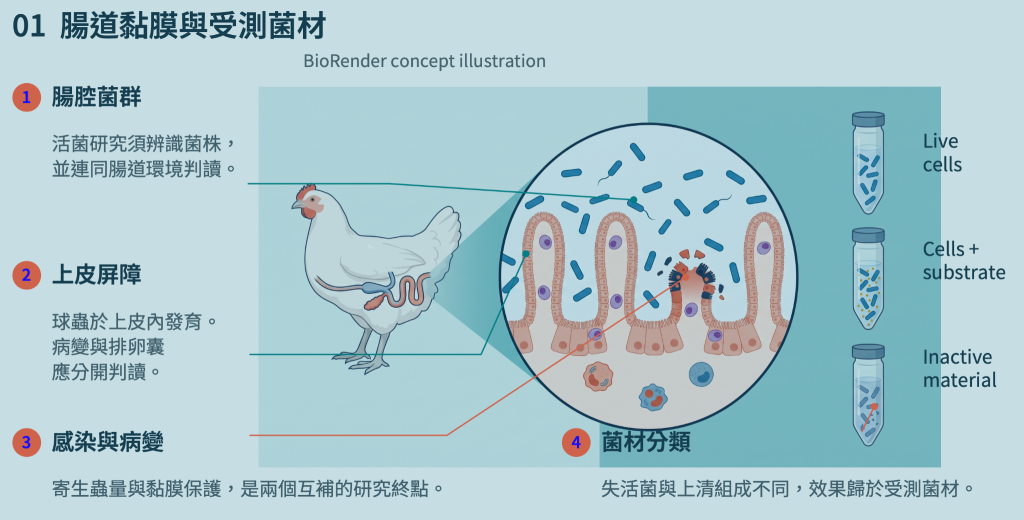
The opening figure is the original conceptual illustration supplied in the block “01 Intestinal Mucosa and Tested Microbial Materials”; it is not experimental imaging or quantitative evidence. Figure 1 was redrawn from Table 2 of Wang et al. (2021); Figure 2 retains the original Figure 2 from that study with only file-format conversion; Figure 3 was redrawn from Table 3 of Chhetri et al. (2026). The three research-based figures are attributed under CC BY 4.0 (https://creativecommons.org/licenses/by/4.0/). Source tables, figures and DOIs appear in captions and the reference list. Search records, evidence matrix, media details and proposed follow-up topics are retained in the editorial workspace.
References
- Wang Yang; Lv Xiaoguo; Li Xuemin; Zhao Jinshan; Zhang Kai; Hao Xiaojing; Liu Kaidong; Liu Huawei (2021). Protective Effect of Lactobacillus plantarum P8 on Growth Performance, Intestinal Health, and Microbiota in Eimeria-Infected Broilers. Frontiers in Microbiology 12:705758. DOI: 10.3389/fmicb.2021.705758
- Zhang Xinhui; Zhou Xuan; Wang Lidan; Tan Xiao; Zeng Yan; Xie Yue (2026). Protective efficacy of Lactobacillus plantarum BS22 against Eimeria tenella and Eimeria acervulina co-infection in broiler chickens. Poultry Science 105(10):107342. DOI: 10.1016/j.psj.2026.107342
- Chhetri Subash; Singh Dinesh Kumar; Tiwari Bibash Bahadur; Neupane Sushil; Shah Bikas Raj; Subedi Deepak (2026). Effect of Probiotic and Synbiotic Supplementation on Growth Performance, Serum Parameters and Gut Histomorphometry in Broiler Chickens Challenged With Eimeria. Veterinary Medicine and Science 12(2):e70842. DOI: 10.1002/vms3.70842
- Santos RR; Star L; Velkers FC; Vernooij JCM; Heerkens JLT; van Harn J; de Jong IC (2024). Effect of dietary treatments on performance, oocysts shedding and lesion scores in broiler chickens experimentally challenged with Eimeria infection. Animal 18(6):101185. DOI: 10.1016/j.animal.2024.101185
- Javanmiri Eghbal; Rahimi Shaban; Karimi Torshizi Mohammad Amir; Nabiyan Sedigheh; Behnamifar Alireza; Grimes Jesse (2024). Comparison of the effect of anticoccidial drug, probiotic, synbiotic, phytochemicals and vaccine in prevention and control of coccidiosis in broiler chickens challenged with Eimeria spp. Poultry Science 103(12):104357. DOI: 10.1016/j.psj.2024.104357
- Molan Abdul-Lateef (2014). Bacteria versus parasites: Effect of Lactobacillus rhamnosus cell-free supernatant on the sporulation of coccidian oocysts in vitro and in vivo. IOSR Journal of Dental and Medical Sciences 13(6 ver. I):86–92. DOI: 10.9790/0853-13618692
- Liu Jianhua; Yuan Cheng; Zhang Guangji; Zhao Changjing; Zhang Qian; Lu Mingmin (2026). Probiotic potential of Blautia producta L1 in mitigating Eimeria tenella-induced intestinal inflammation and dysbiosis in chickens. Parasites & Vectors Article in Press:已接受刊出 2026-08-24. DOI: 10.1186/s13071-026-07640-6
- Seppo Salminen; Maria Carmen Collado; Akihito Endo; Colin Hill; Sarah Lebeer; Eamonn M. M. Quigley; Mary Ellen Sanders; Raanan Shamir; Jonathan R. Swann; Hania Szajewska; Gabriel Vinderola (2021). The International Scientific Association of Probiotics and Prebiotics (ISAPP) consensus statement on the definition and scope of postbiotics. Nature Reviews Gastroenterology & Hepatology 18(9):649–667. DOI: 10.1038/s41575-021-00440-6
- Kelly S. Swanson; Glenn R. Gibson; Robert Hutkins; Raylene A. Reimer; Gregor Reid; Kristin Verbeke; Karen P. Scott; Hannah D. Holscher; Meghan B. Azad; Nathalie M. Delzenne; Mary Ellen Sanders (2020). The International Scientific Association for Probiotics and Prebiotics (ISAPP) consensus statement on the definition and scope of synbiotics. Nature Reviews Gastroenterology & Hepatology 17(11):687–701. DOI: 10.1038/s41575-020-0344-2
Disclaimer: This narrative scientific review is intended for research and technical discussion. Findings from experimental poultry models do not establish efficacy for any specific HYGEM product and must not replace veterinary diagnosis, approved anticoccidial control programs or biosecurity practices.