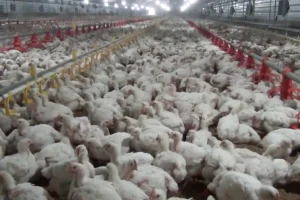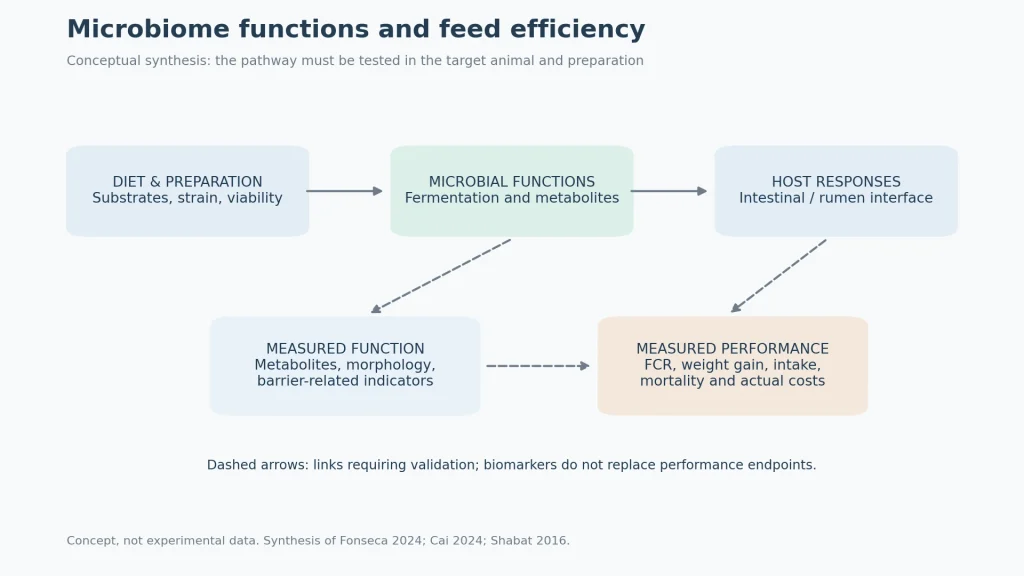

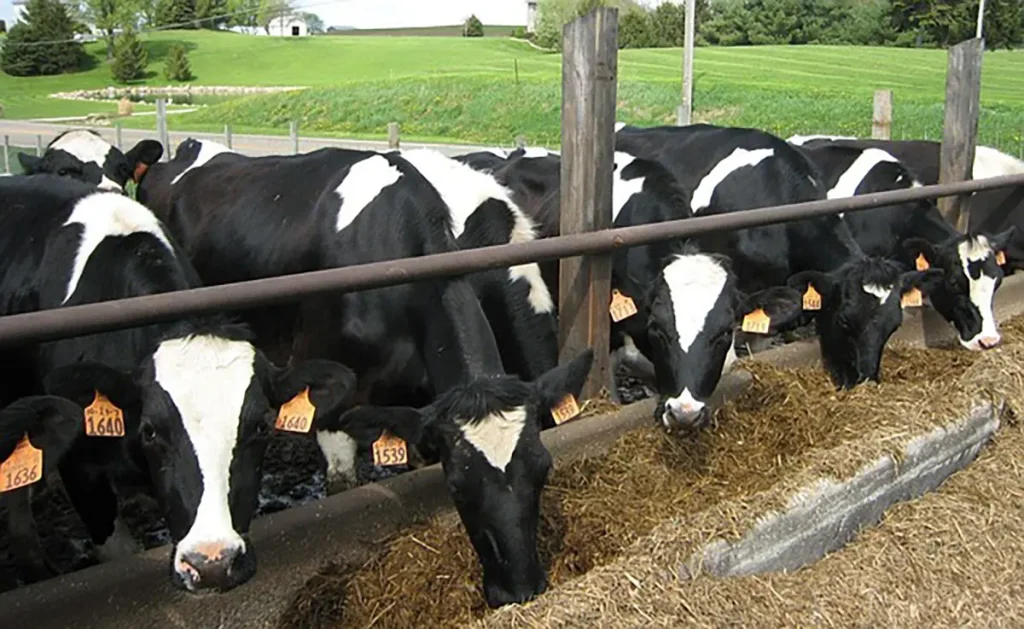
 The microbiome can contribute to feed efficiency, but a microbial shift and an improvement in feed conversion are different findings. The practical question is whether a defined preparation, diet and production setting enable animals to produce the same output with less feed, and whether that result is reproducible. Broiler interventions provide treatment comparisons, while multi-omics studies in dairy cows connect fermentation functions with energy use. Together they support a research direction, rather than proving that every microbial product works. Three original studies illustrate how metabolism, intestinal measurements and performance should be read together.[1, 2, 3]
Start with output and the observation period
Feed conversion ratio (FCR) is commonly calculated as feed consumed divided by weight gained. A lower value indicates less feed per unit of gain. It should be interpreted alongside weight gain, feed intake, mortality and the calculation method. A treatment that reduces intake while also reducing growth cannot be judged from a single ratio alone. Starter-phase and whole-period findings can also differ, so comparisons need equivalent ages, genetic backgrounds and diets.[1, 2]
Microbiome measurements address a separate question: whether digestive ecology and metabolic functions change. Taxon relative abundance, short-chain fatty-acid concentrations and epithelial gene expression can help explain a result, but none independently replaces a production endpoint. Relative abundance is a compositional proportion, rather than a direct measurement of viable cell numbers or metabolic output. A microbial difference therefore supports a statement about community change; it does not by itself demonstrate feed savings.[1]
Why fermentation functions may influence energy use
Rumen microbes convert plant substrates into fermentation products available to the host. Shabat and colleagues measured feed efficiency in 146 lactating cows and conducted multi-layer analyses in 78 animals from the efficiency extremes: 40 efficient and 38 inefficient cows. Efficient animals had lower taxonomic and gene richness, together with distinctive pathways and metabolites related to energy use. Greater microbial richness was therefore not a universal marker of better feed efficiency.[3]
The study connected community composition, genetic functions and metabolites with a host phenotype, rather than judging efficiency from taxonomy alone. However, it compared naturally differing animals and did not test whether a particular additive could convert an inefficient cow into an efficient one. Rumen fermentation, diet and host physiology also differ from those of broilers. Dairy-cow associations cannot be presented as efficacy evidence for a poultry product.[3]
In broiler interventions, identify the comparator
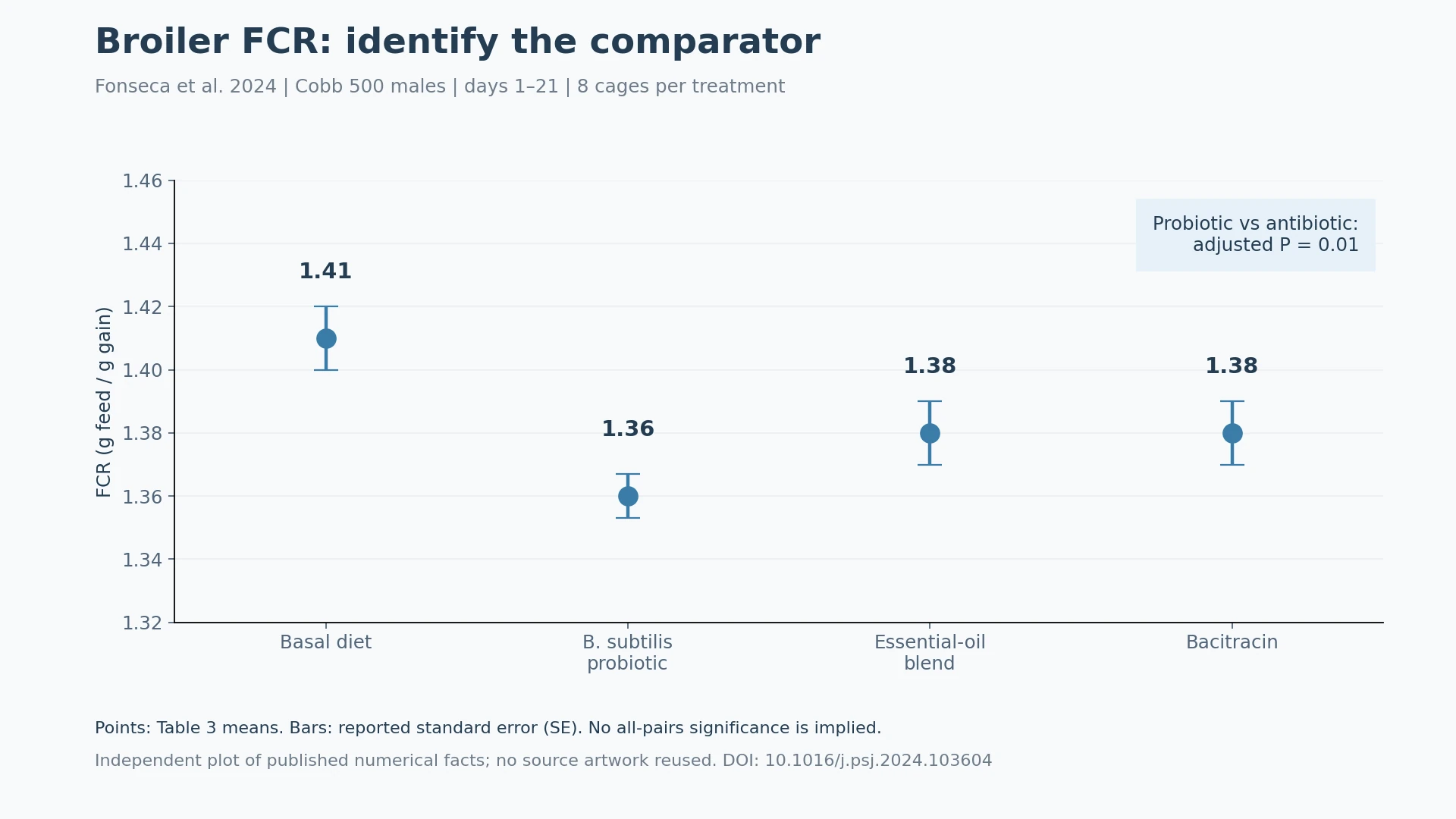
Fonseca and colleagues allocated 320 one-day-old male Cobb 500 broilers to 32 cages and compared a basal diet, a Bacillus subtilis probiotic, an essential-oil blend and bacitracin over 21 days. Each treatment had eight cages with ten birds per cage. Descriptive whole-period FCR means were 1.41, 1.36, 1.38 and 1.38, respectively. The prespecified probiotic-versus-antibiotic contrast was significant for whole-period FCR, with a multiplicity-adjusted P value of 0.01. That comparison does not establish superiority over every other treatment.[1]
Age was also an important driver of excreta microbial variation. Community structure differed between treatments, without a simple diversity pattern that could be labelled universally beneficial. Excreta do not fully represent every intestinal compartment. Although performance and microbiome measurements came from the same experiment, their joint movement does not identify the microbial cause of improved FCR. Functional or mediation experiments would be needed to resolve that link.[1]
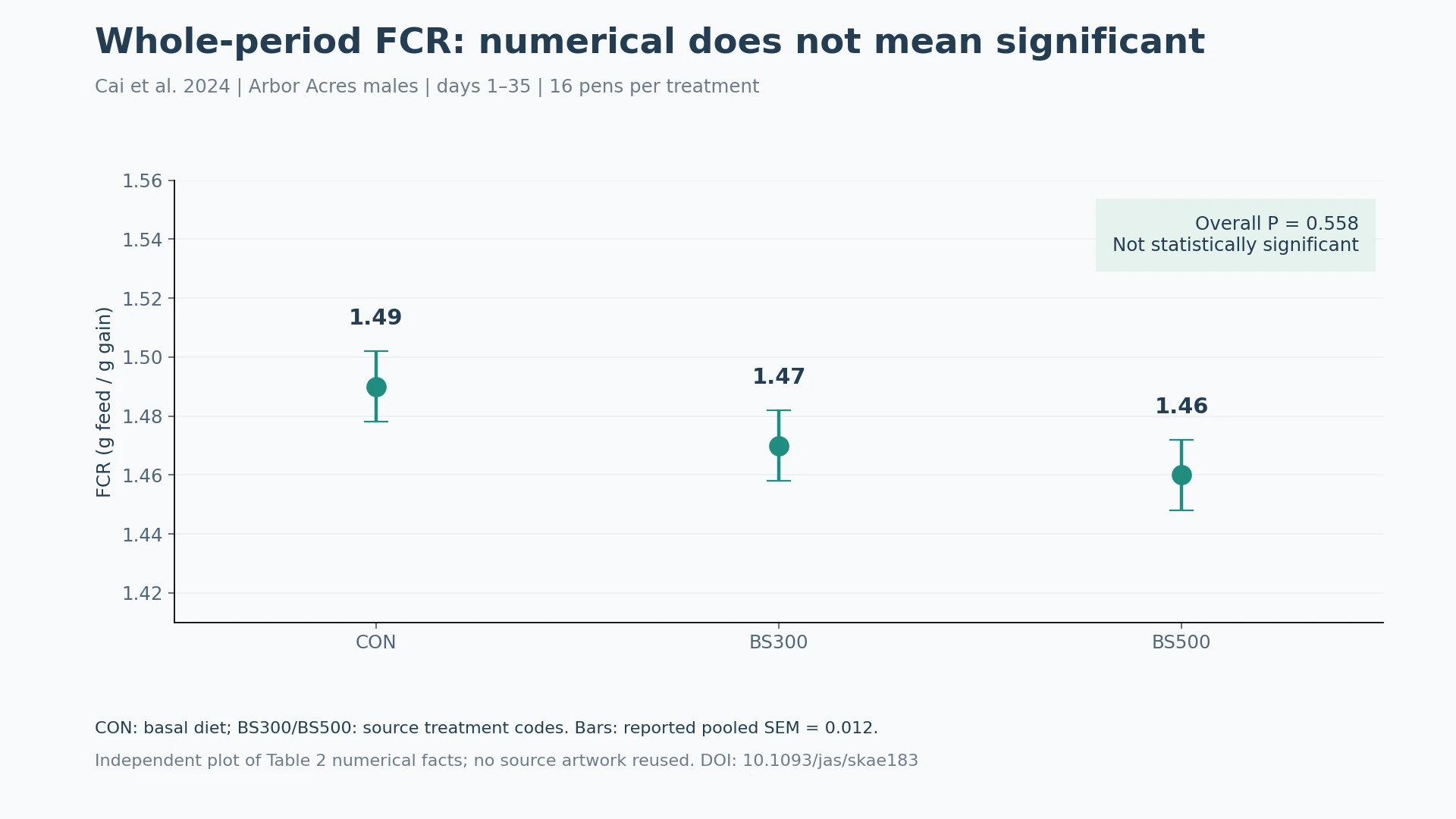
Intestinal changes do not guarantee significant whole-period FCR gains
Cai and colleagues compared a basal diet with two treatments containing a dual-strain B. subtilis preparation, DSM32324 and DSM32325, in 768 male Arbor Acres broilers. There were 16 pens per group and 16 birds per pen over 35 days. Table 2 reports whole-period FCR means of 1.49, 1.47 and 1.46, with an overall P value of 0.558. Intestinal morphology or tight-junction-related findings should therefore not be combined into a claim of demonstrated whole-period feed-efficiency improvement.[2]
The paper also contains a statistical reporting issue. Its abstract describes a significant starter-phase reduction, whereas Table 2 gives an overall starter-phase P value of 0.086 alongside different pairwise letter labels. The overall test, post-hoc comparisons and abstract wording require separate interpretation. Until the original analysis is clarified, the numerical 4.55% reduction should not be promoted as an unambiguous, general improvement rate. The whole-period P value of 0.558 supports a clear conservative interpretation.[2]
| Study and context | Experimental unit / material | Supported interpretation |
|---|---|---|
| Fonseca 2024; broilers, days 1–21 | 8 cages/group; B. subtilis preparation | Better whole-period FCR than the antibiotic comparator, not superiority to every control.[1] |
| Cai 2024; broilers, days 1–35 | 16 pens/group; | Overall whole-period FCR P=0.558; intestinal changes do not establish performance gains.[2] |
| Shabat 2016; lactating cows | 146 phenotyped; 78 multi-omics profiles | Functional associations with efficiency; not an additive intervention.[3] |
Connect mechanisms, performance and costs within one evidence chain
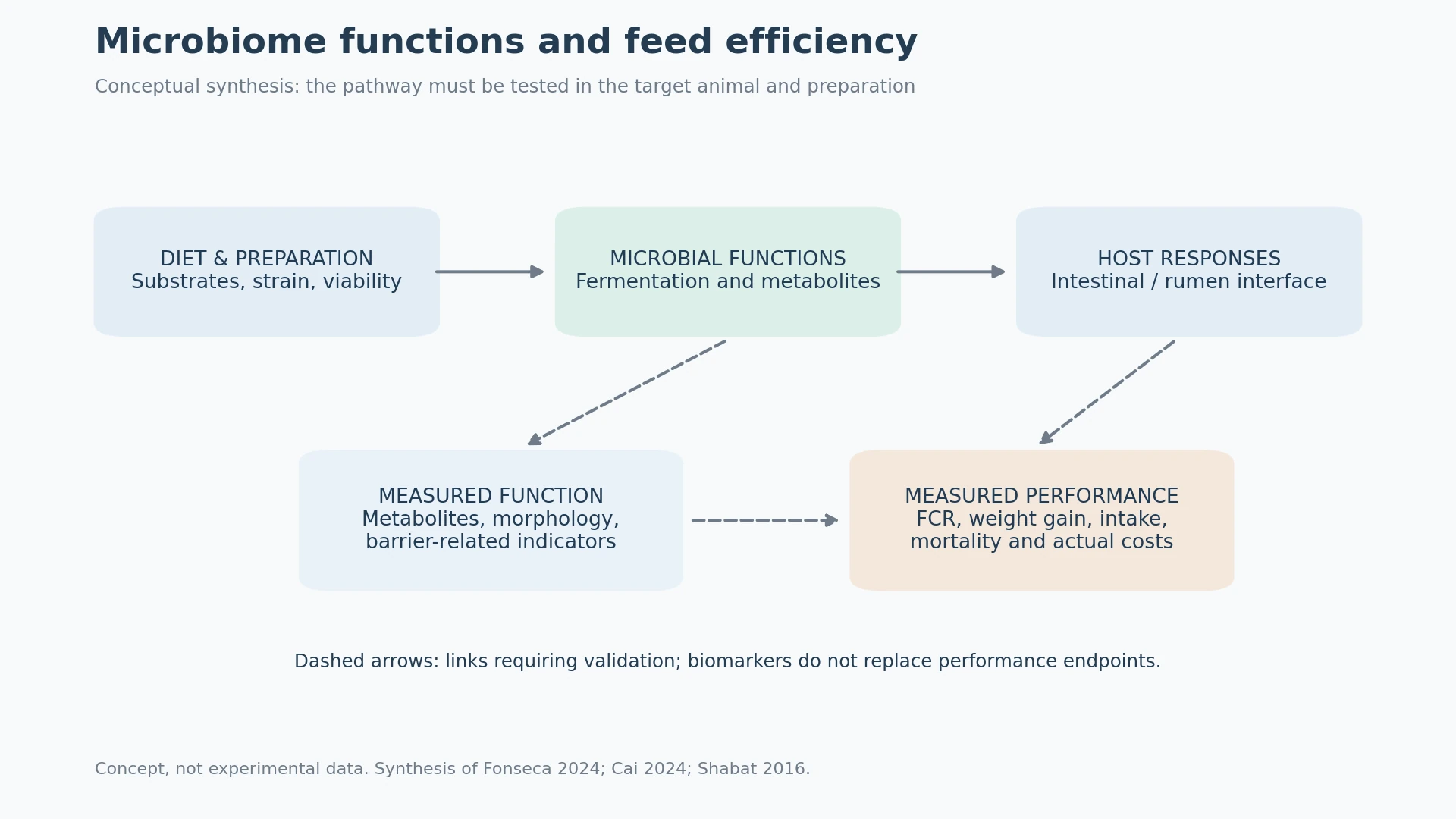
Feed studies can be read at three levels. The first defines the preparation and conditions: strain identity, viability, diet and animal stage. The second measures functional responses, such as fermentation products, intestinal morphology or barrier-related indicators. The third measures actual output, including FCR, growth and health. The first two can explain the third but cannot replace it. Evidence for a live preparation also cannot be transferred directly to an untested inactivated product, fermentation supernatant or purified metabolite.[1, 2, 3]
When feed is supplied collectively, the pen or cage is the relevant experimental unit for feed-use outcomes; individual birds are not independent feed-intake replicates. Economic evaluation additionally needs actual feed costs, additive costs, growth and mortality records over a defined period. Microbial proportions or a single experimental mean cannot establish commercial return on investment without those underlying data. This is how mechanistic research can inform production decisions.[1, 2]
| Evidence level | What to examine | Inference to avoid |
|---|---|---|
| Preparation and setting | Strain, material state, diet and age | Same species name means the same efficacy |
| Function and intestine | Metabolites, morphology and barrier-related measurements | Higher expression proves better barrier function |
| Performance and cost | FCR, gain, mortality and actual costs over the same period | Microbial shifts or nonsignificant means establish commercial ROI |
Judge value with functional and production measurements together
The useful question is which material changes which functions, in which host and diet, and with what production outcome. Available evidence includes favourable treatment comparisons, nonsignificant whole-period results and rumen functions associated with efficiency. Preserving those differences makes the science useful. Replacing the complete production evidence with microbial shifts, immune indicators or a single percentage removes the information needed for sound nutritional interpretation.[1, 2, 3]
References
[1] Fonseca A, Kenney S, Van Syoc E, et al. (2024). Investigating antibiotic free feed additives for growth promotion in poultry: effects on performance and microbiota. Poultry Science, 103(5):103604. DOI: 10.1016/j.psj.2024.103604.
[2] Cai Y, Xiao C, Tian B, et al. (2024). Dietary probiotic based on a dual-strain Bacillus subtilis improves immunity, intestinal health, and growth performance of broiler chickens. Journal of Animal Science, 102:skae183. DOI: 10.1093/jas/skae183.
[3] Shabat SKB, Sasson G, Doron-Faigenboim A, et al. (2016). Specific microbiome-dependent mechanisms underlie the energy harvest efficiency of ruminants. The ISME Journal, 10(12):2958–2972. DOI: 10.1038/ismej.2016.62.
This article supports scientific interpretation and does not establish efficacy for a particular commercial product or production site.